
A dish of patience and memory
Harisa at Ararat Tavern
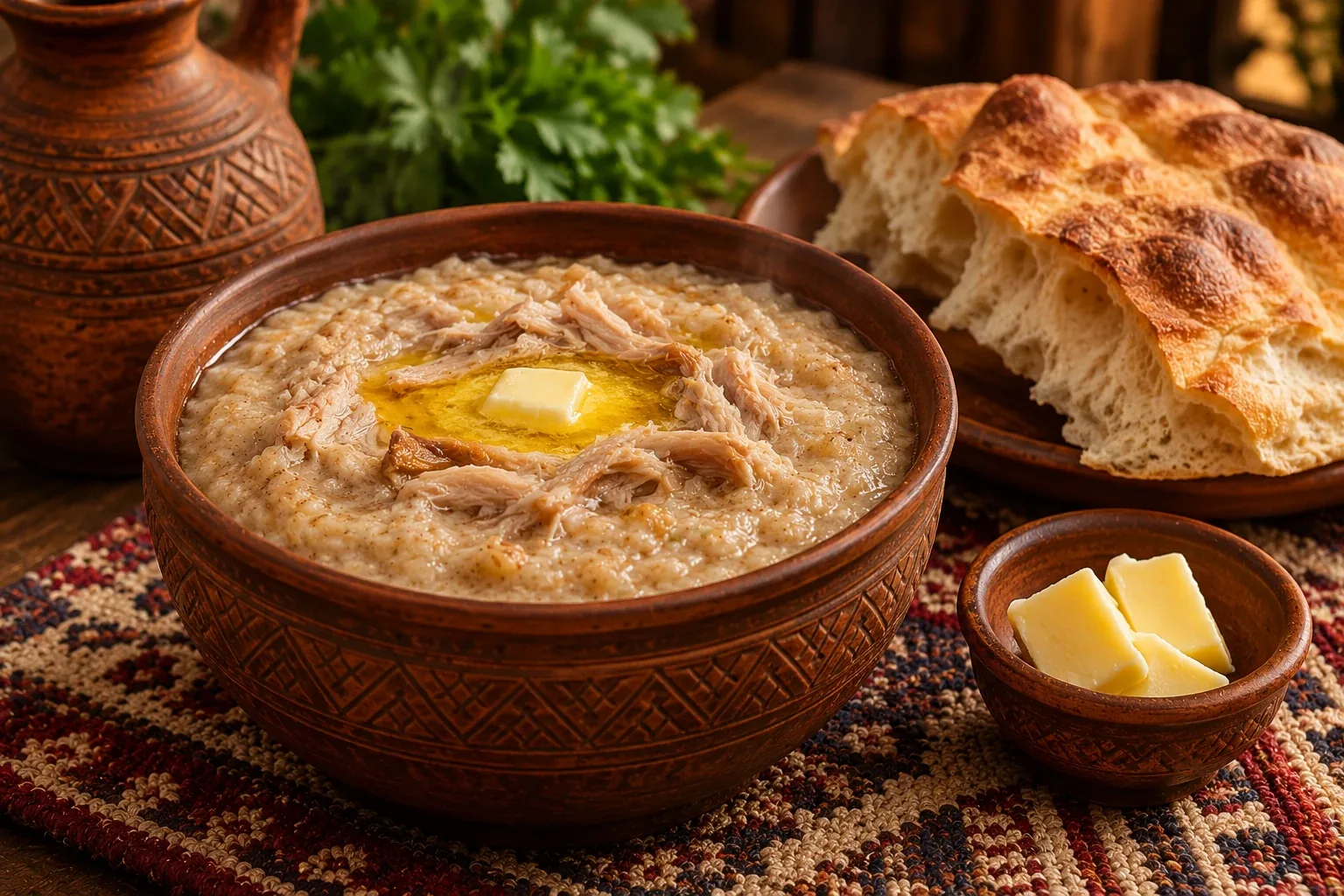
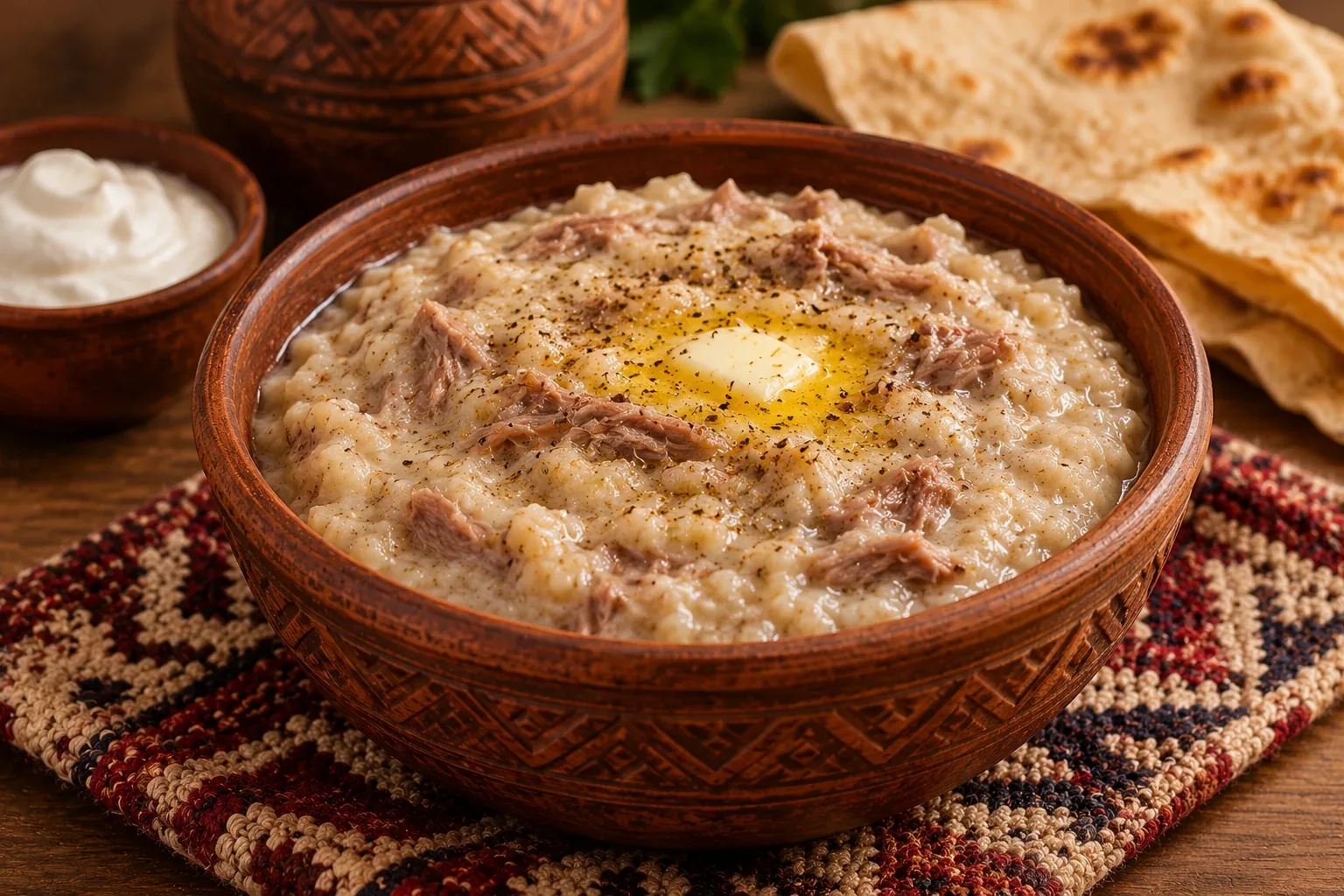
Wheat and meat slowly cooked for hours and beaten into a smooth, velvety porridge, finished with melted butter. Harisa is a dish of patience, celebration and the shared table.
- Season
- Winter and feast days
- Cooking
- Several hours
- The secret
- Constant stirring
- Best with
- Everyone together
Հարիսա · Ариса · Harisa
What is harisa?
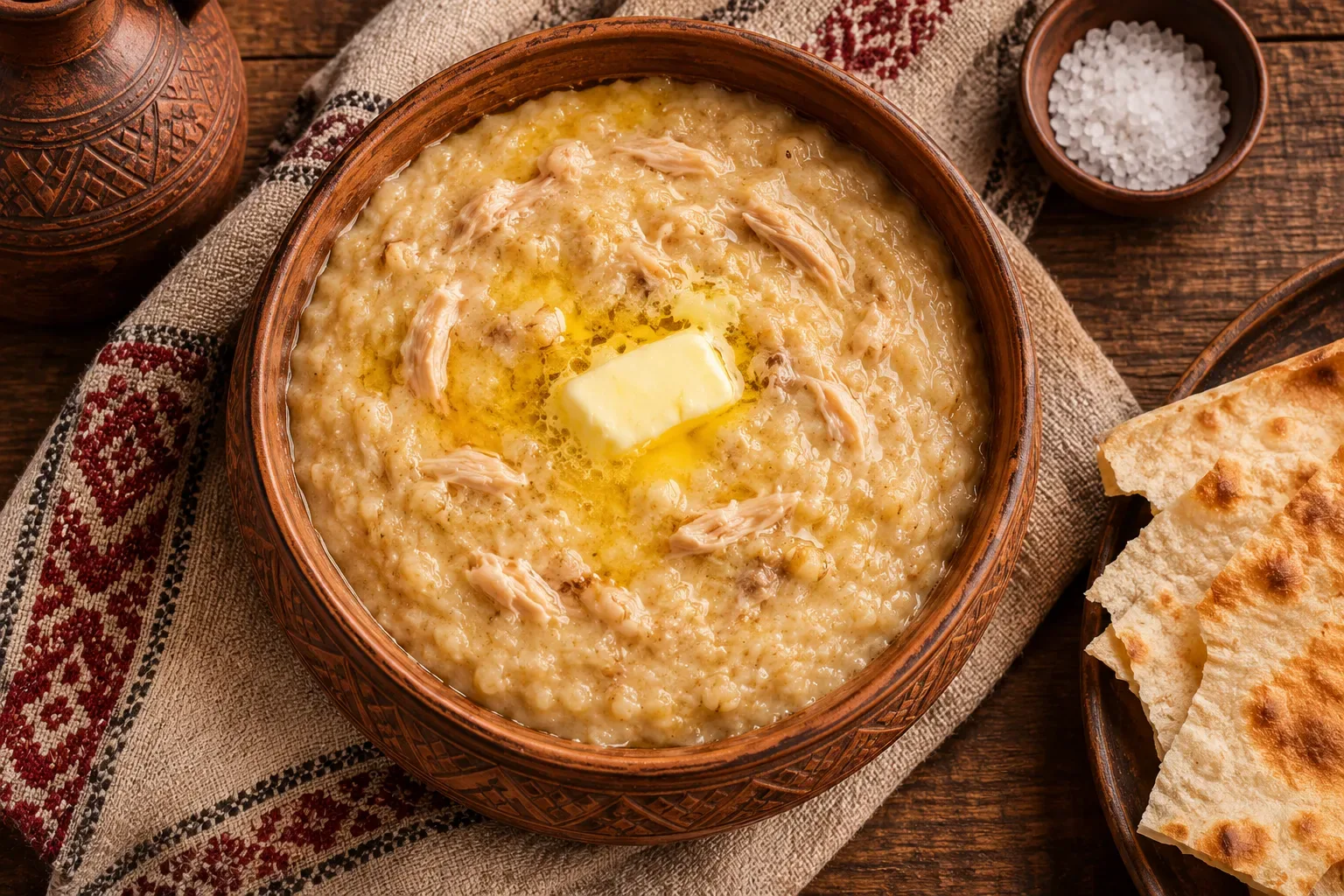
Harisa, one of Armenia's national dishes, is a porridge of korkot (hulled wheat) and meat, cooked for hours and stirred until grain and meat become one smooth mass.
It is made with chicken or lamb, water and salt, without extra spices, and served with melted butter. From the simplest ingredients comes a warm, filling and tender dish.
Harisa is cooked for feast days and on cold days, often in large cauldrons so there is enough for everyone.
About the name
A folk tale links the name to «հարե՛ք» (harek), “stir it!”, while linguists trace it to the Arabic harīsa, “pounded”. In Russian it is written «ариса» or «хариса». It has nothing to do with harissa, the North African chili paste.
History
Around the cauldron for centuries
Harisa is one of the traditional dishes of Armenian cuisine, tied to feast days, community and memory.
Legend
“Harek!”
A folk tale says that when the food in the cauldron was not enough for everyone, Gregory the Illuminator ordered “Harek!”, “stir it!”. It is a legend, not a historical fact.
Feast days
All night in the tonir
Harisa was a ritual and festive dish, made for feast days, weddings and the Feast of the Holy Cross. It cooked all night in a clay pot in the tonir and was eaten on Sunday morning; on fast days, greens took the place of meat.
Musa Dagh
A dish of memory
In 1915 the Armenians of Musa Dagh held out for 53 days until French ships carried them to Port Said. Every September, at the memorial in Musaler village, harisa is cooked all night in large cauldrons, then blessed and shared with everyone in the morning. Anjar in Lebanon keeps the same tradition.
Today
Winter warmth
Today harisa remains a favourite of the winter and festive table, at home, in communities and in restaurants.
Preparation
How harisa is made
The secret of harisa lies not in the ingredients but in time and hands: hours of cooking and stirring.
Ingredients
- Korkot (hulled wheat)
- Chicken or lamb
- Water
- Salt
- Butter
- Time: hours on low heat
Soak the wheat
The wheat is rinsed and soaked, often overnight.
Cook the meat
The meat is simmered in water until tender, then the bones are removed and the meat is shredded.
Simmer slowly
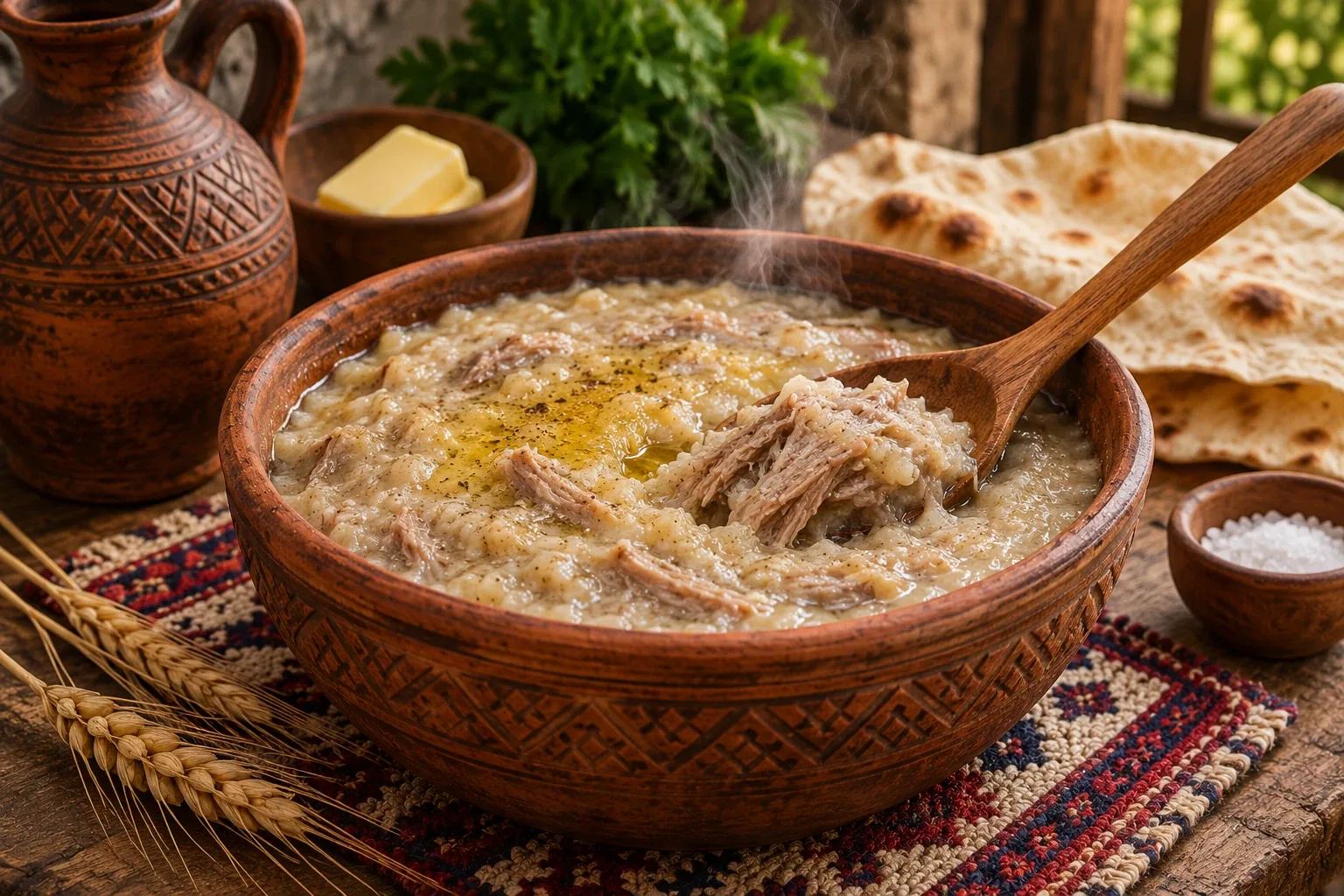
The wheat goes into the broth with the meat and simmers on low heat for hours, with water added when needed.
Beat and stir
The mixture is stirred and beaten all the time with a wooden paddle until wheat and meat become one smooth porridge.
Serve with butter
Harisa is served hot, with melted butter poured over the top.
- Harisa is ready when it turns smooth and thick and slides slowly off the spoon.
The tradition
How harisa is enjoyed
Harisa is a slow dish, both to make and to enjoy.
Patience
Hours of stirring are part of harisa: it does not like to be rushed.
A shared cauldron
On feast days harisa is cooked in large cauldrons and shared with everyone, as a sign of the common table.
Melted butter
Hot butter on top is harisa's essential finish.
With lavash
Fresh lavash comes with harisa, with herbs and pickles on the table.
Winter warmth
On cold days harisa warms you and keeps you full for the whole day.
Memory
For many families harisa is tied to remembrance and togetherness.
On the table
What is served with harisa
Harisa is a complete dish on its own; the table only rounds it out.
Melted butter
Hot butter poured over the harisa.
Lavash
Fresh, thin lavash.
Matsoni
Cool matsoni with a gentle tang.
Fresh greens
Fresh herbs and spring onion.
Pickles
Pickled vegetables.
Red wine
Armenian red wine.
From our kitchen
Harisa at Ararat Tavern
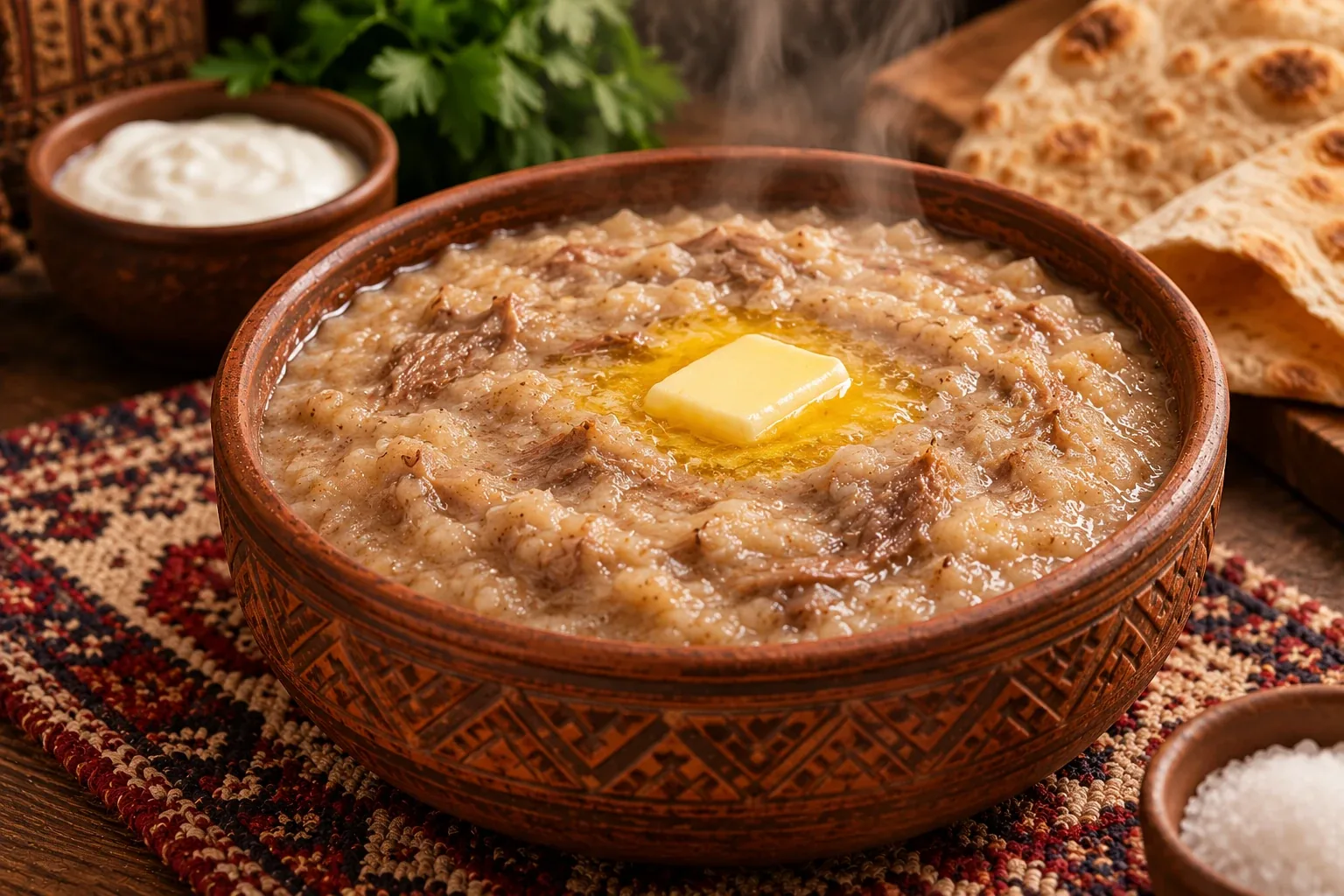
At Ararat Tavern harisa is made with chicken and hulled wheat and served with butter.
Try it on a cold day or at a festive table with family and friends.
Harisa on our menu
Harisa
2 500 AMDchicken breast, wheat groats, served with butter
Questions
Frequently asked questions about harisa
What is harisa?
Harisa is an Armenian porridge of hulled wheat and meat, cooked and stirred for hours until smooth and served with melted butter.
What is harisa made of?
Hulled wheat, chicken or lamb, water and salt, served with butter.
Is harisa the same as harissa paste?
No. Armenian harisa is a wheat and meat porridge; North African harissa is a hot chili paste.
Where does the name come from?
A folk tale links it to «harek», “stir it!”; linguists link it to the Arabic word harīsa.
How long does harisa take to cook?
The wheat is usually soaked overnight, and cooking with stirring takes several hours.
What is served with harisa?
Melted butter, fresh lavash, herbs and pickles.
Are there similar dishes in other cuisines?
Yes, wheat-and-meat porridges are made across the region, each with its own tradition.
Why is harisa linked to Musa Dagh?
Every September, at the memorial in Musaler village, harisa is cooked all night in large cauldrons, blessed and shared with everyone in memory of the 53-day defence of Musa Dagh in 1915.
When is harisa eaten?
Traditionally on feast days and at weddings, on the Feast of the Holy Cross and on Musa Dagh remembrance days, and at home on Sunday mornings. It is also a favourite winter dish.
Can I order harisa at Ararat Tavern?
Yes, harisa is on our menu, made with chicken and hulled wheat and served with butter. Book a table on this page or give us a call.