
An Armenian winter tradition
Khash at Ararat Tavern
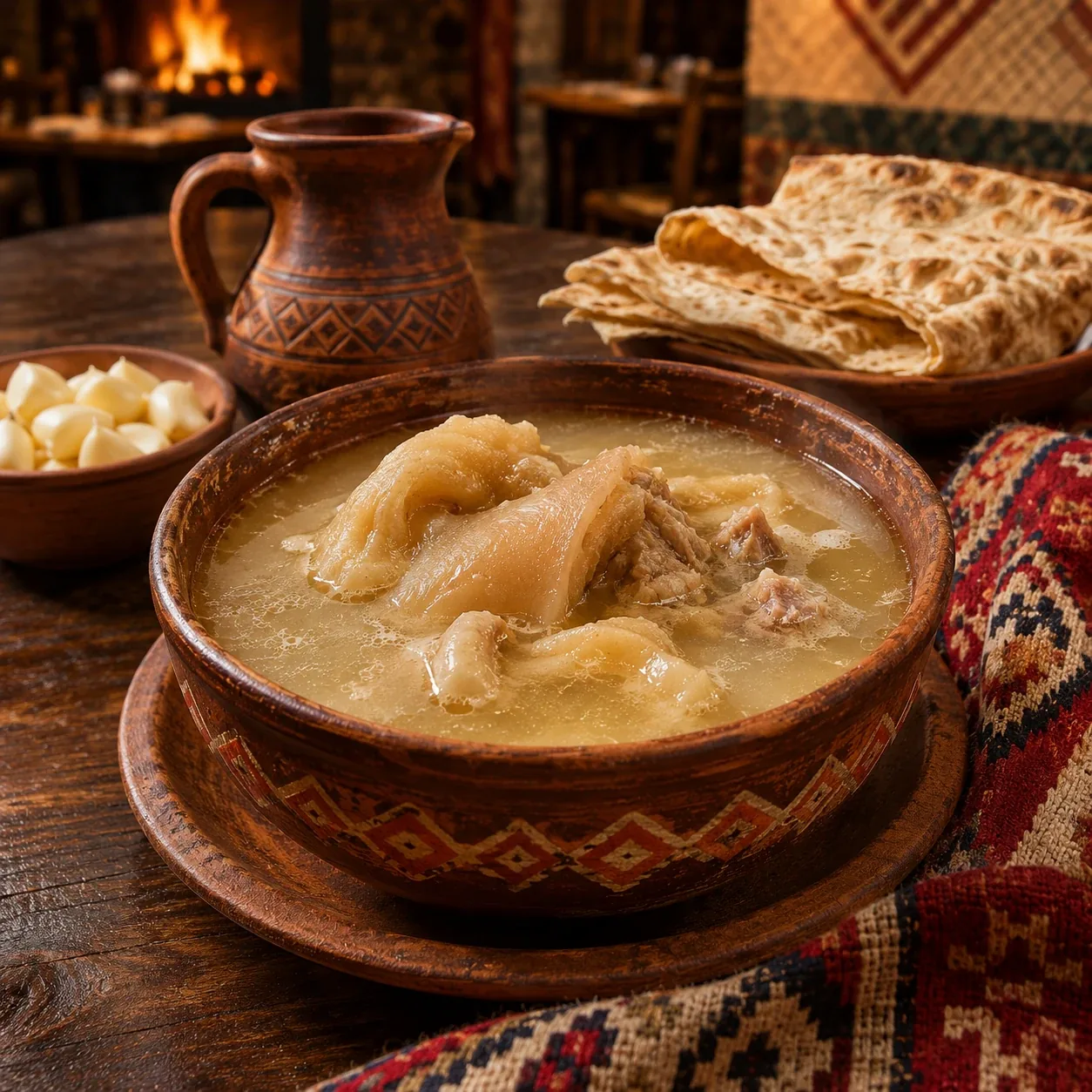
A rich broth simmered through the night and served at dawn with garlic, salt and lavash. Khash is more than a dish: it is a ritual of friendship and hospitality.
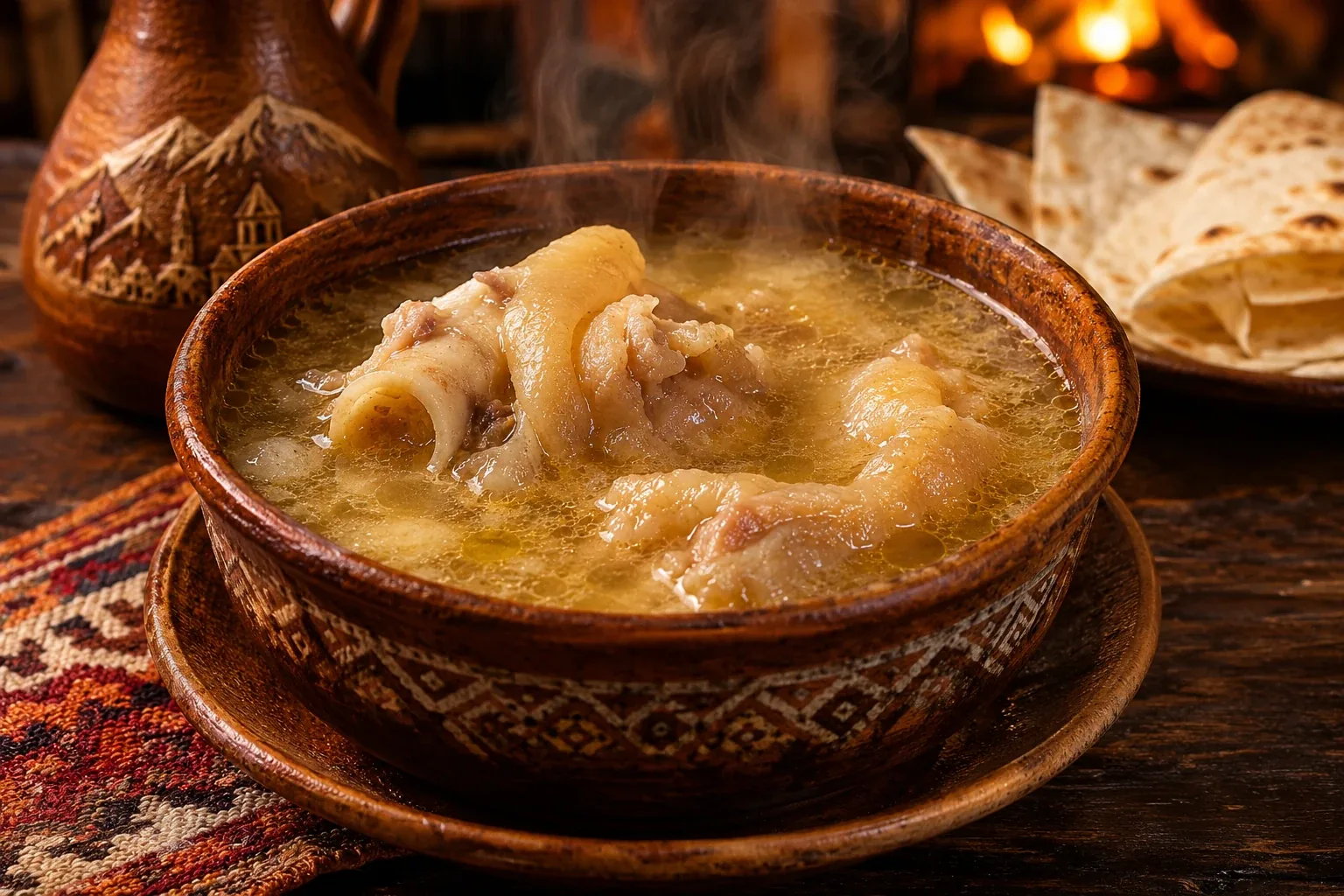
- Season
- Autumn to spring
- Cooking
- All night
- Served
- Early morning
- Best with
- Good friends
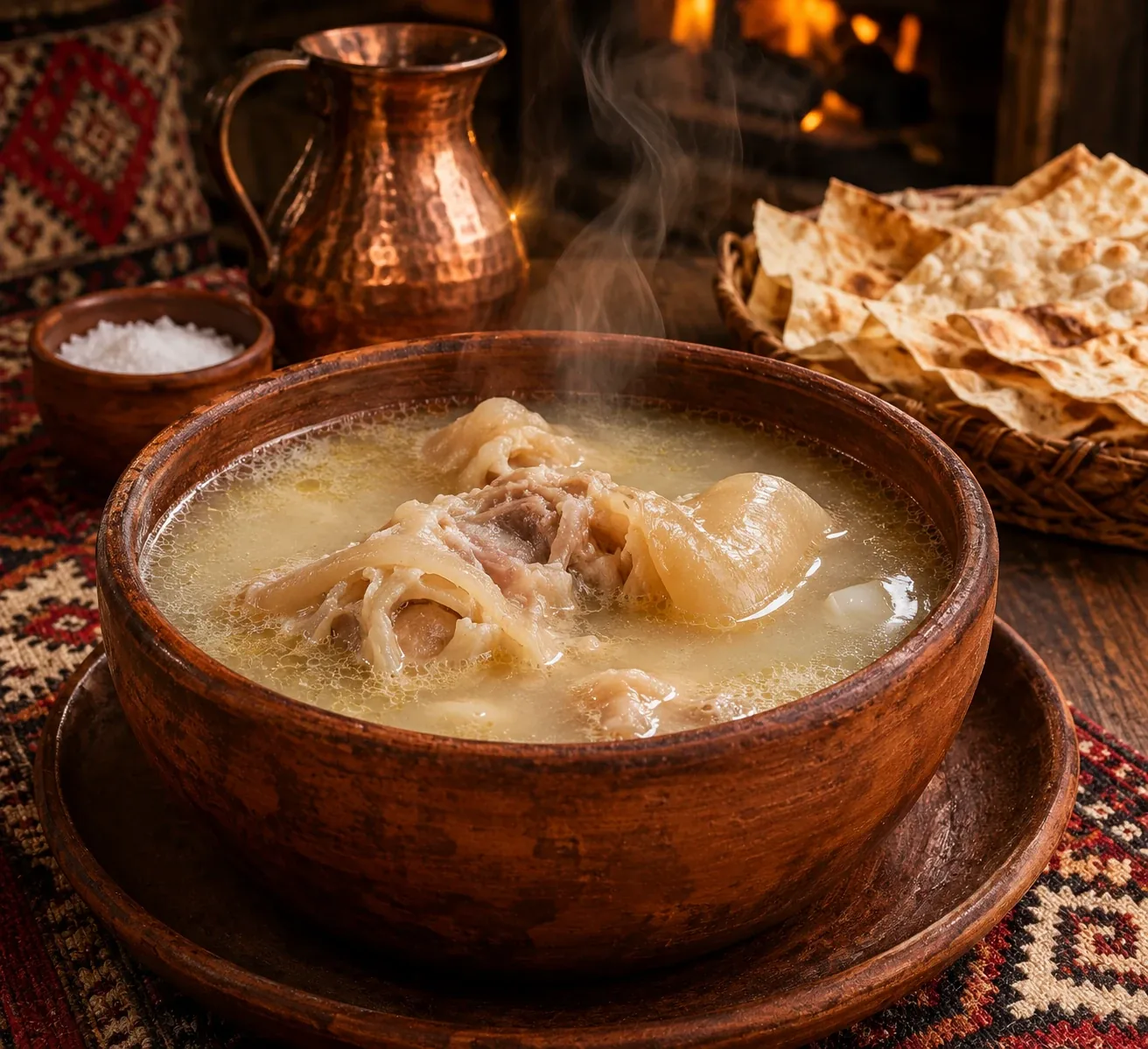
Խաշ · Хаш · Khash
What is khash?
Khash is a traditional Armenian dish of beef feet simmered through the night, until the broth turns pale, rich and gelatinous.
It is cooked without salt, so that every guest seasons their own bowl with salt and crushed garlic, then crumbles crisp dried lavash into the hot broth.
In Armenia khash is eaten on cold mornings, slowly and in good company, with fresh greens, radishes, pickles and cheese on the table and vodka for the toasts.
Where the name comes from
The word comes from the Armenian verb «խաշել» (khashel), “to boil”; its medieval form khashoy meant meat broth. In Russian it is written «хаш», and in Latin letters you will see both khash and xash.
History
From a village pot to a festive ritual
Khash has deep roots in Armenian cuisine. Over the centuries it has grown from a simple meal for working people into a symbol of friendly gatherings on cold winter mornings.
1184
A physician's prescription
In his medical book Relief of Fevers, the physician Mkhitar Heratsi prescribed khashoy, a meat broth, including one made from kid's feet, for patients with fever.
17th–18th c.
In dictionaries and almanacs
The word khash appears in an Armenian–Italian dictionary compiled in Venice around 1680, and an 18th-century Armenian almanac recommends eating khash in February, with garlic and red pepper.
Village life
Food of the poor
For a long time khash was food for the poor, for shepherds and villagers: it was made from the parts wealthier households passed over, the feet, head and tripe. Patience and a slow fire turned them into a hot, filling meal.
20th century
A ritual of friendship
The khash morning as we know it, with friends gathered at dawn, vodka and toasts, took shape mostly in the 20th century, in Soviet times. An invitation to khash still means you are among close friends.
Today
Khash season
In the cold months, restaurants and taverns across Yerevan serve khash, usually on weekend mornings and by advance booking. It remains a favourite winter tradition for locals and visitors alike.
Preparation
How khash is cooked
Khash needs only a few ingredients but a lot of patience: from soaking to serving, it takes more than a day.
Ingredients
- Beef feet, cleaned and split
- Sometimes tripe or head
- Plenty of cold water
- Fresh garlic, crushed
- Salt, at the table
- Dried and fresh lavash
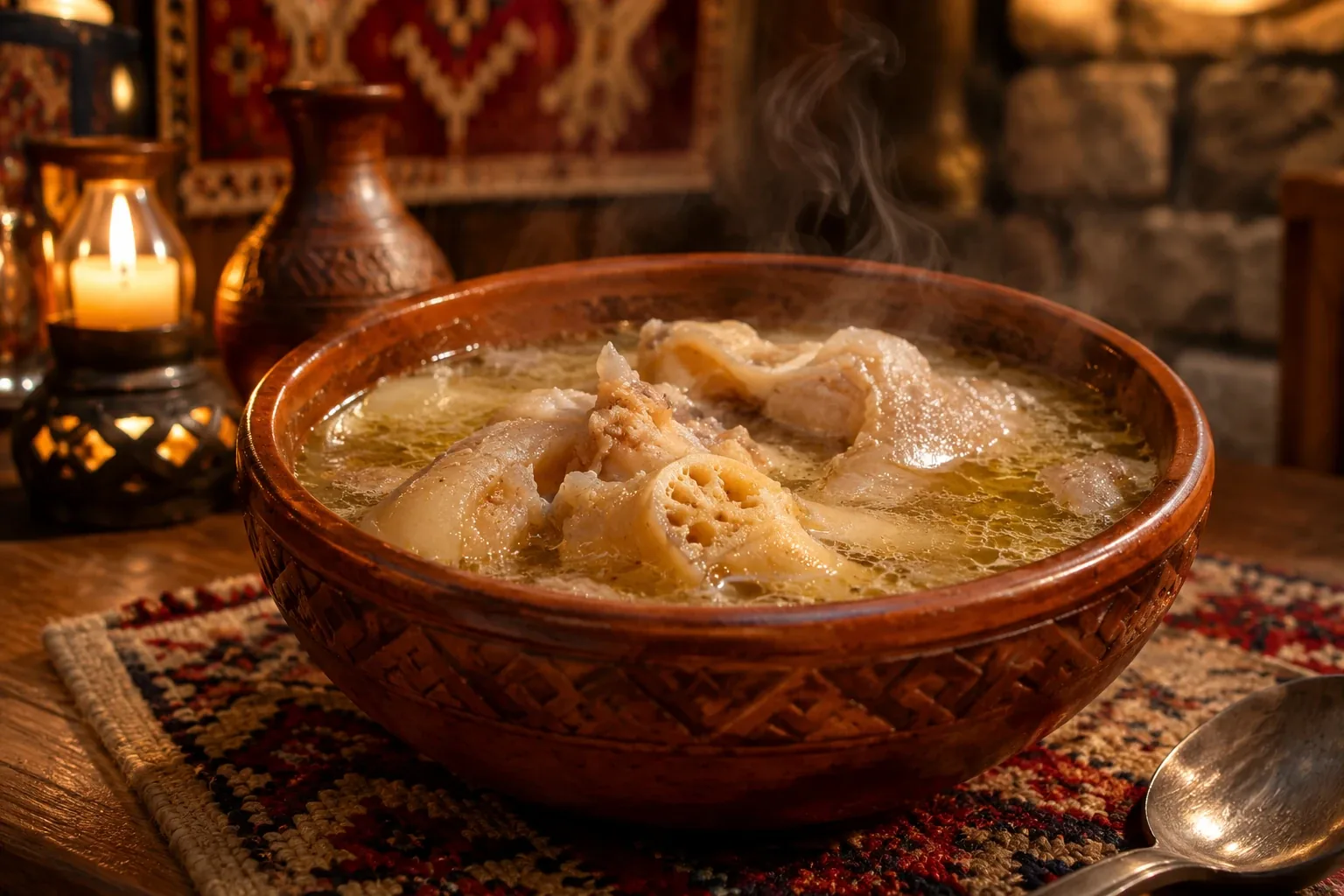
Clean
The feet are singed or scalded, cleaned of hair, scraped and washed thoroughly, then split so that the marrow and cartilage give all their flavour and body to the broth.
Soak
They are then soaked in cold water for about a day, with the water changed every few hours, so that the broth comes out clean and free of any smell.
Simmer all night
Covered with fresh water, the feet simmer gently all night, for 6–8 hours, until the meat comes away from the bone. The cook skims the foam and tops up with boiling water when needed.
No salt in the pot
Khash is never salted while it cooks; it is said this keeps the broth white. Everyone salts their own bowl to taste.
Serve hot at dawn
Khash goes to the table straight from the pot, in warmed deep bowls, with garlic, salt, lavash and everything else that belongs on a khash table.
- A good khash broth is pale and whitish, rich and gelatinous, and the meat comes away from the bone with ease.
The ritual
How to eat khash the Armenian way
Khash comes with its own unwritten rules, passed down at the table from one generation to the next.
Early in the morning
Khash is a breakfast dish. It is eaten early in the morning, often at weekends, on holidays or the morning after a feast.
Season it yourself
Add salt to taste and crushed garlic. Some stir the garlic into a little broth first, others put it straight into the bowl.
Lavash in the bowl and on top
Dried lavash is crumbled into the broth until it soaks it up like a sponge, and the bowl is covered with fresh lavash to keep the khash hot.
No spoon
Traditionally khash is eaten without a spoon, by hand or with pieces of lavash.
The toasts
Vodka or homemade fruit spirit is the drink of the khash table, not wine or beer. Three toasts are common; one well-known version is to the day, to the cooks and to the guests.
No hurry
Khash is never eaten alone or in a rush. It is a reason for friends to gather, and the morning often stretches into the afternoon.
On the table
What is served with khash
A bowl of khash never arrives alone: it comes with fresh and pickled sides.
Garlic
Fresh crushed garlic, the essential khash seasoning.
Dried lavash
Thin, crisp lavash to crumble into the broth.
Radish
Red or white radish, sliced or grated.
Fresh greens
Fresh herbs and spring onion.
Pickles
Pickled vegetables: cabbage, cucumbers, peppers.
Cheese
Salty white Armenian cheese.
Mineral water
Cold mineral water after the rich broth.
Vodka or oghi
Vodka or homemade Armenian fruit spirit for the toasts.
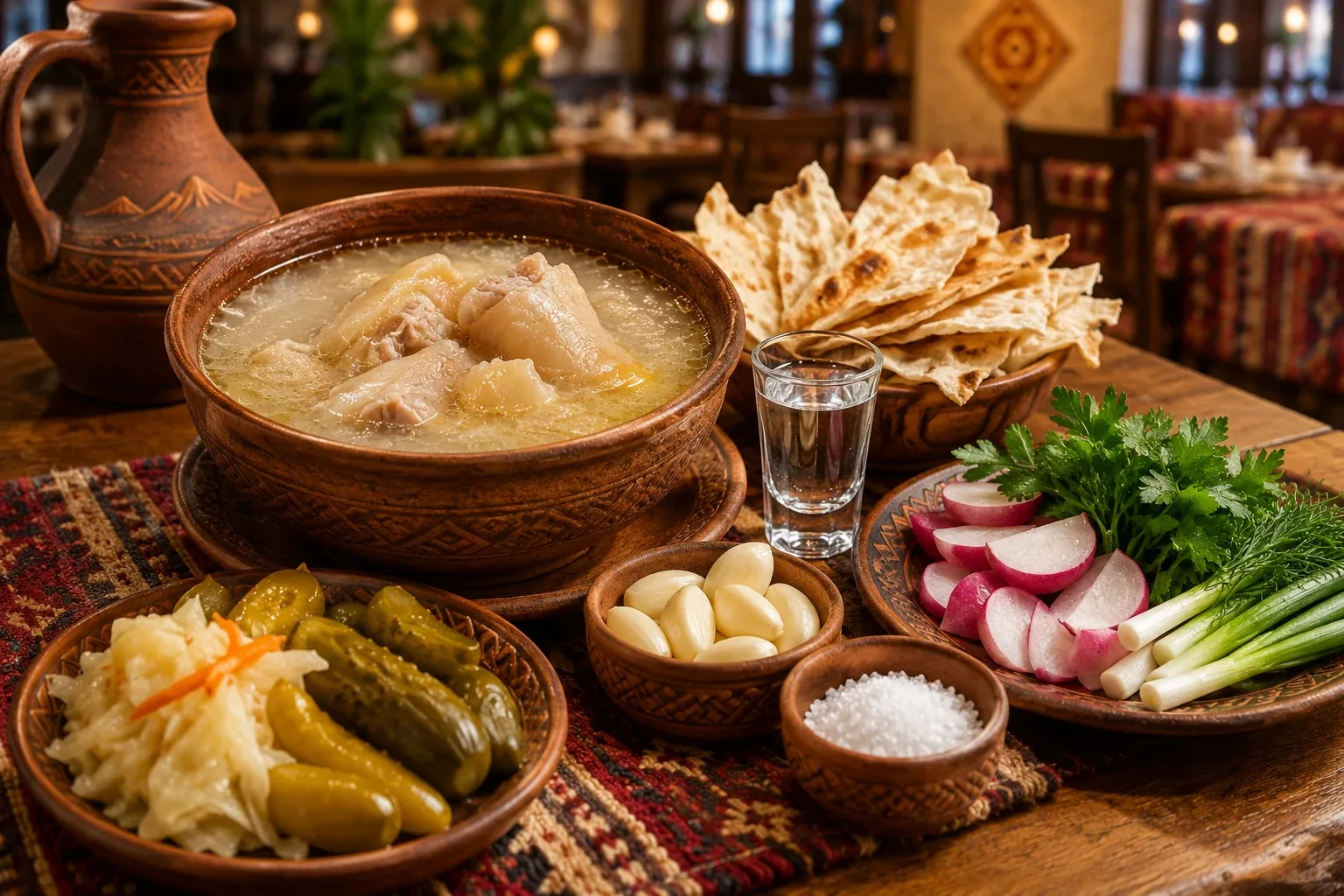
Khash season
Khash at Ararat Tavern
Khash season is open at Ararat Tavern. Our khash is served hot, with everything a proper khash table needs.
Come with friends or family, choose khash with or without meat, add the appetizer set and book your table in advance, especially at weekends.
Khash menu
Khash without meat
2 900 AMDWith garlic, salt and dried lavash
Khash with meat
3 500 AMDWith garlic, salt and dried lavash
Appetizer set
7 300 AMDGreens and radish, cheese selection, pickles, cold cuts, olives and lemon
Questions
Frequently asked questions about khash
What is khash?
Khash is a traditional Armenian dish of beef feet (sometimes with tripe or head) simmered all night without salt. It is eaten hot early in the morning with garlic, salt and lavash.
What is khash made of?
Mainly beef feet, sometimes with tripe or head. Only water goes into the pot; salt, garlic and lavash are added at the table.
How old is khash?
In his 1184 medical book, the physician Mkhitar Heratsi prescribed khashoy, a meat broth, including one made from kid's feet, for patients with fever. The word khash also appears in an Armenian–Italian dictionary from around 1680.
When do Armenians eat khash?
In the cold months, from autumn to spring, early in the morning and often at weekends or on holidays. A popular saying has it that khash is eaten only in months with an “r” in their name: September to April.
Why is khash cooked without salt?
By tradition every guest salts their own bowl to taste, together with the garlic. It is also said that the broth stays whiter without salt.
How do you eat khash?
Add salt and garlic (or garlic mixed with a little broth), crumble in dried lavash, cover the bowl with fresh lavash and eat by hand or with pieces of lavash. Greens, radish, pickles and cheese go on the table too.
What do you drink with khash?
Traditionally vodka or homemade fruit spirit, often with three toasts: to the day, to the cooks and to the guests. Mineral water and soft drinks are fine too.
How long does it take to cook khash?
The feet soak for about a day, with the water changed, then simmer all night for 6–8 hours. In all, more than a day.
Is khash the same as khashlama?
No. Both names come from the verb khashel, “to boil”, but khashlama is a meat and vegetable stew, while khash is a broth of beef feet. You will find both on our menu.
Does khash help with a hangover?
In Armenia khash is a traditional morning-after dish and many swear by it. It is a warming tradition rather than a cure, though: doctors say only time cures a hangover.
Do I need to book a table?
During khash season, especially at weekends, we recommend booking ahead. Use the form on this page or give us a call.