
Armenia's favourite feast
Khorovats at Ararat Tavern
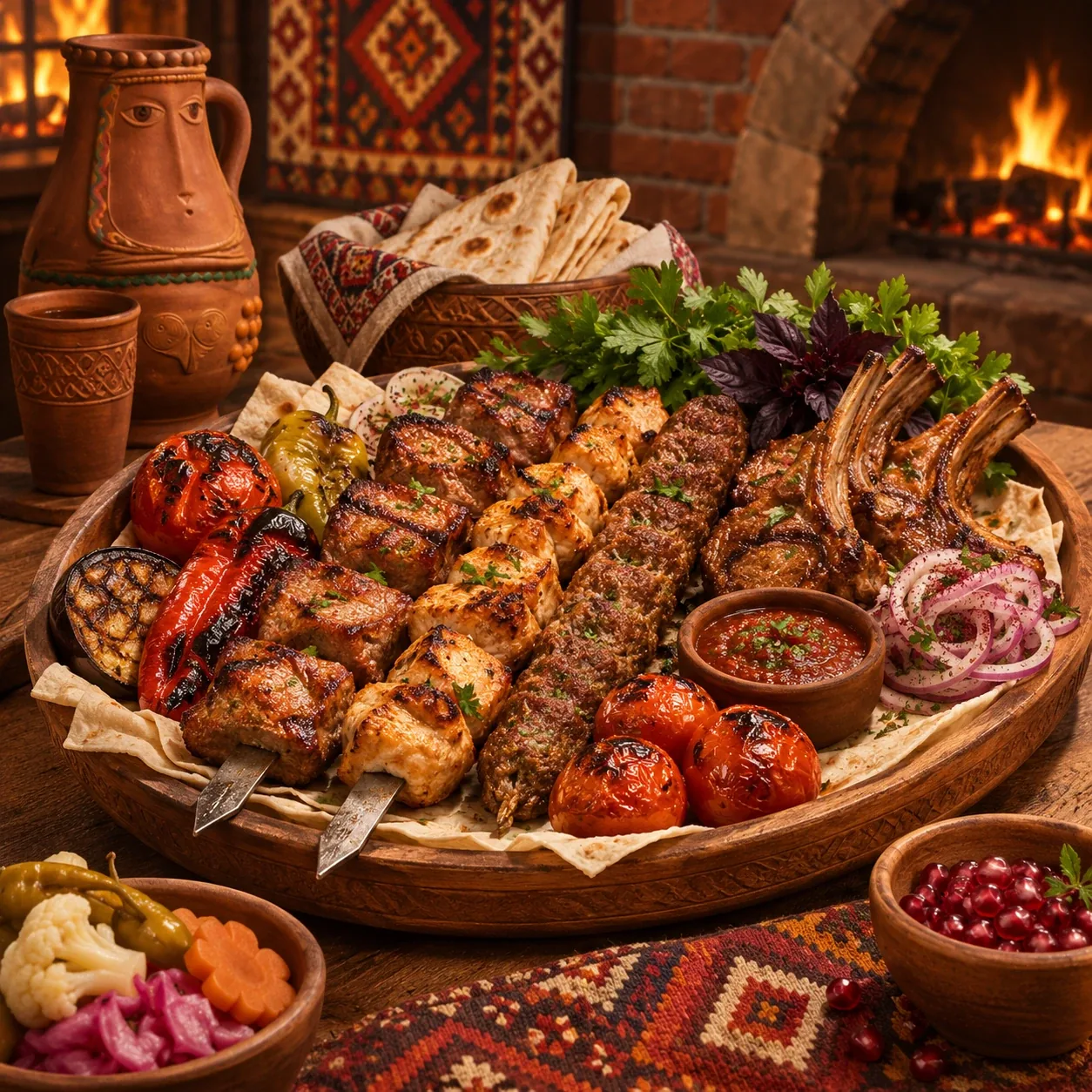
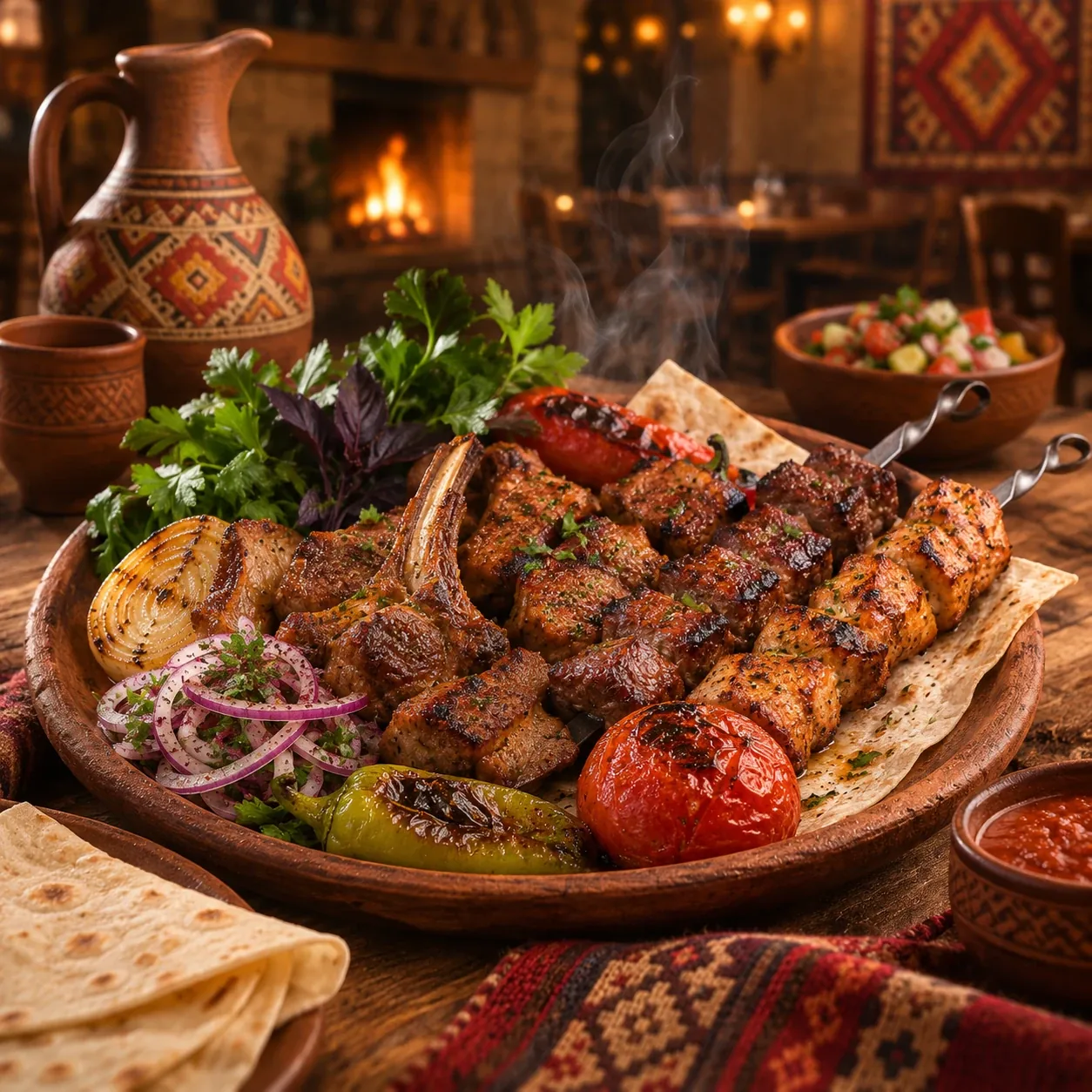
Juicy meat on skewers, grilled over glowing coals and served on warm lavash with onions, herbs and grilled vegetables. Khorovats is how Armenians celebrate, gather and welcome guests.
- Season
- All year round
- On the coals
- Half an hour or more
- Cooked
- Over hot coals
- Best with
- Family
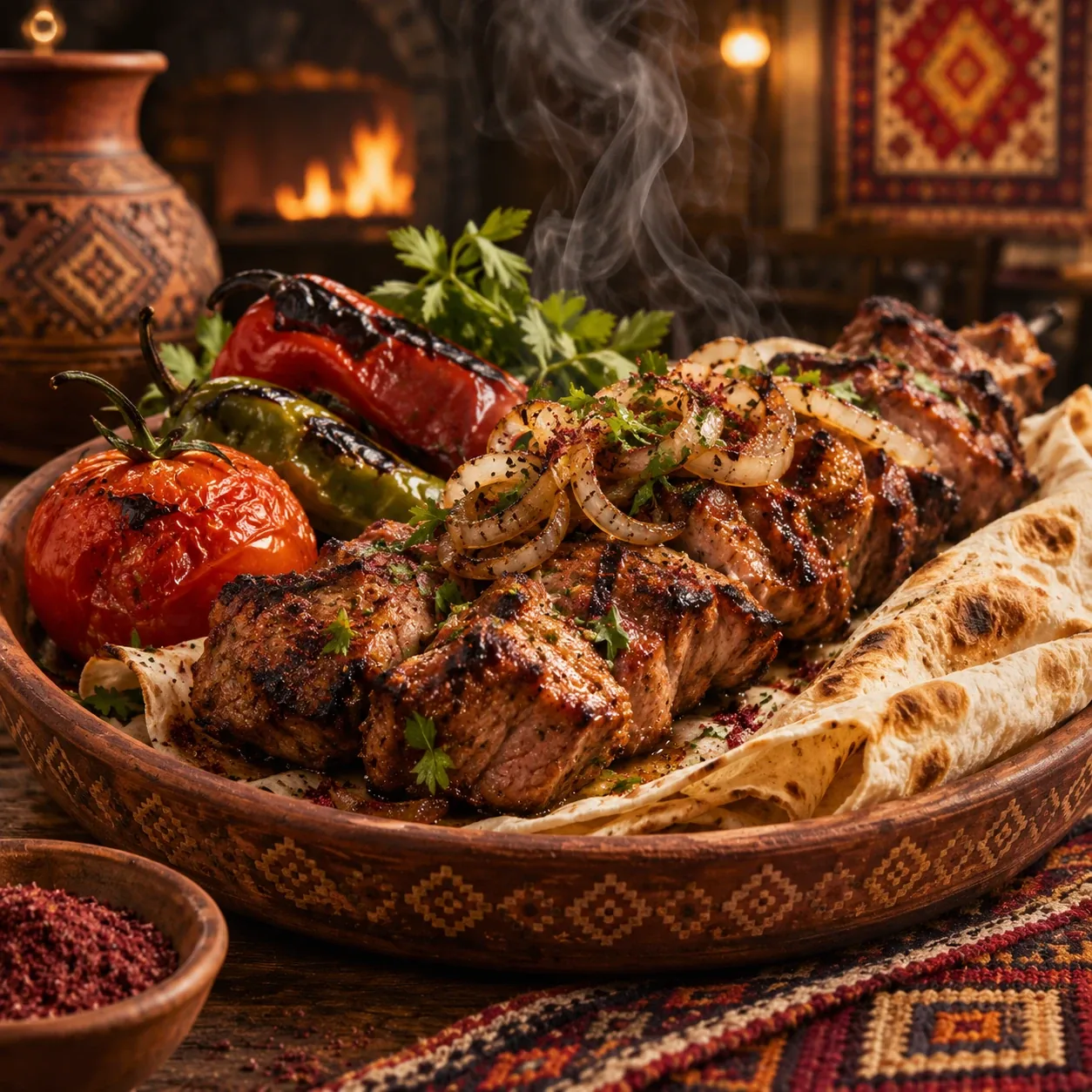
Խորոված · Хоровац · Khorovats
What is khorovats?
Khorovats is Armenian barbecue: large pieces of meat threaded on long skewers and grilled over hot coals until golden outside and juicy inside.
Pork is the favourite in Armenia today and lamb remains the classic; khorovats is also made with veal, chicken and fish. Because the word simply means “grilled”, it covers vegetables too: eggplants, tomatoes and peppers go on the coals beside the meat for the smoky salad that comes with it.
Khorovats is never just dinner. It is the heart of family celebrations, weekend trips out of town and long summer evenings: one person tends the mangal while everyone else waits at the table with lavash and herbs.
Where the name comes from
Khorovats means “grilled”: it comes from the Armenian verb «խորովել» (khorovel), “to grill, to roast”. The word for the skewer, շամփուր (shampur), has been used in Armenian since the classical period. In Russian it is «хоровац»; in Latin letters you will see khorovats, khorovac and xorovats.
History
Gathered around the fire
Skewer-grilling is loved across the Caucasus and beyond. What makes khorovats Armenian is its name, its customs and the table it gathers.
Middle Ages
By the tonir
The tonir ovens found in the medieval castle of Aruch were suited to baking lavash, cooking in pots and roasting meat. Tonir khorovats is still made today.
Village life
Khorovats in a pit
The Armenian Soviet Encyclopedia describes the old way: mutton wrapped in its own skin, buried in a pit about half a metre deep, with a fire lit on top.
20th century
A sign of good times
In Soviet times good meat was hard to come by, so a khorovats table meant life was good. Khorovats became the taste of every family occasion.
Since 2009
A khorovats festival
Since 2009 Lori province has hosted the Pan-Armenian Khorovats Festival, held for many years in Akhtala, where teams compete for the best taste and presentation.
Today
On every table
Today khorovats is grilled at home, outdoors and in restaurants all year round, and every family has its own grill master.
Preparation
How khorovats is made
Good khorovats comes down to three things: the right cut, simple seasoning and patient heat from the coals.
Ingredients
- Pork, lamb, veal or chicken
- Onions
- Salt and black pepper
- Eggplants, tomatoes and peppers
- Wide, flat skewers
- Charcoal or wood embers
Choose the cut
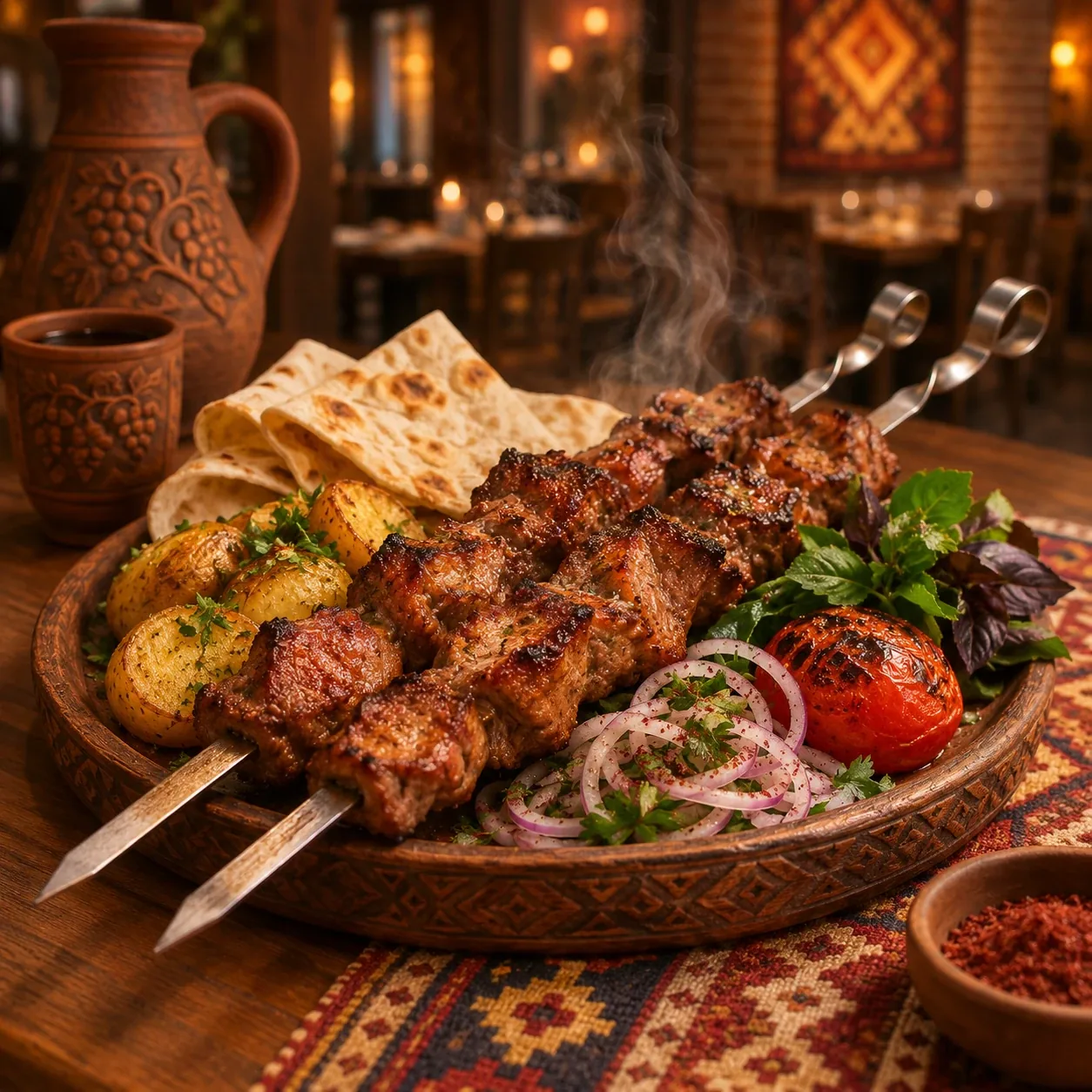
Armenians love bone-in cuts: pork chops and ribs, lamb chops. The meat is cut into large pieces, and bits of fat between them keep it juicy.
Season simply
The classic seasoning is salt, pepper and plenty of onion, sometimes herbs, left from a few hours to overnight. Some families add wine or cognac; vinegar, common in Russian shashlik, is rarely used.
Ready the coals
Khorovats is cooked over glowing embers, never open flame. Charcoal is the everyday choice, and many families like to burn dried grapevine cuttings or fruitwood down to coals.
Grill and turn
The skewers go onto the mangal and are turned often, for half an hour or more depending on the cut, with the biggest pieces in the middle of the skewer over the hottest coals.
Serve on lavash
The meat is pulled off the skewer with lavash and served with thinly sliced raw onion, fresh herbs and the grilled-vegetable salad.
- Eggplants, peppers and tomatoes are grilled whole until their skins blacken, left to steam for a moment, peeled and chopped with onion, garlic and fresh herbs: that is the khorovats salad.
The ritual
How Armenians enjoy khorovats
Khorovats is more than a way to cook meat: it is a day spent with family and friends.
A reason to gather
Birthdays, holidays, Sunday trips out of town: wherever Armenians gather, someone lights the mangal.
The grill master
By custom the men tend the mangal while the table is laid, and the grill master hears every guest's verdict.
Lavash on the table
Lavash pulls the meat off the skewer, keeps it warm and wraps each bite with onion and herbs.
Smoky vegetables
Eggplants, tomatoes and peppers grilled beside the meat become the salad no khorovats table goes without.
Toasts
A tamada leads the table: the first toast welcomes everyone and thanks the host. The glasses hold homemade fruit oghi or wine. Genats!
No hurry
Khorovats is grilled in rounds, so the feast lasts for hours, with conversation, songs and fresh skewers.
On the table
What is served with khorovats
Khorovats comes to the table with fresh, grilled and pickled sides.
Lavash
Thin, soft lavash to hold and wrap the meat.
Onions
Thinly sliced raw onion, sometimes with sumac.
Fresh greens
A generous bunch of herbs to nibble between bites.
Khorovats salad
Grilled eggplants, tomatoes and peppers, peeled and chopped with onion, garlic and herbs.
Potatoes
Potatoes grilled or baked in the coals.
Pickles
Pickled vegetables to cut through the richness of the meat.
Oghi and wine
Homemade fruit oghi, Armenian wine or brandy for the toasts.
Tan
Cold tan, a refreshing yogurt drink and the non-alcoholic choice.
From our grill
Khorovats at Ararat Tavern
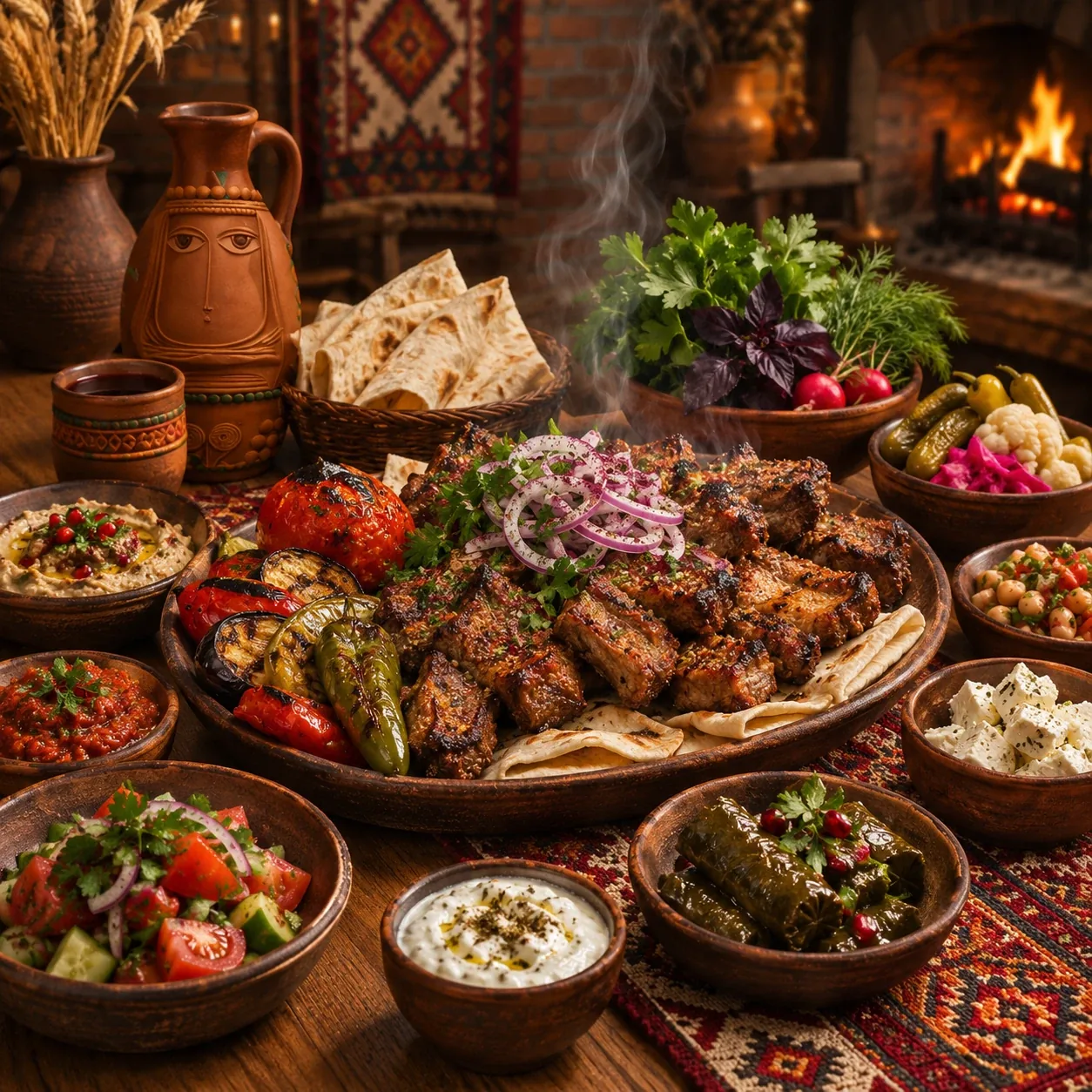
At Ararat Tavern khorovats comes straight off the coals: pork, lamb, veal and chicken, kebabs, fish, and vegetables and mushrooms from the mangal.
Coming with a group? Our khorovats sets are made for 3–4 and 5–6 people, so the whole table can share. Book ahead for weekends and celebrations.
Questions
Frequently asked questions about khorovats
What is khorovats?
Khorovats is Armenian barbecue: meat, and often vegetables, threaded on long skewers and grilled over hot coals. The word means “grilled”.
What is the difference between khorovats and shashlik?
They belong to the same family of skewer-grilled meat; shashlik is the Russian word. Armenian khorovats keeps the seasoning simple and rarely uses vinegar, often grills bone-in chops and ribs, and the word also covers grilled vegetables.
Is khorovats the same as lula kebab?
No. Khorovats is whole pieces, while lula kebab is minced meat with onion shaped around the skewer. Both are grilled over coals and served with lavash.
Which meat is best for khorovats?
Pork is the favourite in Armenia, especially bone-in chops and ribs, and lamb remains the classic. Veal, chicken and fish are grilled too.
How is khorovats marinated?
Traditionally with salt, pepper and plenty of onion, sometimes herbs, for a few hours to overnight. Some add wine or cognac; vinegar is rarely used.
What is khorovats cooked over?
Glowing embers, not open flame. Charcoal is standard, and many families like dried grapevine cuttings or fruitwood.
How long does khorovats take to grill?
Usually half an hour or more over moderate coals, turning often. Thick bone-in pieces take longer; lula kebab takes about 10–15 minutes.
What is served with khorovats?
Lavash, raw onion, plenty of fresh herbs and the grilled-vegetable salad, with oghi, wine or brandy for the toasts, or cold tan.
What is khorovats salad?
Eggplants, peppers and tomatoes grilled whole on the coals, peeled and chopped with onion, garlic and herbs. It is served warm or cold.
What is tonir khorovats?
Meat or vegetables on skewers hung inside a tonir, the clay oven used to bake lavash.
Is there a khorovats festival in Armenia?
Yes. Since 2009 Lori province has hosted the Pan-Armenian Khorovats Festival, held for many years in Akhtala.
Do you have khorovats for groups?
Yes, our menu has khorovats sets for 3–4 and 5–6 people. Tell us the number of guests when you book and we will suggest the right one.