
The sweet end of an Armenian feast
Pakhlava and Gata at Ararat Tavern
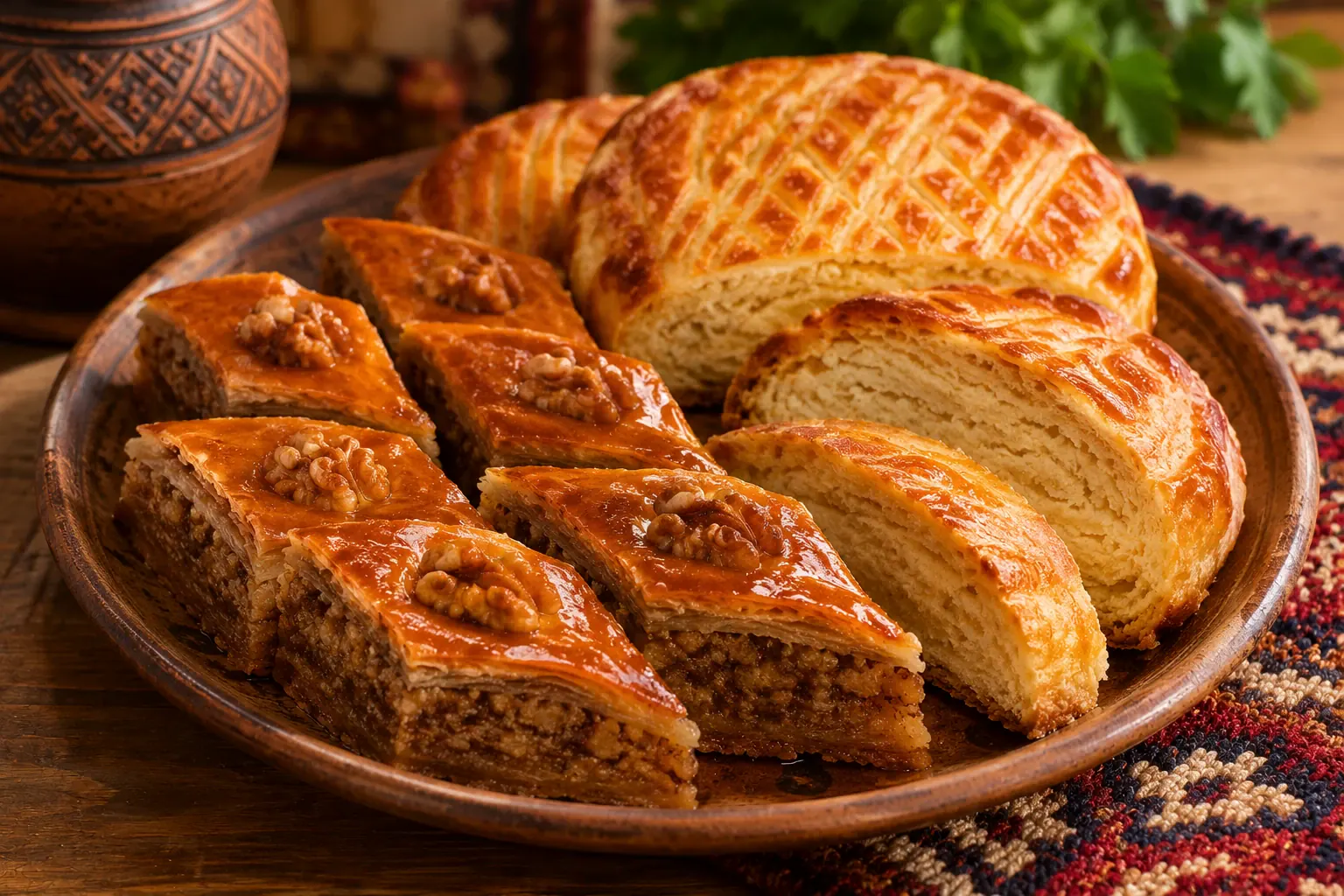
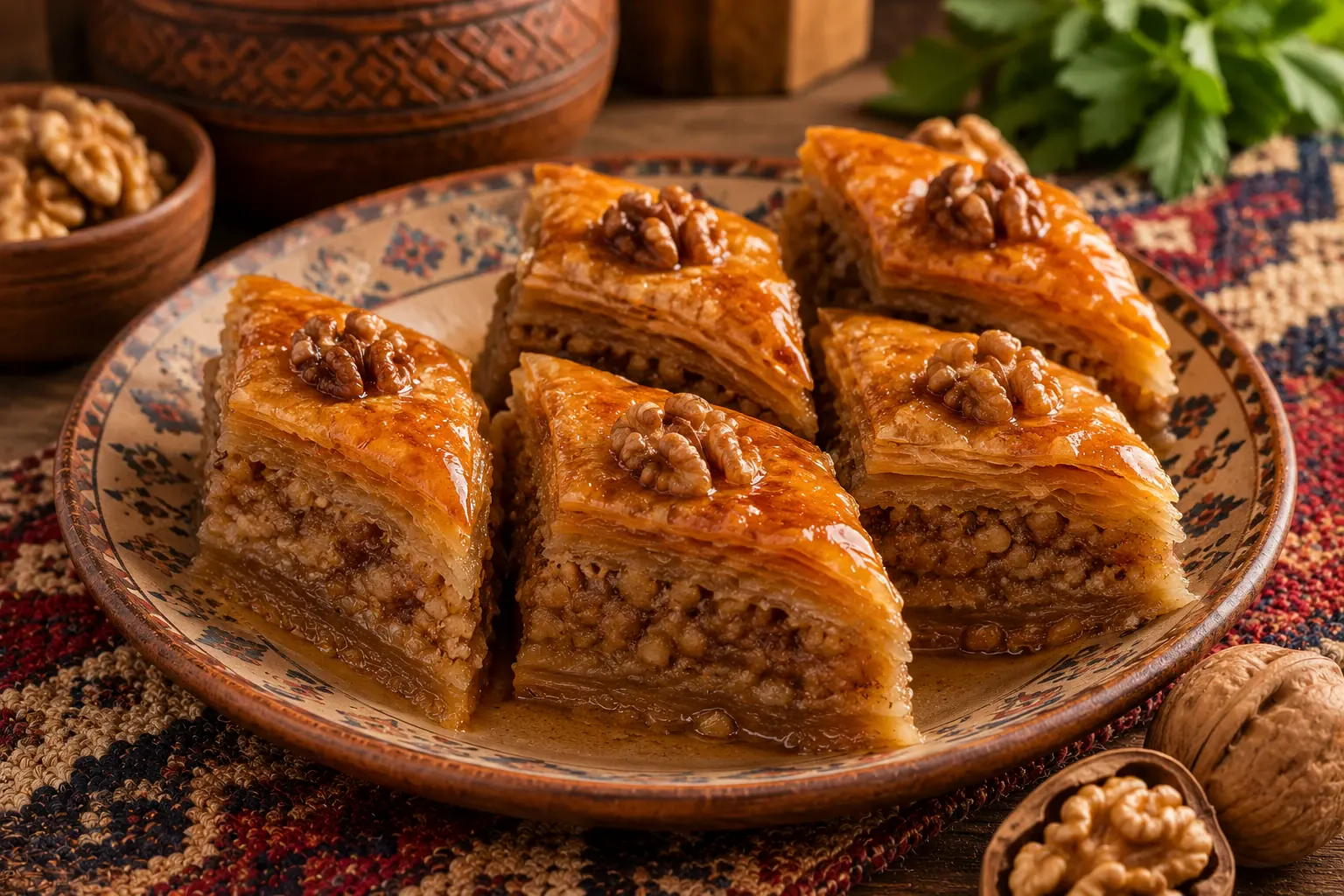
Thin-layered pakhlava with walnuts and honey, and golden gata with a crumbly khoriz filling. An Armenian table rarely ends without these two sweets and a cup of coffee or tea.
- Occasion
- Holidays and guests
- Baking
- 30–40 minutes
- Best with
- Coffee or tea
- Table
- For sharing
Փախլավա · Գաթա · Pakhlava · Gata
What are pakhlava and gata?
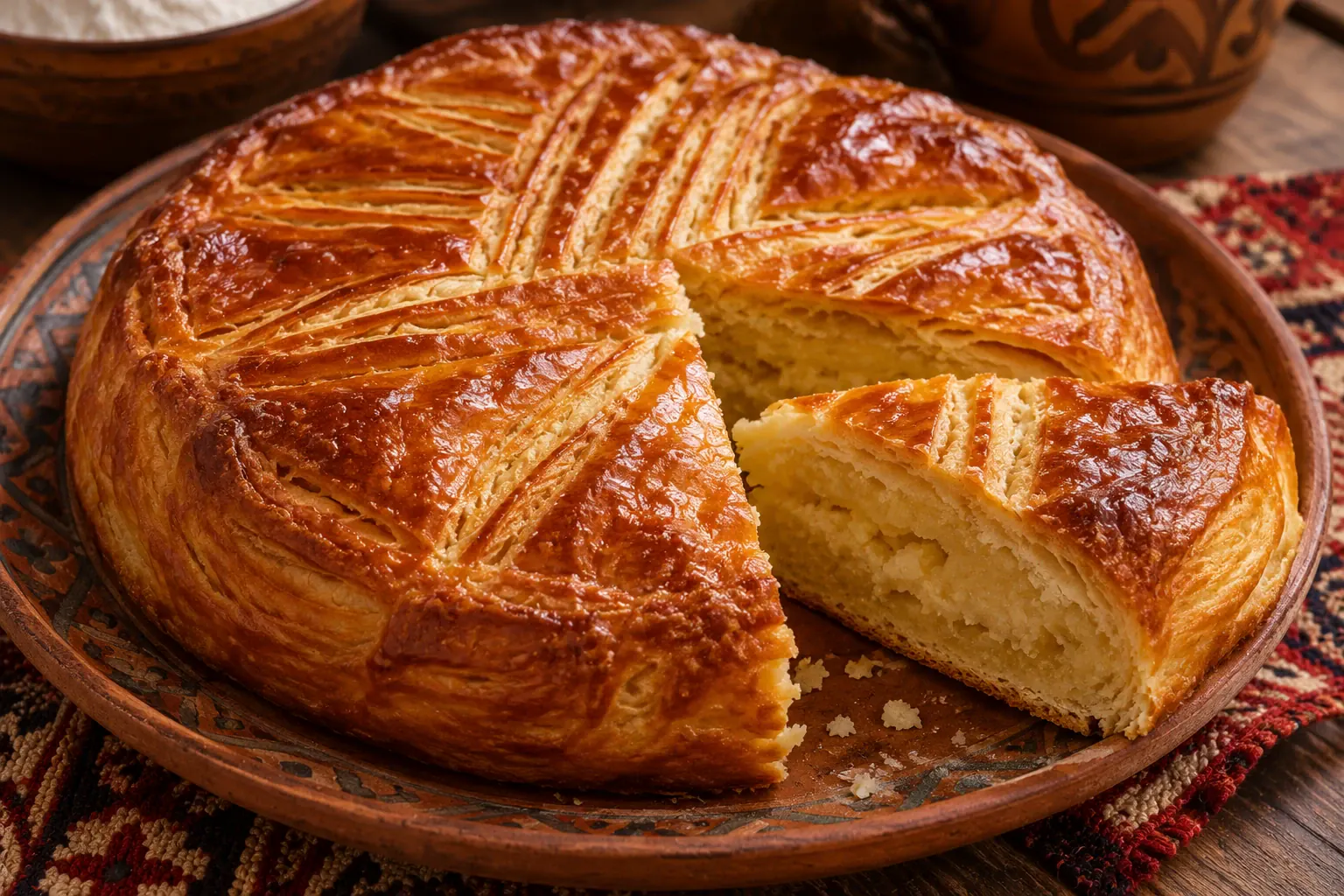
Pakhlava is a dessert of many paper-thin layers of pastry with walnuts and sugar, soaked in honey; gata is a sweet pastry of rich, buttery dough whose classic filling is khoriz: flour, butter and sugar.
Pakhlava is cut into diamonds, baked until golden and finished with honey (today often a sugar syrup). The result is crisp, sweet and fragrant, and the walnuts are often spiced with cardamom.
Gata is more of a home bake: Gyumri, Yerevan, Vanadzor, Stepanavan, Gavar and Artsakh each have their own. It can be round or triangular, layered or soft, filled with khoriz or walnuts, brushed with egg yolk and patterned with a wooden gata stamp (gatanakhsh) or a fork.
About the names
The word gata (գաթա) appears in Armenian writing from the 13th century, in the fables of Vardan Aygektsi; where it comes from is unknown. In Russian it is «гата». Pakhlava (փախլավա) is what Armenia, the Caucasus and Iran call the layered nut pastry known in English as baklava; in Russian it is «пахлава».
History
The sweet of the festive table
In an Armenian home, gata and pakhlava stand for celebration, hospitality and family gatherings.
An old custom
Stamped festive bread
Stamping ritual bread is a very old custom: clay stamps were found in Early Bronze Age layers at Metsamor, and the folk wooden gata stamps carry the tradition on.
13th century
The word in writing
The word gata appears in one of Vardan Aygektsi's fables, and later in medieval lyric poetry.
Village life
Tonir, stamp and coin
The women of a house kneaded the dough with their neighbours and fired up the tonir, and every family had its own stamp pattern. Gata was baked for christenings, weddings and funeral meals, and a coin went into a round gata to bring luck to whoever found it.
Around 1830
Kyavar pakhlava
Settlers from Bayazet brought their honey pakhlava of 22–25 layers to Nor Bayazet, today's Gavar. It is known today as Kyavar pakhlava.
Today
National heritage
Gata-making, the gata-stamp tradition and Kyavar pakhlava are on Armenia's national list of intangible cultural heritage, and since 2014 the village of Khachik in Vayots Dzor has held a gata festival.
Preparation
How pakhlava and gata are made
Both desserts start from the same things, flour, butter and sugar, but gata is about khoriz and soft dough, while pakhlava is about thin layers and patience.
Ingredients
- Wheat flour
- Butter
- Matsoni or milk
- Eggs
- Walnuts
- Honey and sugar
The gata dough
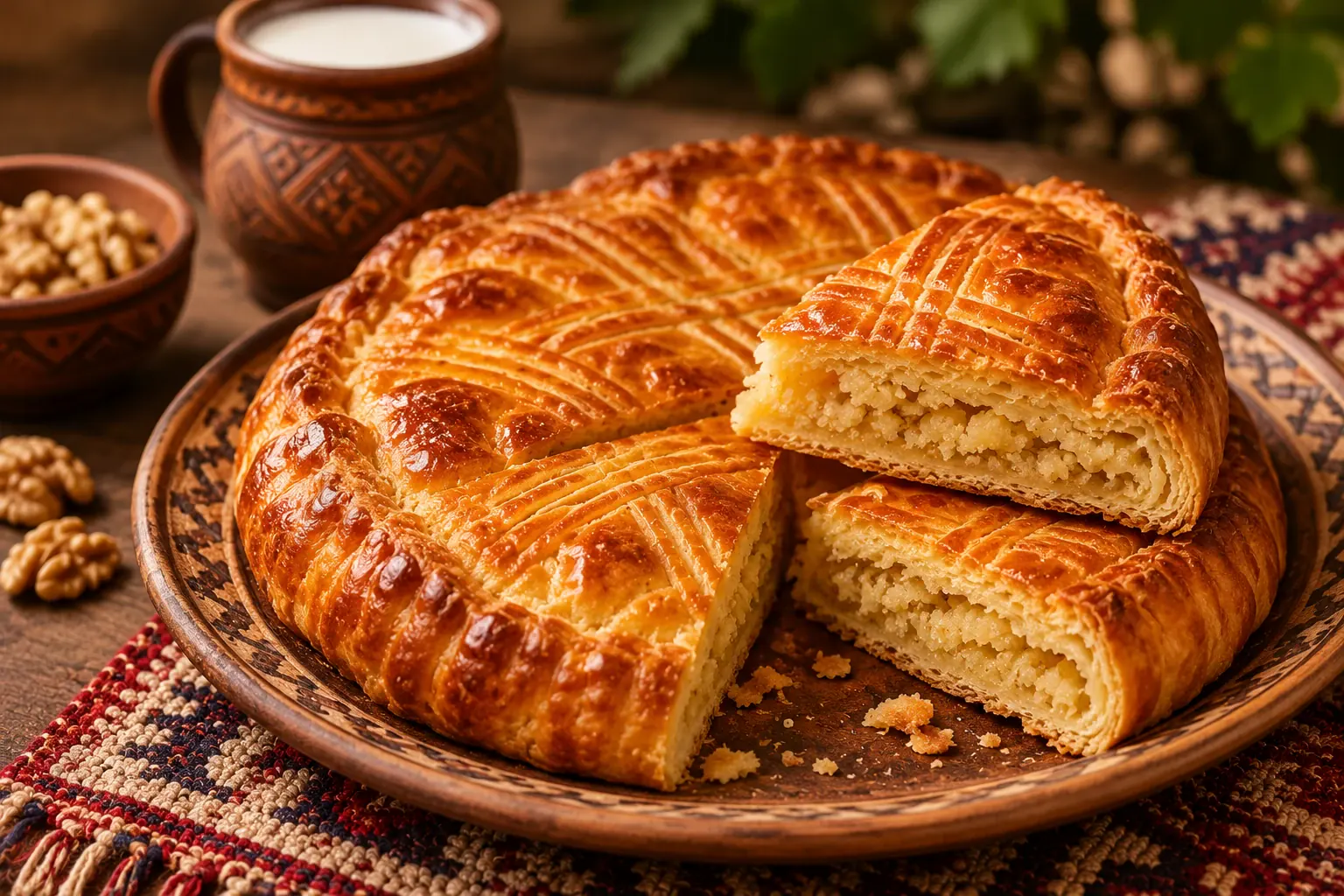
Flour is kneaded with butter, egg and matsoni or sour cream (or made into a yeast dough with milk), and the dough is left to rest.
Khoriz
Flour is rubbed with melted butter and sugar into a crumbly filling, sometimes with vanilla. Gyumri gata uses a khoriz without sugar.
Baking the gata
The dough is rolled out, filled with khoriz, folded and shaped, brushed with yolk, patterned and baked at about 180 °C for 30–35 minutes, until golden.
The pakhlava layers
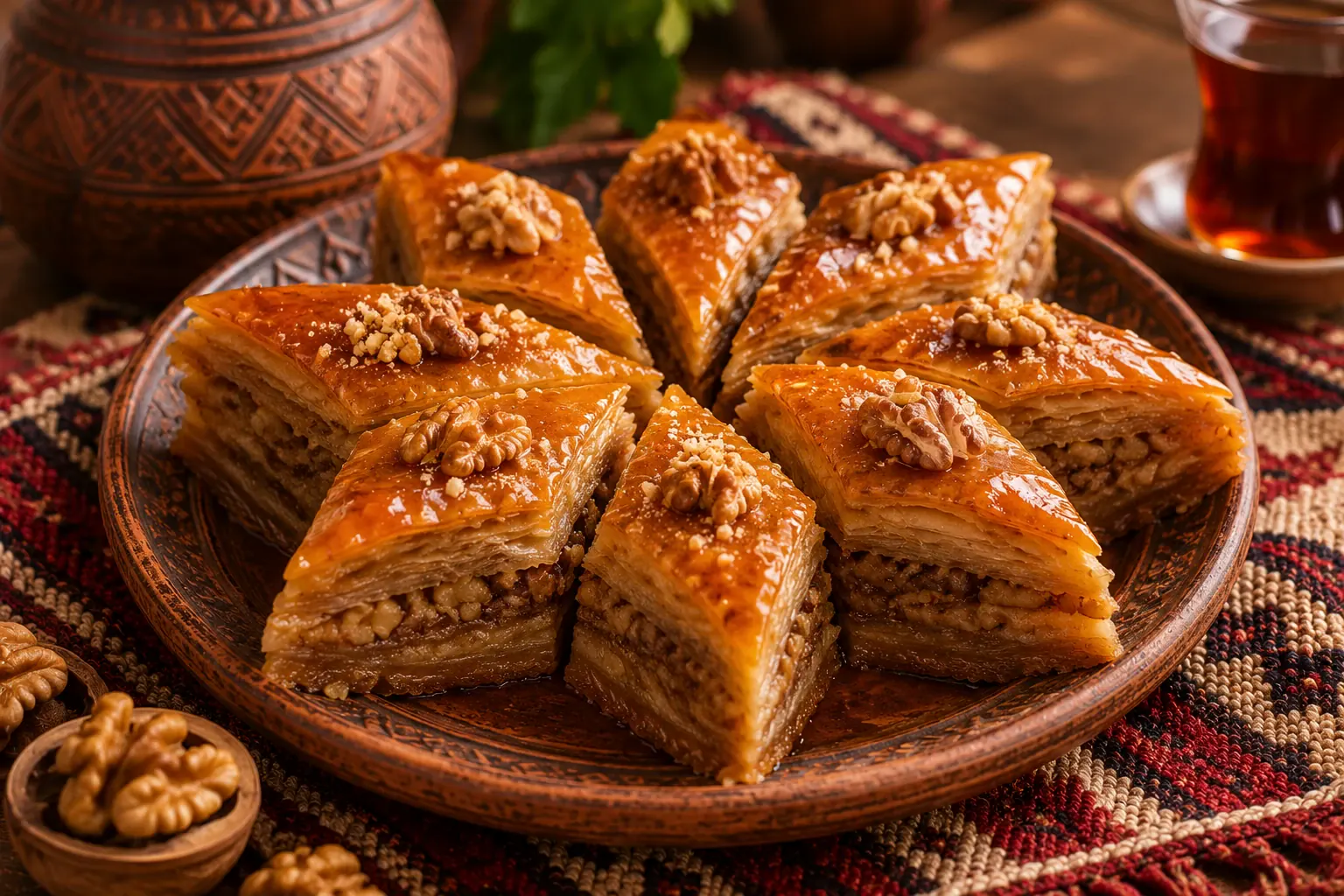
Thin sheets of dough are stacked, each brushed with butter, with chopped walnuts, sugar and cardamom between them.
Diamonds
Before baking, the pakhlava is cut into diamonds; it then bakes at about 180 °C for 30–40 minutes, until golden.
Honey
Honey (or sugar syrup) is poured along the cuts of the hot pakhlava, and it rests for a few hours to soak it up.
- Pakhlava is at its best once the honey has soaked in, and gata when the khoriz stays crumbly and buttery.
The tradition
How pakhlava and gata are enjoyed
In an Armenian home, sweets are part of hospitality: a guest is offered coffee or tea and a piece of gata or pakhlava.
With coffee or tea
Tea and Armenian coffee are the traditional companions of pakhlava and gata.
The lucky coin
A coin or a bean baked into a round gata brings luck to whoever finds it; the same custom belongs to the New Year “year bread”.
The New Year table
Gata is one of the must-have dishes of the New Year table, and in Gavar a New Year table without pakhlava is hard to imagine.
The gata dance
At weddings, guests dance with a gata to bring the new family luck and plenty.
Easter
Alongside red eggs, fish and pilaf, gata is a fixture of the Easter table.
To end the meal
After the khorovats and tolma, a big table ends with sweets and coffee.
On the table
What to serve with pakhlava and gata
Traditionally gata and pakhlava come with tea or Armenian coffee; the rest is our suggestion for a fuller dessert table.
Armenian coffee
Strong coffee brewed in a jazve.
Tea
Black tea, or tea with mountain herbs such as thyme.
Seasonal fruit
Pomegranate, grapes or fresh fruit.
Murabba
Home-made preserves of green walnut, fig or apricot.
Armenian brandy
A glass of brandy for the festive table.
Dried fruit and nuts
Dried fruit and walnuts.
From our kitchen
Pakhlava and Gata at Ararat Tavern
Pakhlava and gata are on Ararat Tavern's dessert menu, the traditional end of an Armenian meal.
Order them with coffee or tea after khorovats, khashlama or tolma. For weekends, book your table in advance.
Questions
Frequently asked questions about pakhlava and gata
What is gata?
Gata is an Armenian sweet pastry of rich, buttery dough, often filled with khoriz, a crumbly mix of flour, butter and sugar, and sometimes with walnuts.
What is pakhlava?
Pakhlava is a dessert of many thin pastry layers with walnuts and sugar, often spiced with cardamom, cut into diamonds and soaked in honey or syrup.
What is khoriz?
Khoriz is the classic gata filling: flour, butter and sugar, sometimes with vanilla. In Gyumri gata it is made without sugar.
How is pakhlava different from baklava?
They belong to the same family: pakhlava is the name used in Armenia, the Caucasus and Iran, and many peoples of the region have their own version. Armenia's best known is the honey-soaked Kyavar (Gavar) pakhlava.
When is gata baked?
For family celebrations and holidays: weddings, christenings, New Year and Easter, and many families also bake it for Trndez. Today it is an everyday treat too.
Why is a coin put in the gata?
By an old custom a coin or a bean is baked into a round gata, and whoever finds it is said to be lucky. At New Year the same custom belongs to the ritual “year bread”.
What is served with pakhlava and gata?
Traditionally tea or Armenian coffee. In Gavar, pakhlava is sometimes eaten wrapped in lavash.
What is Geghard gata?
A round, patterned gata, often stamped with the word “Geghard”, sold at the stalls along the road to Geghard monastery.
Is there a gata festival?
Yes. Since 2014 the village of Khachik in Vayots Dzor has held an autumn gata festival with a giant gata at its centre.
How long do pakhlava and gata bake?
Gata bakes for about 30–35 minutes and pakhlava for 30–40 minutes at around 180 °C; the pakhlava is then soaked in honey and left for a few hours.
Can I order pakhlava and gata at Ararat Tavern?
Yes, both are on our dessert menu. Book a table on this page or give us a call.