
Autumn arishta, winter pilaf
Arishta and pilaf at Ararat Tavern
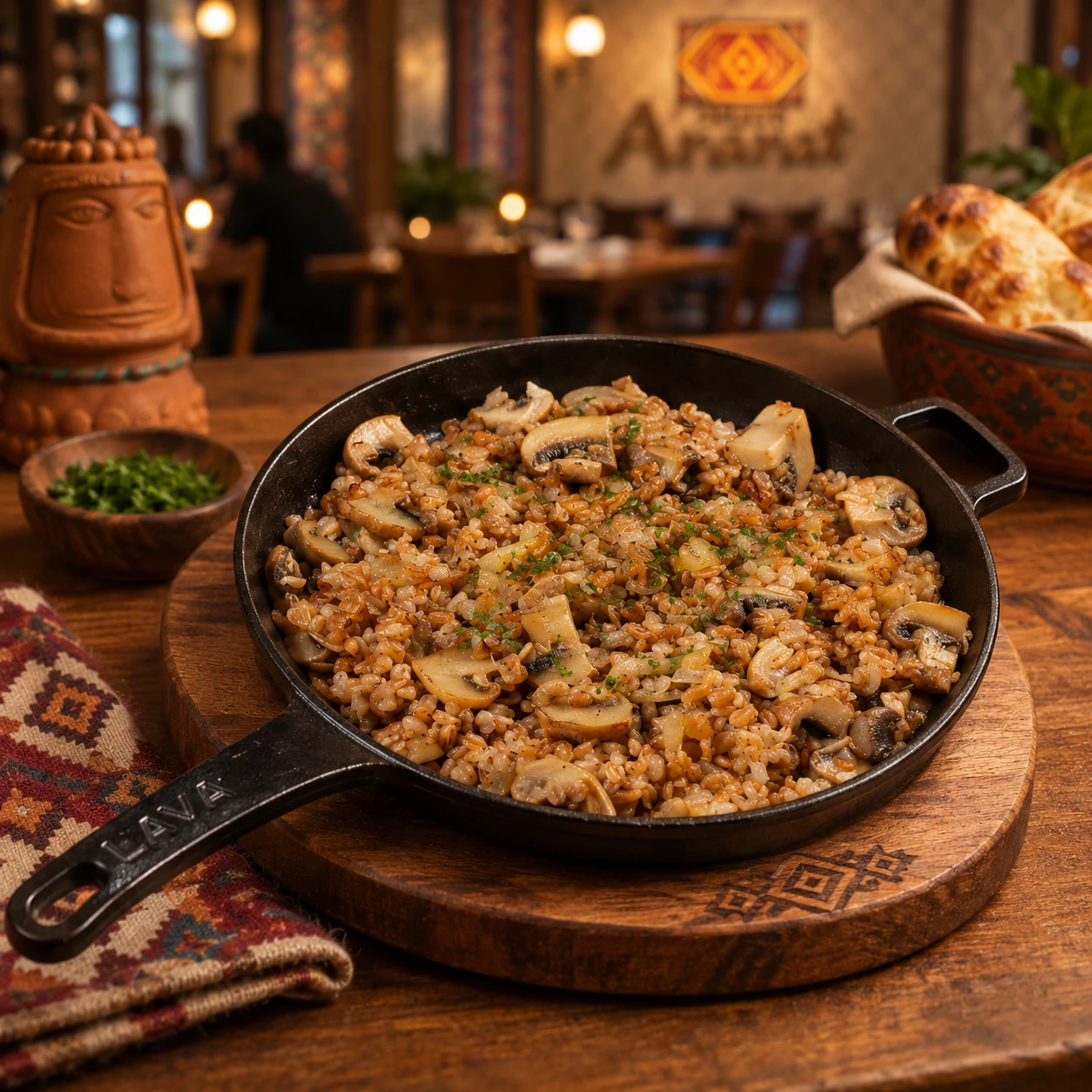
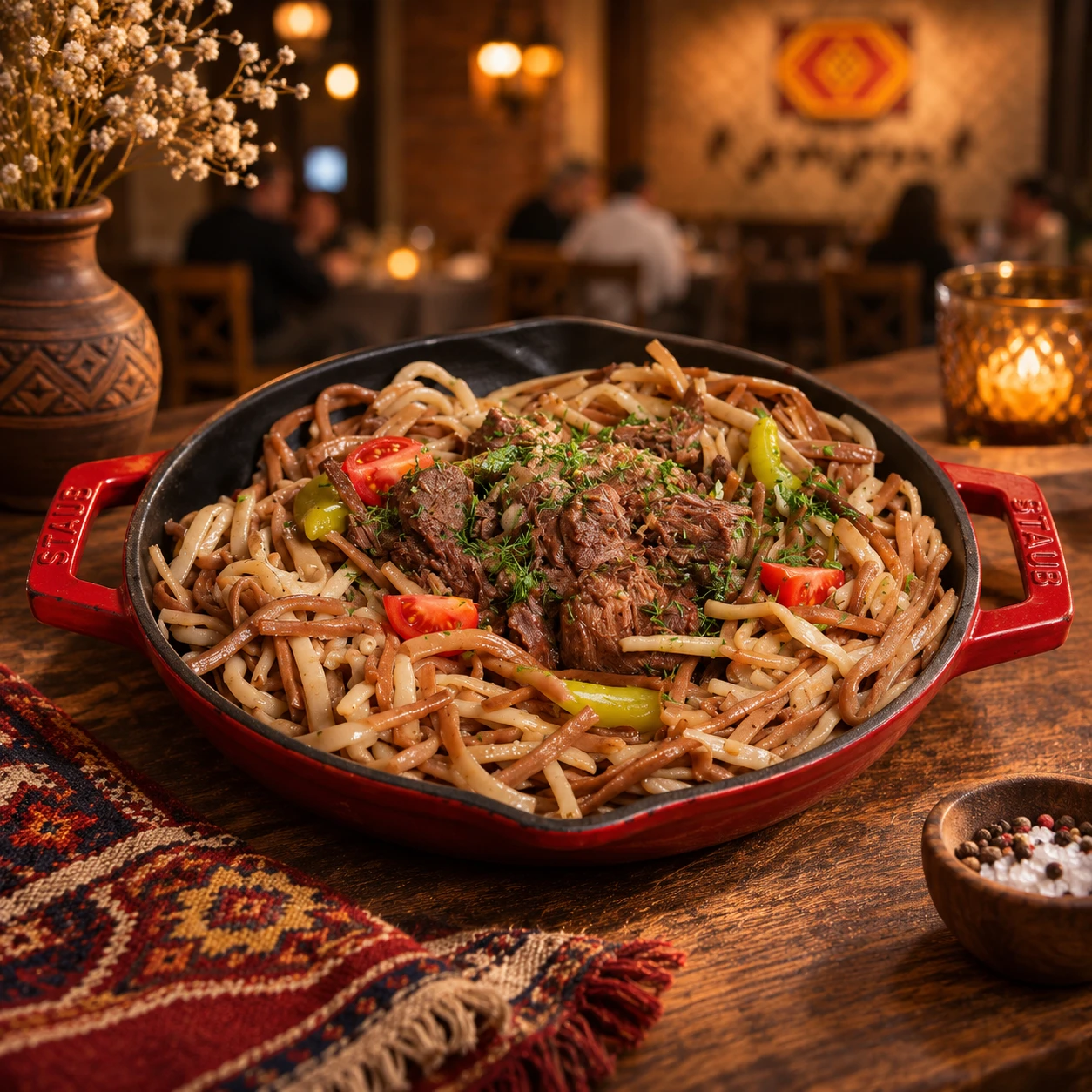
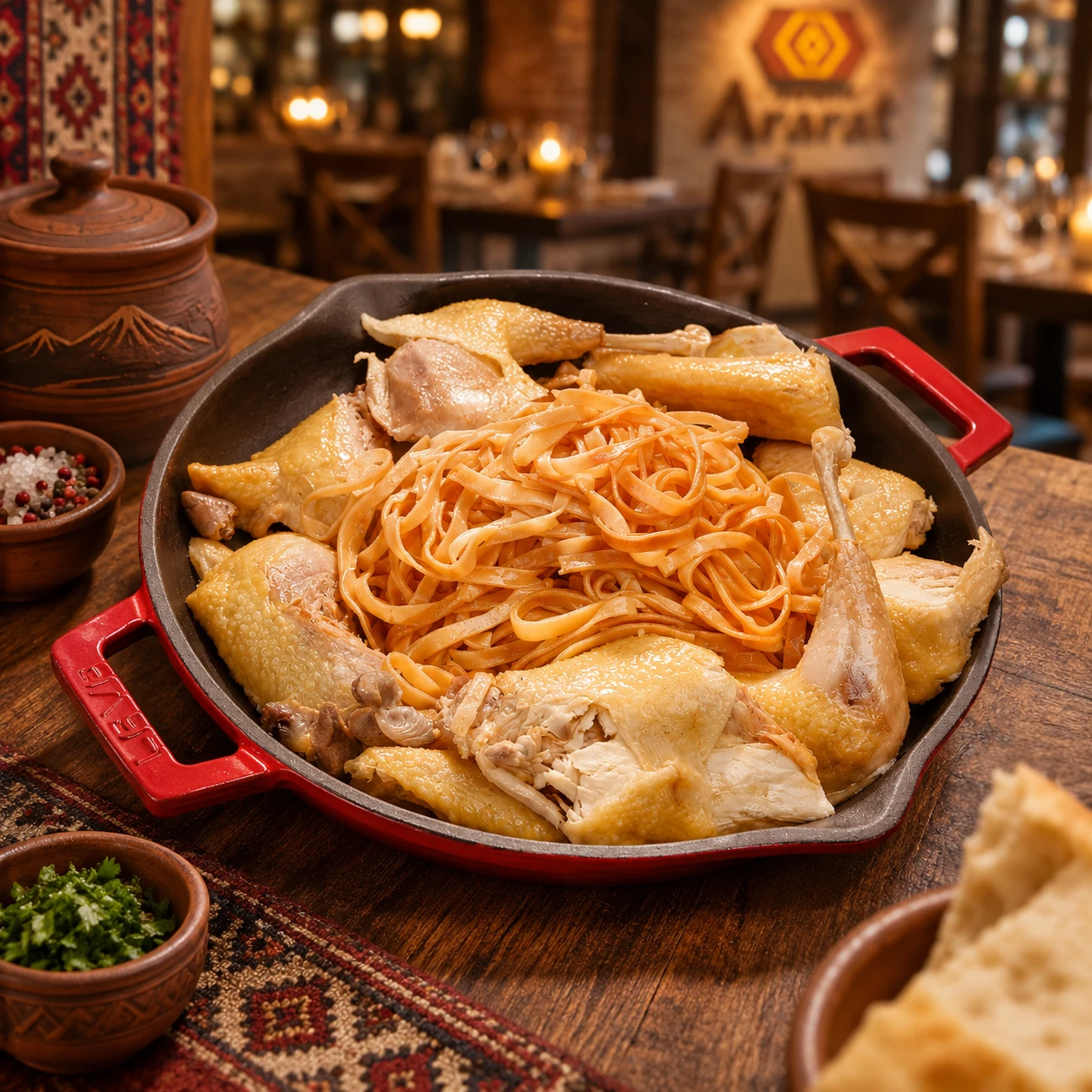
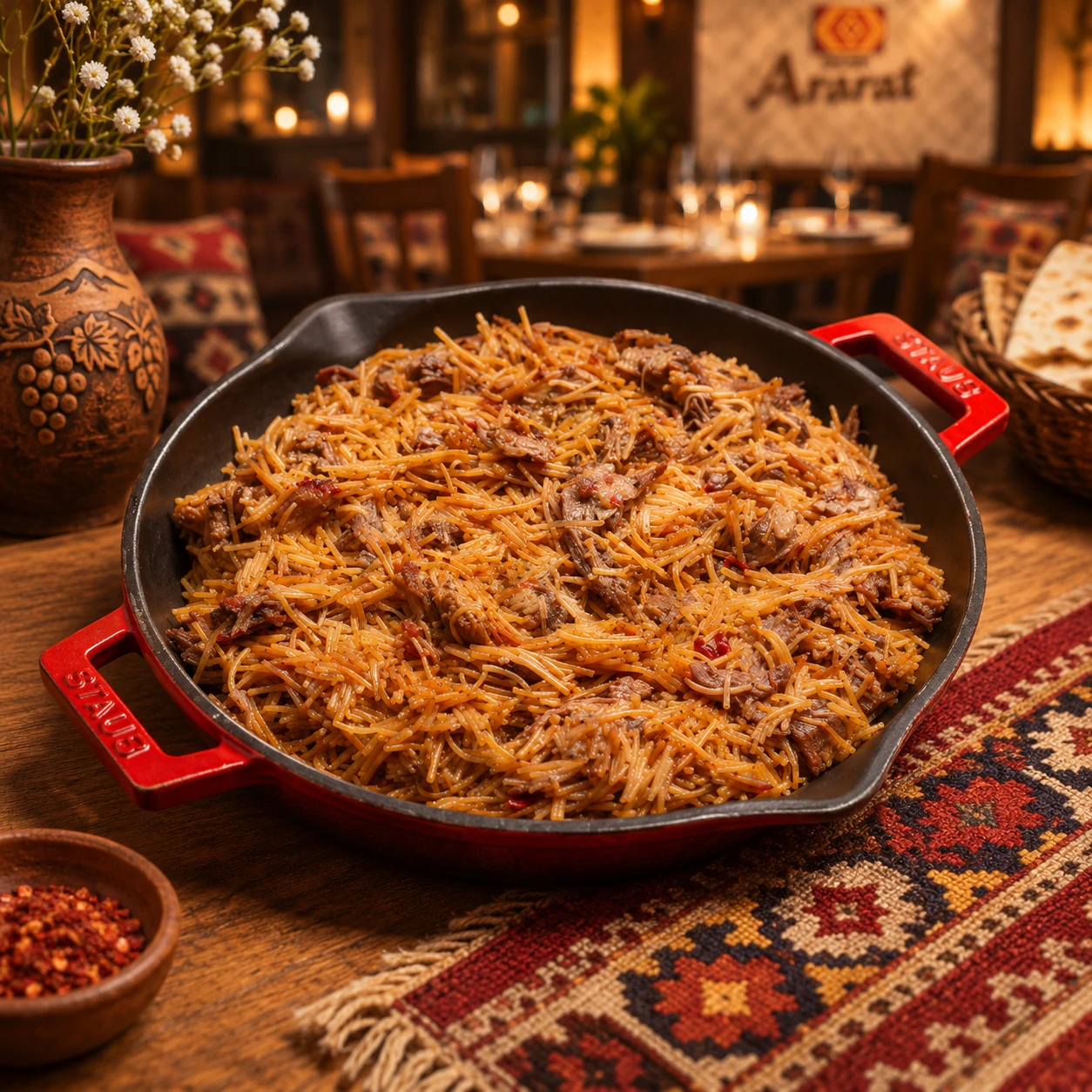
Homemade Armenian noodles, dried and toasted for winter, and the pilafs of the Armenian table. We serve arishta with ghavurma, tushonka or chicken, emmer pilaf with mushrooms and our Ararat vermicelli.
- Made
- In autumn
- Arishta
- Homemade noodles
- Pilaf
- Rice, bulgur, emmer
- Table
- For 3–4 people
Արիշտա · Аришта · Arishta
What is arishta?
Arishta is a homemade Armenian wheat noodle: a stiff dough, with or without eggs, is rolled thin, cut into ribbons, dried in the sun and toasted, then stored for winter.
Families made arishta in autumn, after the new harvest, and neighbouring women often worked together, kneading, rolling and cutting to songs; in Javakhk the dough was even kneaded by dancing on it. A 1935 record from Leninakan (today's Gyumri) says that in the long winter arishta was cooked now and then in place of bread. It is still made in villages of Aragatsotn, Shirak and Kotayk.
Arishta is boiled as a side dish, cooked in broth or turned into pilaf. Pilaf itself is held to be a valued and respected dish in Armenian tradition: rice is the most common base, but Armenians also make pilaf from bulgur, hachar (emmer) and arishta, and serve it with chicken, ghavurma or mushrooms. At Easter, a rice pilaf with raisins, dried fruit, walnuts and almonds is a favourite.
Preparation
How arishta pilaf is made
The home method from the Armenian Household Encyclopedia: dried arishta, salt and ghee (clarified butter). The noodles are toasted first and steamed in ghee at the end. In Akhalkalak it was also mixed with rice or bulgur.
- Dried homemade arishta
- Ghee (clarified butter)
- Salt
- Water
- Rice or bulgur, if you like
Toast
Dried arishta is toasted lightly in fat until dark golden.
Boil
It is boiled in salted water for 15–20 minutes, drained and rinsed with warm water.
Steam
Part of the ghee is melted in a wide pot, the arishta goes in with the rest of the ghee on top, and it is cooked, covered, over low heat for 15–20 minutes.
Serve
Arishta pilaf is served hot, on its own or mixed with rice or bulgur.
From our kitchen
Arishta and pilaf at Ararat Tavern
At Ararat Tavern you can order arishta as a side, with ghavurma or fried potatoes, and, for 3–4 people, homemade tushonka (stewed meat) with arishta or potatoes and home-raised chicken with arishta or rice. The menu also has emmer pilaf with mushrooms as a side and our Ararat vermicelli for 3–4 people.
Arishta and pilaf on our menu
Ararat vermicelli
11 500 AMDvermicelli, veal
Beech with mushrooms
1 700 AMDspelt, mushrooms, spices
Arishta
1 500 AMDarishta noodles, vegetable oil, spices
Questions
Frequently asked questions about arishta and pilaf
What is arishta?
Homemade Armenian wheat noodles. The dough, with or without eggs, is rolled thin, cut into ribbons, dried in the sun and toasted in an oven or a tonir, then kept for winter.
How is arishta cooked?
As a side it is boiled in salted water. For pilaf it is toasted in fat, boiled, drained and steamed with ghee, on its own or mixed with rice or bulgur. It also goes into broths.
What is hachar?
Hachar is emmer (Triticum dicoccum), an ancient hulled wheat, in Russian полба. Archaeobotanical finds show it was one of the main crops of Bronze Age Armenia, and pilaf of hachar with mushrooms or meat is a well-known Armenian dish.
Which pilafs do Armenians make?
Rice pilaf is the most common, but there are pilafs of bulgur, emmer and arishta, with chicken, ghavurma, mushrooms or dried fruit. At Easter, a rice pilaf with raisins, dried fruit, walnuts and almonds is a favourite.
Is arishta always made with eggs?
No. Some doughs are just flour, water and salt, others add eggs; both are traditional.
Can I order arishta and pilaf at Ararat Tavern?
Yes: plain arishta, arishta with ghavurma or fried potatoes, homemade tushonka with arishta, home-raised chicken with arishta, emmer pilaf with mushrooms and Ararat vermicelli are on our menu. Book a table on this page or call us.