Before refrigerators, meat that could not be eaten fresh had to be salted, dried or sealed in fat, and the Armenian kitchen has three classic answers. Ghavurma is meat boiled, browned and kept under a layer of fat. Basturma is beef that is salted, pressed and dried in a coat of spice paste. Sujukh is a dry, spiced sausage. All three were born of the need to make meat last, and all three are still on the Armenian table today.
Ghavurma, also called tahal in Armenian, is the most homely of them and was made for the winter. Beef or mutton is boiled, then browned in fat, often the fat skimmed off the broth, pressed tightly into clay pots and covered with hot melted fat. Kept in a cold place, it lasted the whole winter: each time a portion was taken out, more fat was poured over the rest so that the meat stayed sealed. It is eaten hot or cold, with potatoes, eggs, pilaf or in soup. The name is shared by many cuisines of the region and means “fried”.
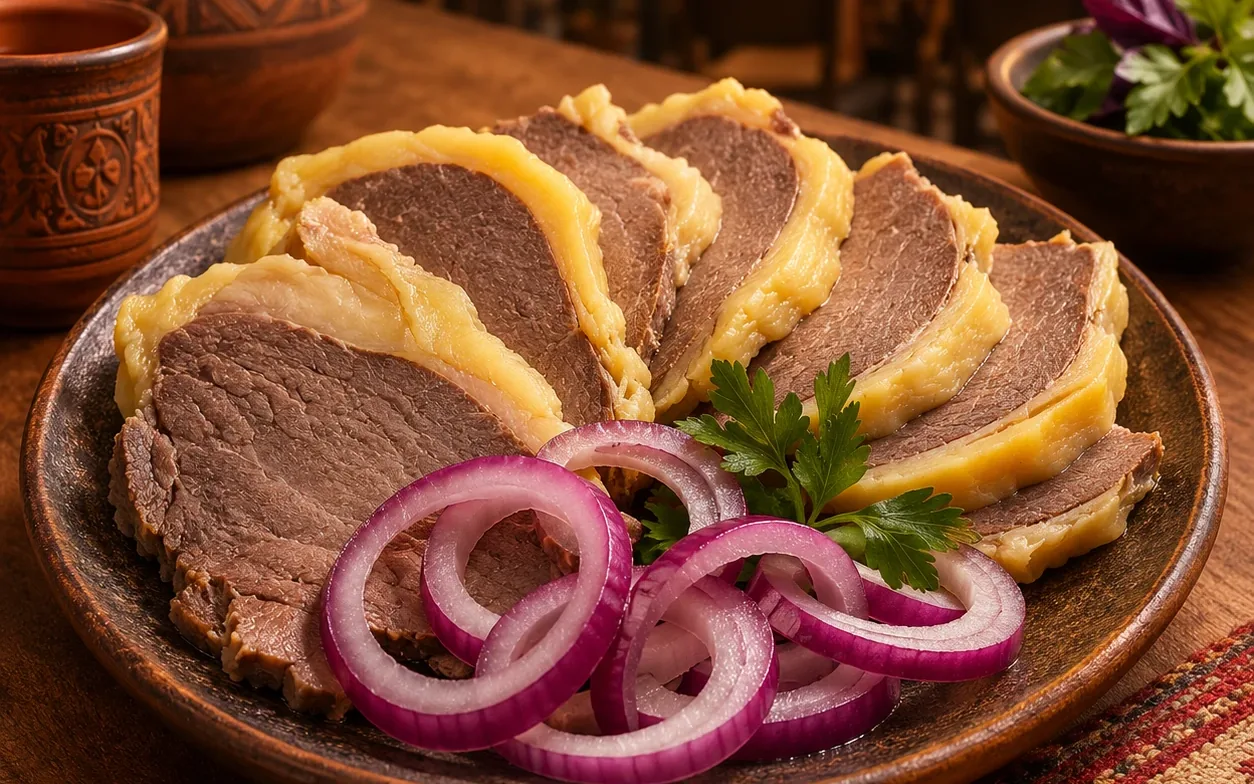
Basturma takes more patience. Tender beef is kept in salt for several days, rinsed, pressed under a board and a weight, then hung up to dry. It is coated several times with chaman, a thin paste of pounded fenugreek seed, garlic and red pepper, and dried again in the shade until it is firm enough to slice almost transparently thin. The rust-red coating is what gives basturma its sharp, unmistakable aroma. The name comes from Turkish and is usually linked to a verb meaning “to press”; in Armenian basturma is also called chormis or apukht.
Basturma belongs to a tradition shared across Anatolia and the wider region, and Armenians were among its best-known makers. In the late Ottoman period the city of Kayseri, ancient Caesarea (Gesaria in Western Armenian), was famous for it: a British consular trade report for 1893, published in 1894, singled the city out for its basturma. Much of the making and trade was in the hands of local Armenians, though the city's Greeks, and later its Turks, cured it at home too. After 1915, survivors of the Genocide carried the craft to the Middle East, Greece and beyond. Kayseri, for its part, is still famous for its basturma.
Sujukh is the dry sausage of the same wide region, known from the Balkans to Central Asia under related names. In Armenia it is made mostly from beef: salted meat and fat are minced, seasoned with garlic, red pepper and other spices, stuffed into thin casings, pressed flat and hung up to dry for about two weeks. Yershik is the general Armenian word for sausage; sujukh is the dry, spiced kind.
In Armenia the word has a second meaning that often surprises visitors. Sweet sujukh is not meat at all: walnut halves are threaded on a string, dipped again and again in grape juice thickened with flour and hung up to dry. Also called sharots, it is a close relative of Georgian churchkhela and of similar sweets in Turkey and Cyprus, and the tradition of making sweet sharots in Ashtarak is on Armenia's national list of intangible cultural heritage.
Today these meats are everyday food as much as winter stores. Thin slices of basturma and sujukh come to the table before the meal with cheese, herbs and lavash. Basturma goes into omelettes and salads, sujukh is fried in a pan, often with eggs, as it is across the region, and ghavurma, warmed in its own fat, turns eggs, potatoes or a bowl of soup into a filling winter meal.
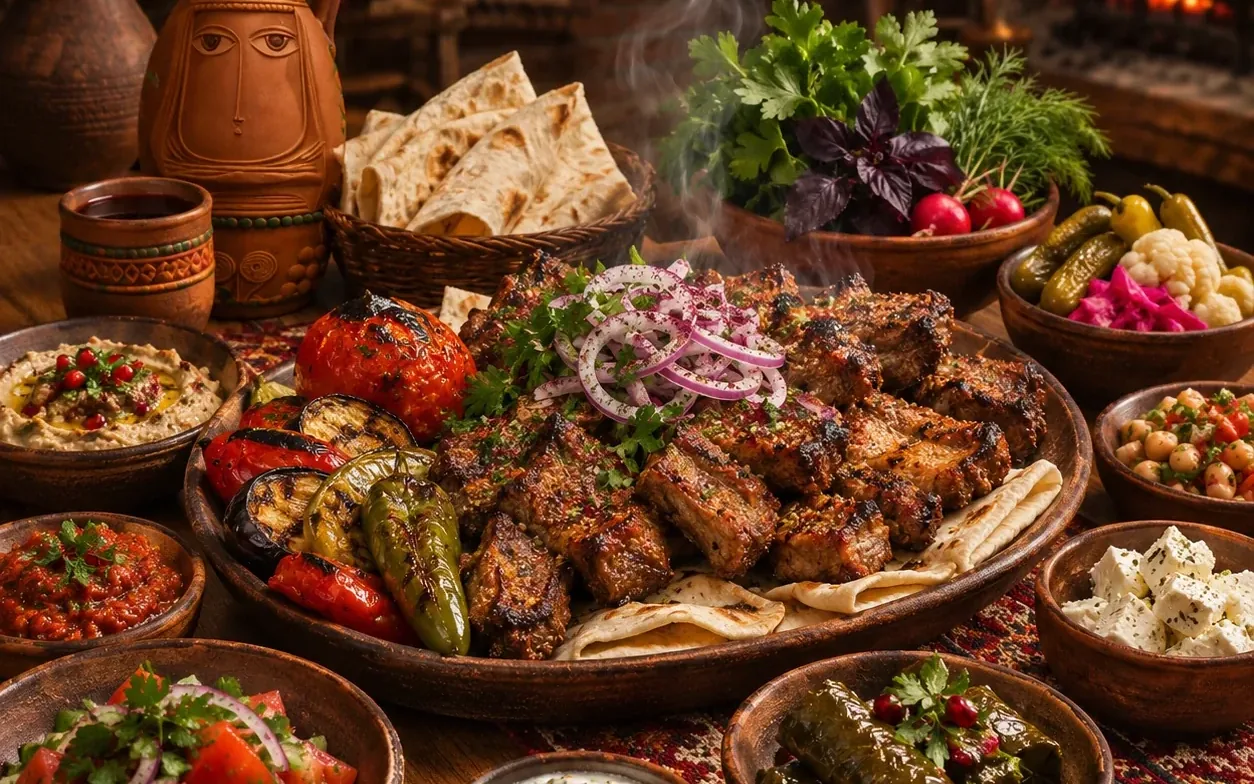
At Ararat Tavern ghavurma comes several ways: as a cold starter with red onion, in an omelette, in lentil soup and with arishta noodles. Basturma goes into an omelette and a salad with sheep cheese, and the meat platter brings basturma and sujukh together on one plate. Book a table and order them with a glass of Armenian brandy or an Artsakh fruit vodka.