By mid-November the mornings in Yerevan turn sharp, and the Armenian table changes with them. The winter kitchen rests on two things: dishes that need hours of slow heat, and the stores laid in during autumn, when the garden and orchard gave their last and meat was prepared to last the whole winter. Much of what Armenians still love to eat in December and January comes from that old rhythm.
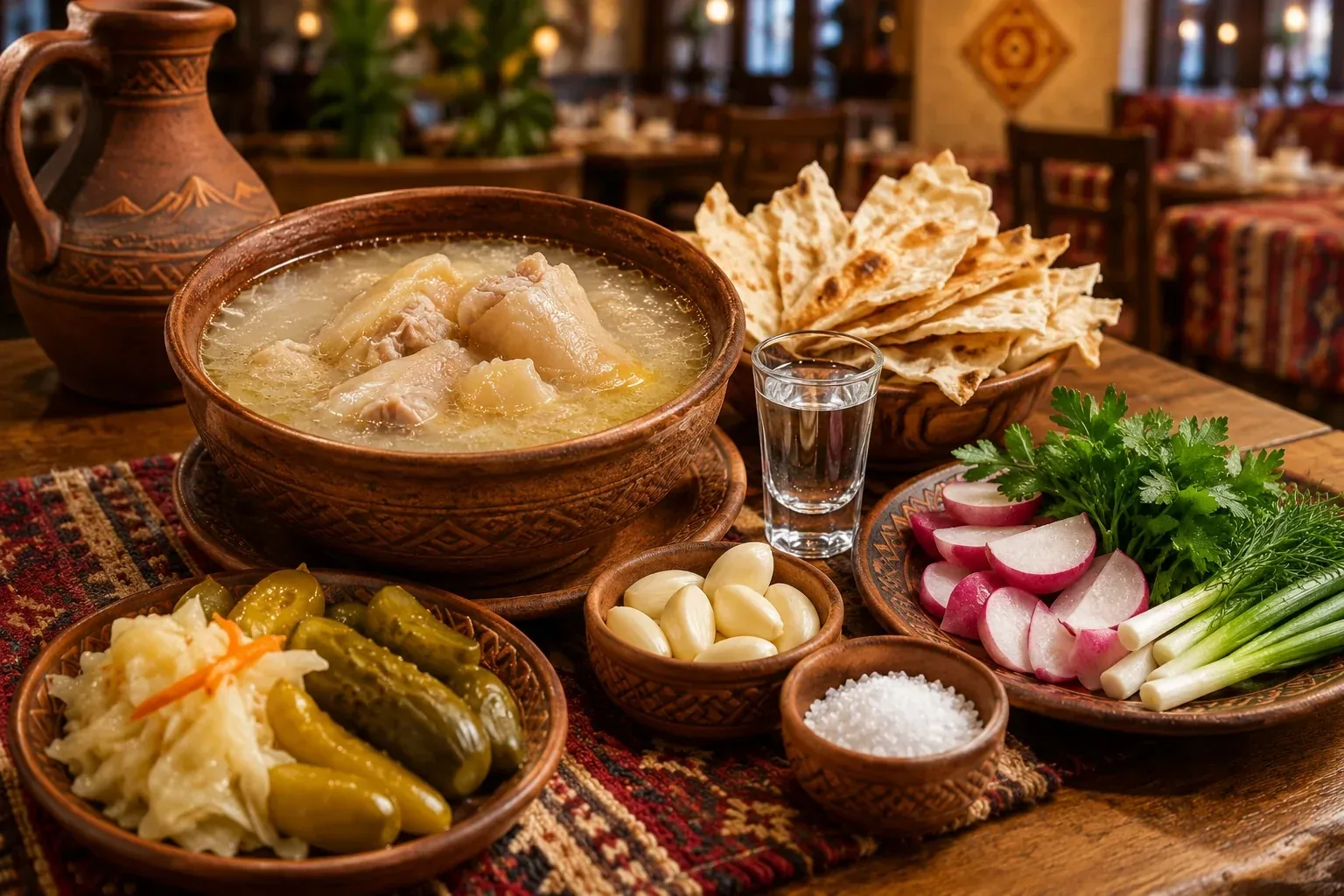
Khash opens the season. Beef feet are cleaned, soaked for a day and simmered all night without salt, so that everyone seasons their own bowl with salt and crushed garlic and crumbles dried lavash into the hot broth. It is eaten early in the morning, unhurried and in good company, with radishes, greens, pickles and cheese on the table and vodka for the toasts. Three toasts are usual, and one well-known order is to the day, to the cooks and to the guests. A popular saying allows khash only in the months with an R in their name, from September to April. It is a saying, not a rule, but it marks the season well. Similar broths are made across the region, from Georgia to Iran and Turkey.
Harisa is the other dish that asks for patience. Hulled wheat and chicken or lamb cook for hours and are stirred and beaten with a wooden paddle until grain and meat become one smooth porridge, finished with melted butter. It has long been a dish for feast days and big cauldrons, and on a cold day one bowl keeps you going until evening. Khashlama comes from the same world of slow pots, though it is cooked all year round: bone-in lamb or veal with onions, tomatoes, peppers and potatoes, cooked under a lid in its own juices and served in one big bowl for the whole table.
Then there is the larder. At the end of autumn, Armenian families preserved meat for the winter as ghavurma, basturma and sujukh. Ghavurma is meat that is boiled, browned in fat and pressed into clay pots under a layer of hot melted fat; kept somewhere cold, it lasted the whole winter. Basturma is beef cured with spices and air-dried, and sujukh is a dry, spicy sausage. In January a few pieces of ghavurma went into a pan with eggs, into pilaf or into soup for a quick, filling meal.
Lentils and beans were kept in sacks and earthenware jars, ready for soup on any cold day. Tolma follows the season too. In the cold months many families roll it in cabbage leaves, and around New Year comes pasuts tolma, the meatless version from the old fasting tradition, filled with beans, other pulses and grains, often with a piece of dried apricot or plum for sweetness.
No winter table is complete without pickles. In autumn, kitchens fill jars with cabbage and cucumbers, peppers, garlic and whatever else is left in the garden, so that something sour and crunchy reaches the table even in the depths of winter. Beside them stand the jams and compotes made in summer. A plate of pickles is also the natural partner of khash and harisa, its sharpness cutting through their richness.
Winter sweetness came from the summer sun. Apricots, plums and grapes were dried, and dried fruit, chir in Armenian, together with walnuts and honey, was the traditional treat of the cold months. From late summer to late autumn, walnuts are threaded on string and dipped in thickened grape juice to make sharots, also called sweet sujukh.
In the cold months it is khash season at Ararat Tavern: khash with or without meat comes with garlic, salt and dried lavash, and you can add the appetizer set of greens and radish, cheeses and pickles. The menu also has harisa, tolma with cabbage, lamb or veal khashlama, and ghavurma, served with red onion, with arishta noodles, in lentil soup or in an omelette. For the toasts there is Artsakh mulberry or cornel vodka. Book ahead, especially at weekends.