Lavash is the bread an Armenian table is laid around. Fresh, it is thin, soft and supple, and it does far more than sit beside a meal: it wraps cheese and herbs, pulls meat off the skewer, lies under the khorovats like a plate and covers a bowl of khash to keep it hot. In 2014 UNESCO inscribed it on the Representative List of the Intangible Cultural Heritage of Humanity as “Lavash, the preparation, meaning and appearance of traditional bread as an expression of culture in Armenia”.
The dough could not be simpler: wheat flour and water, with salt and often a piece of the last batch kept back as a starter. The secret of lavash is not the recipe but the work. Traditionally it is baked by a small group of women, often neighbours, each with her own job. One kneads the dough and divides it into balls, another rolls each ball out almost paper-thin, and a third stretches the sheet over an oval cushion and slaps it onto the hot wall of the tonir. The bread bakes very quickly, often in under a minute, and is peeled off the wall with an iron hook, then stacked to cool. Girls start by helping and take on more as they learn, while the ovens and the cushions are traditionally made by men.
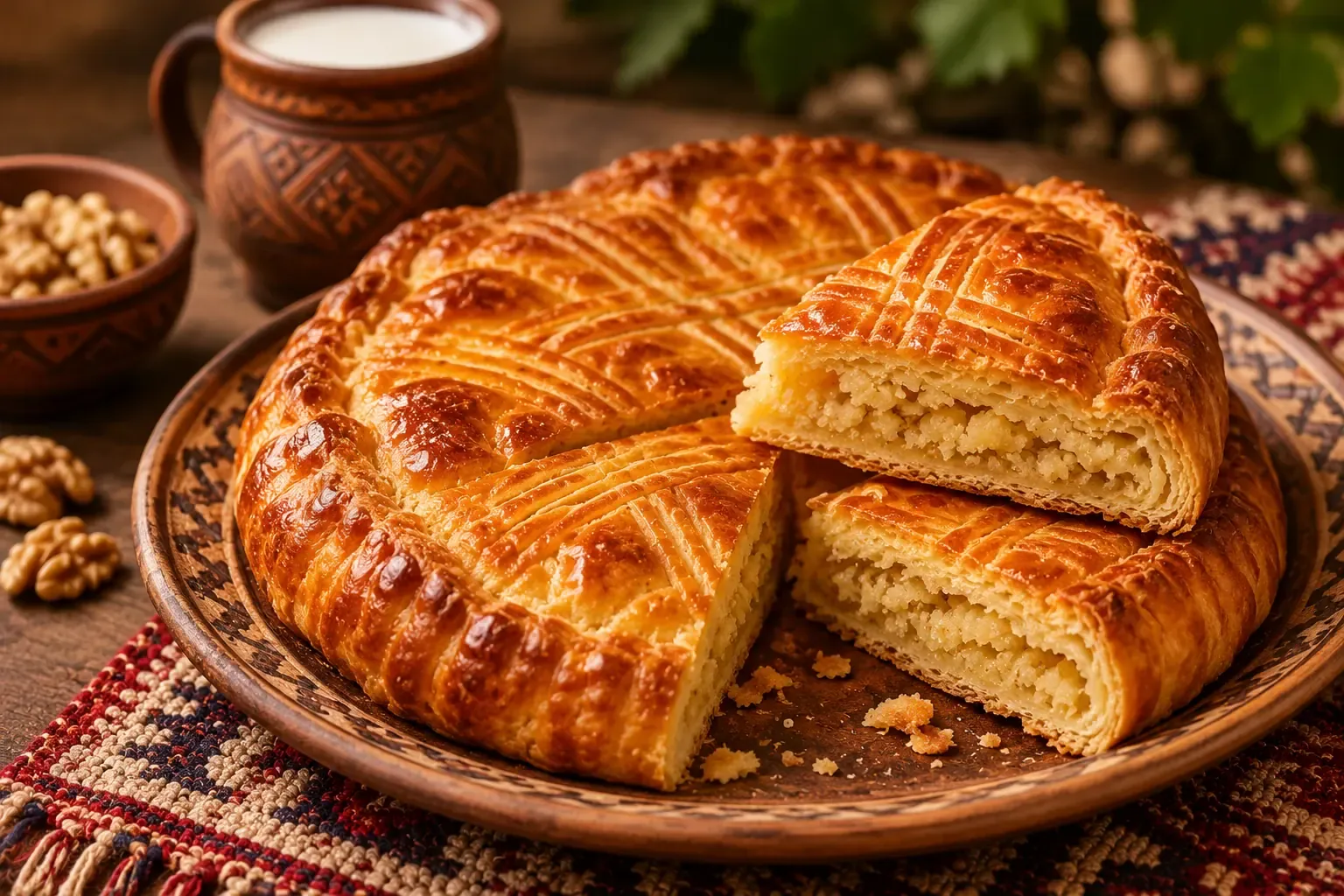
The tonir is a clay oven sunk into the ground and fired with wood at the bottom. Lavash is its best-known bread, but the same oven bakes gata, and in the village of Arinj in Kotayk lamb is still hung on a skewer inside a lit tonir, above a pot of bulgur. The tradition of making and using the tonir is itself on Armenia's national list of intangible cultural heritage.
Lavash was also baked to last. Traditionally, families baked large batches in autumn and dried the sheets for winter, stacking them high. Kept dry, lavash lasts for up to six months. To bring it back to life, it is sprinkled with water or wrapped in a damp cloth and left for a little while, and it turns soft and pliable again.
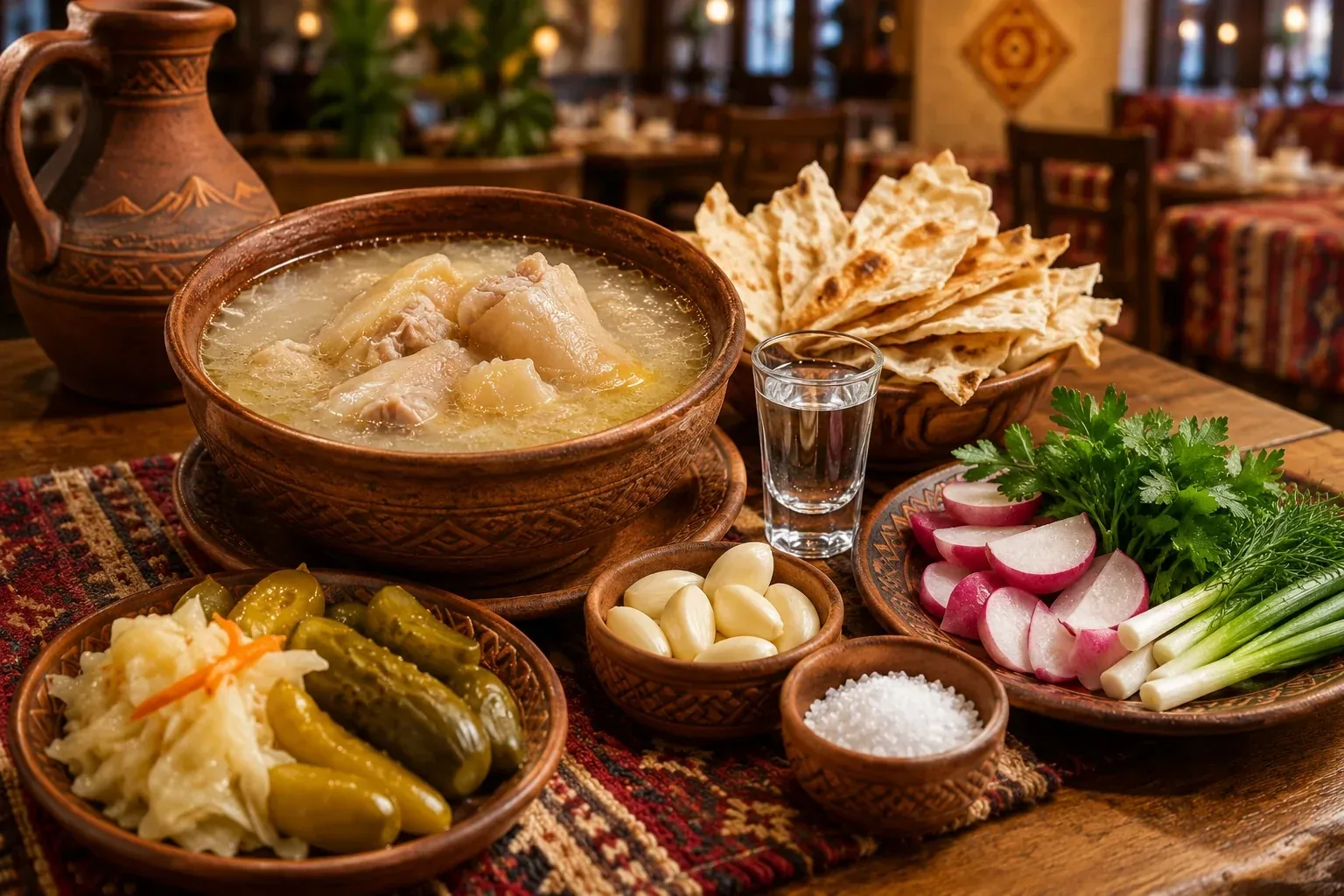
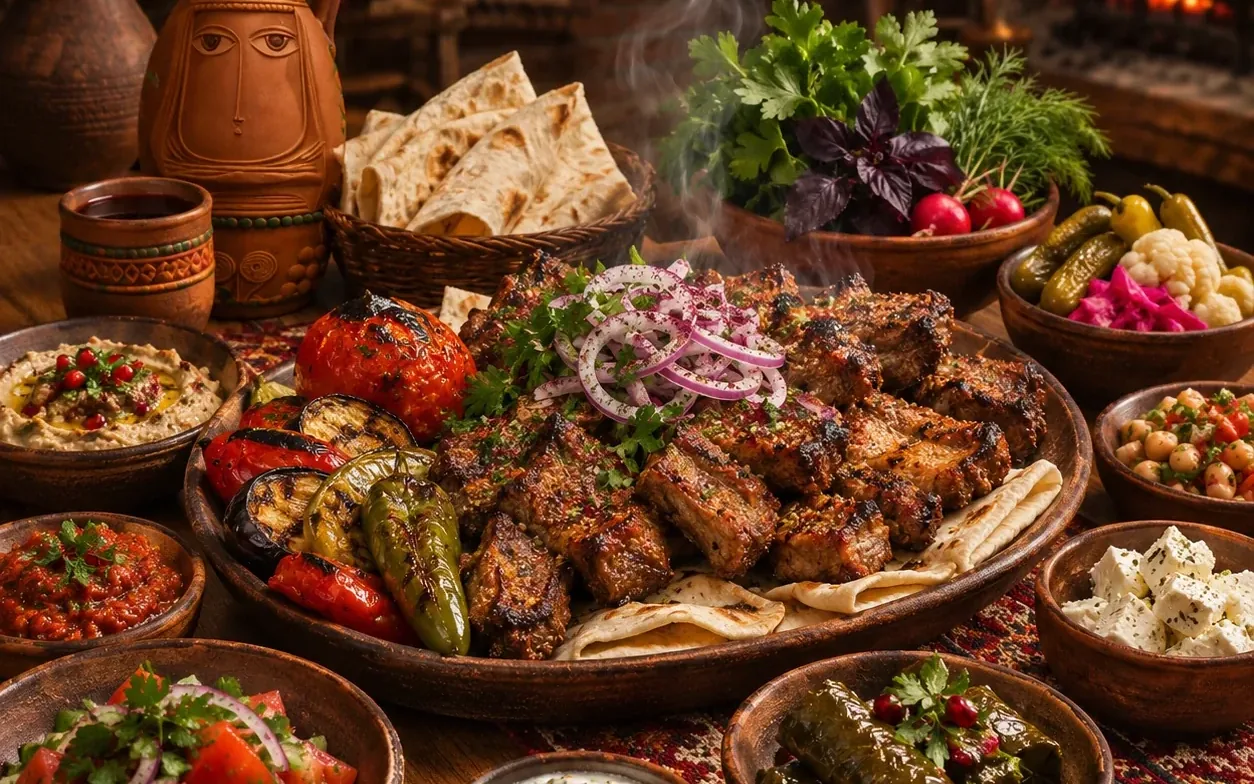
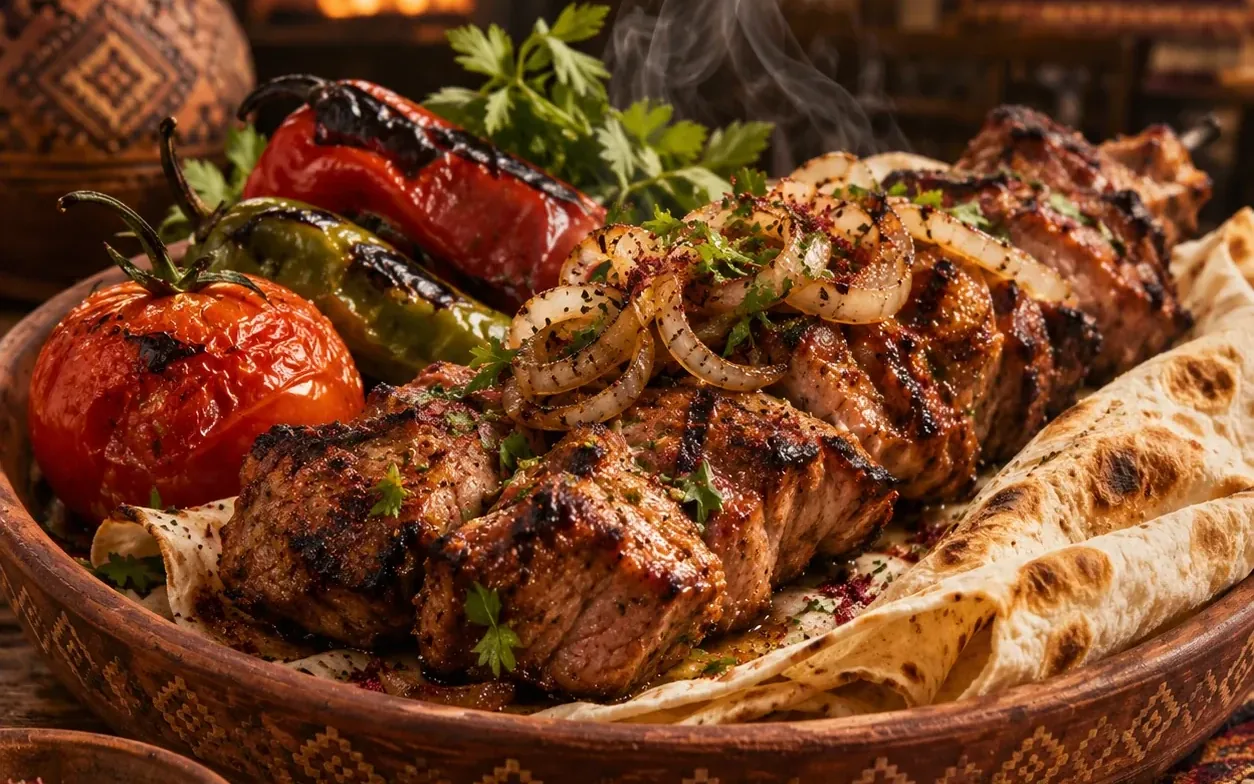
Dried lavash has its own uses. On winter mornings it is crumbled into khash, where it soaks up the hot broth, while a fresh sheet laid over the bowl keeps the khash warm. Fresh lavash is rolled around salty cheese, spring onions and herbs, a wrap Armenians call brduch, and at a khorovats lavash is indispensable: it pulls the meat off the skewer, keeps it warm and soaks up the juices of the grilled tomatoes and peppers laid on top of it.
Lavash has its place at weddings too. As the newlyweds enter the groom's house, lavash is laid over their shoulders, often by the groom's mother, as a wish for fertility and prosperity in their new home.
None of this makes lavash Armenian alone. Thin breads of the same family are baked from Iran and Turkey to Central Asia, and when it approved Armenia's nomination, UNESCO's committee noted that lavash is shared by communities in the region and beyond, and that inscription does not imply exclusivity. In 2016 a joint nomination from several countries added that wider flatbread culture to the list as a separate element. What the 2014 inscription recognises is the knowledge, the shared work and the meaning that families in Armenia pass down from one generation to the next.
At Ararat Tavern you will find the dishes lavash suits best: khorovats of pork, lamb, veal or chicken, the assortment of Armenian cheeses and fresh greens for wrapping. Book a table and enjoy them the Armenian way.