In Armenia the holidays begin on 31 December and run until Christmas on 6 January. By law only four of those days are days off: 31 December and 1, 2 and 6 January. In many homes, though, the table stays laid all week, because the guests keep coming. The holiday is called Nor Tari, “new year”, or Amanor, and folk tradition also knows it as Kaghand and Taremut. The New Year and its customs are on Armenia's national list of intangible cultural heritage.
Christmas falls on 6 January because the Armenian Apostolic Church has kept the ancient custom of celebrating the birth of Christ and his baptism on the same day. On the evening of 5 January families go to the Christmas Eve liturgy and carry lit candles home. The week before Christmas is traditionally a fast, and 1 January falls within it, so the old New Year table rested on fasting food: dried and fresh fruit, raisins and pulses.
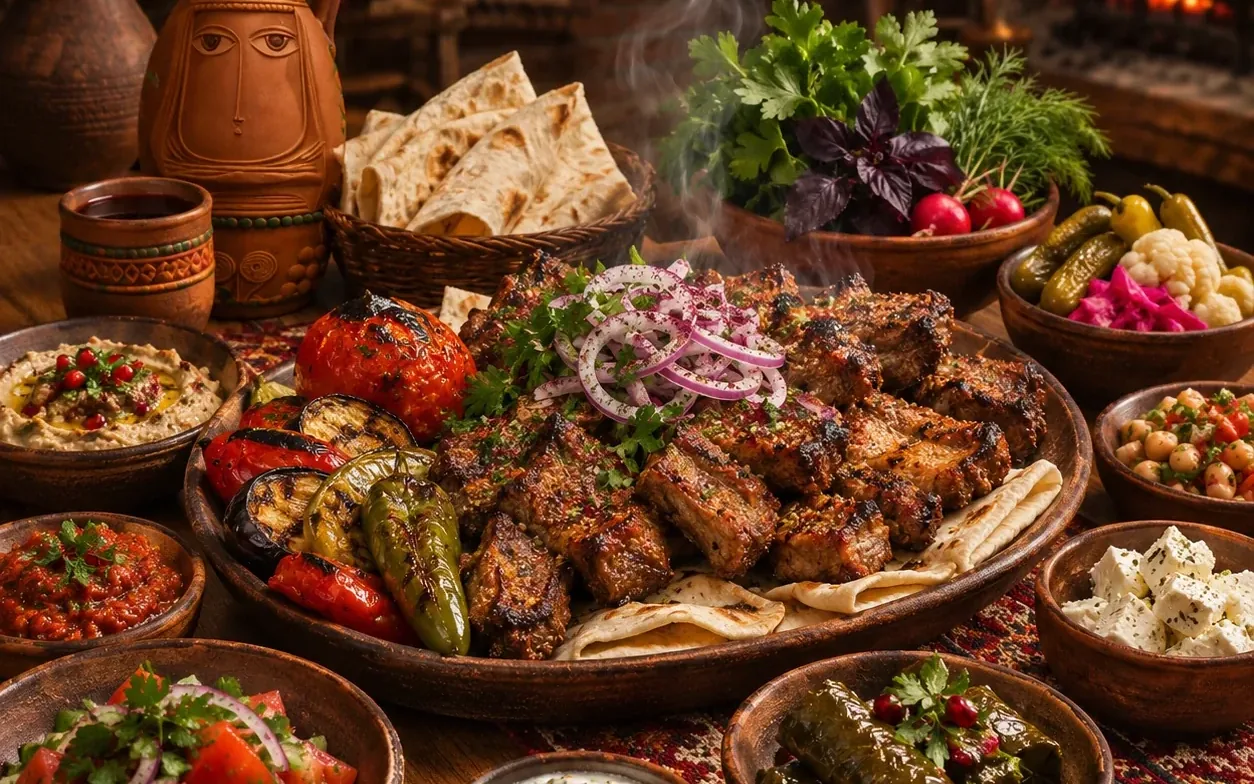
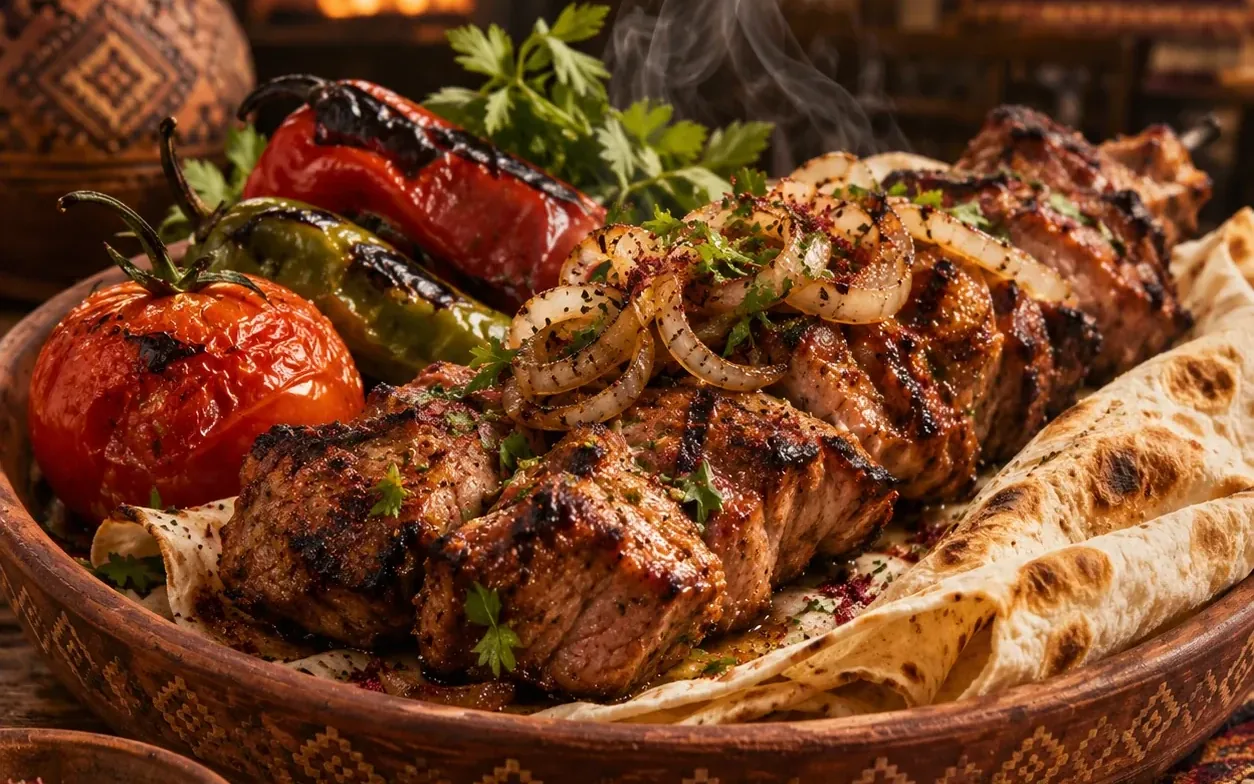
Tolma takes pride of place. Meat tolma in vine or cabbage leaves sits next to pasuts tolma, the meatless version filled with beans, other pulses and grains. The heritage list's description of the New Year names the essentials of today's table: tolma, pancakes, kufta, vegetable salads, pulses, nuts, fruit and gata, with a specially prepared leg of pork or a turkey, and khorovats, as welcome additions. Ishli kufta, bulgur shells with a spiced meat filling, has also become a New Year favourite in many homes.
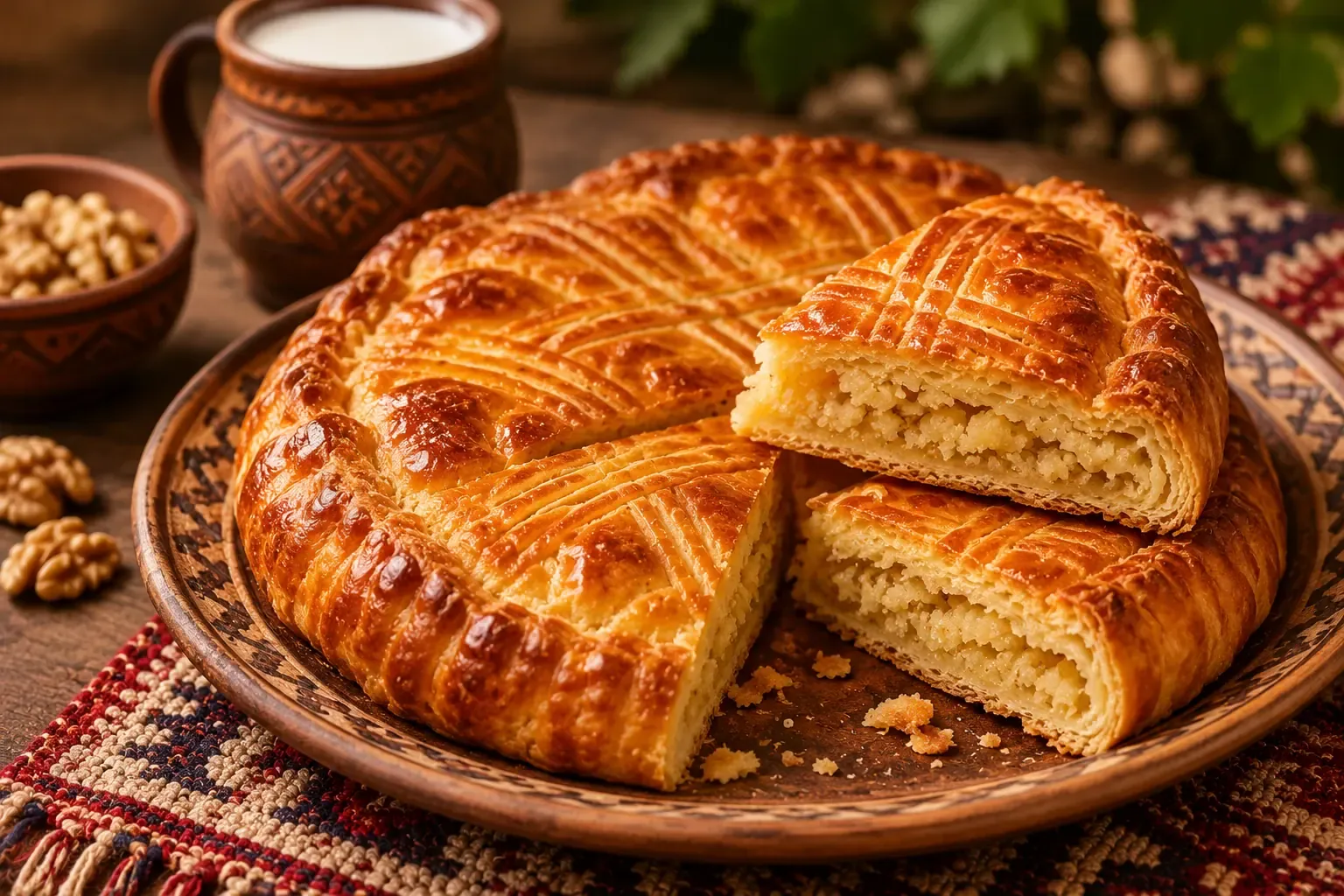
Gata stands for luck. By an old custom a coin is baked into a round gata, and whoever finds it in their slice is said to be lucky all year; the same custom once belonged to the ritual “year bread” baked on 31 December. Beside the gata comes anushabur, literally “sweet soup”: wheat or barley cooked slowly with dried apricots, raisins and other dried fruit, spiced with cinnamon and topped with walnuts and almonds.
Nuts and dried fruit are a given: walnuts, hazelnuts, almonds, raisins, dried apricots, and sharots, walnuts on a string coated in thickened grape juice. By an old custom, on 1 January visitors were showered with nuts, dried fruit, raisins and small sweets, symbols of plenty for the year ahead. For the cold platter, basturma and spicy sujukh are sliced thin, and for many families a festive table is unthinkable without them.
The Soviet decades added a layer of their own. In the 20th century the decorated tree entered the Armenian New Year, along with Dzmer Pap, literally “Grandfather Winter”, whom children affectionately call Dzmer Papik, and his companion Dzyunanush, the Armenian Snow Maiden. Olivier salad, herring “under a fur coat”, sparkling wine at midnight and the scent of tangerines date from those years too, and they are still part of New Year's Eve.
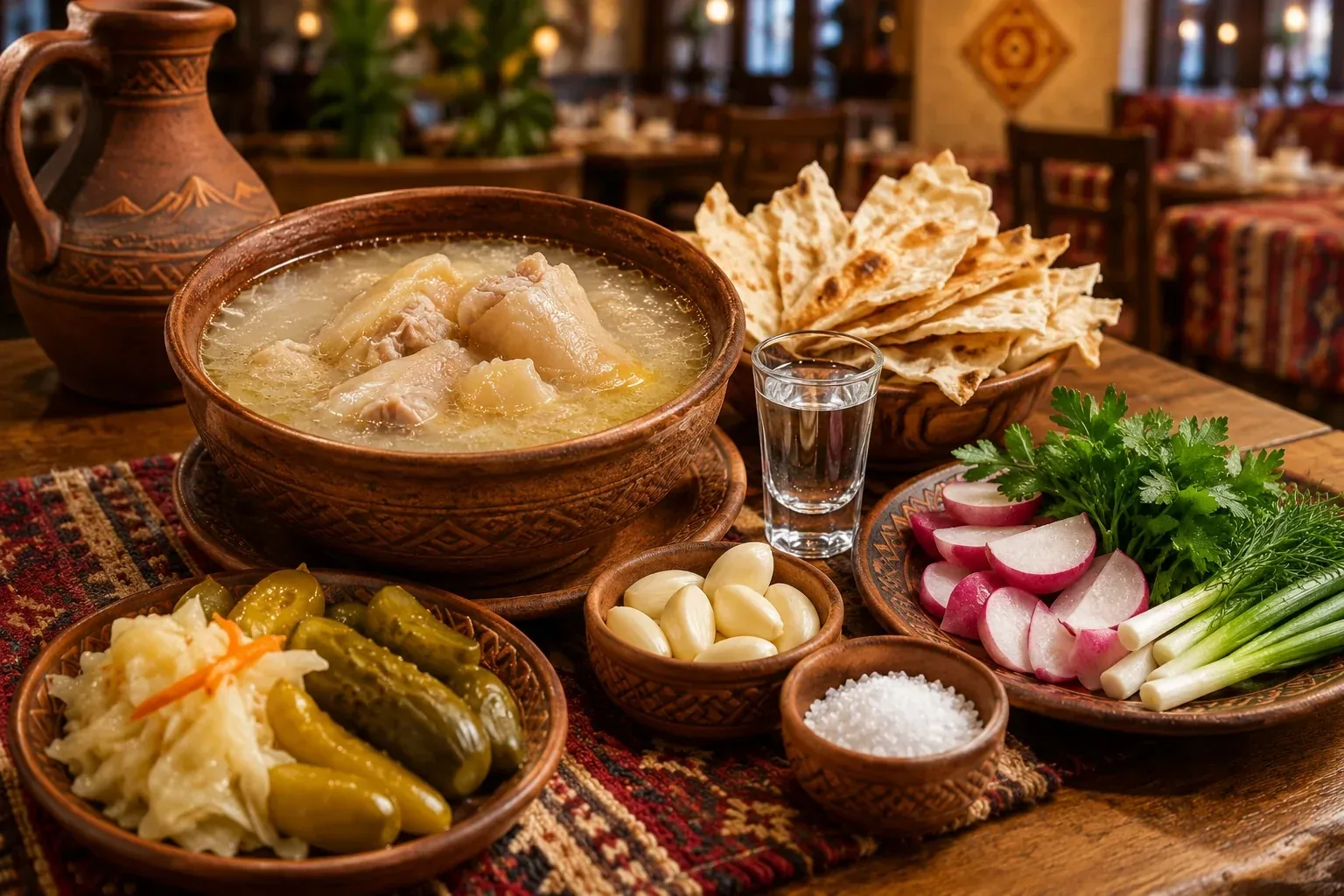
Then the visiting begins. From 1 January people go from house to house, to relatives first, then to friends and neighbours, and in many families the visits used to stretch on until the Old New Year in mid-January. Some families greet the first morning of the year with khash. The day after Christmas, 7 January, is Merelots, a day for remembering the dead. Guests rarely arrive empty-handed, and a host will seldom let them go without at least a slice of gata and a glass raised to the year ahead.
If you would rather not spend the last days of December at the stove, much of the New Year table is on Ararat Tavern's menu: tolma in vine and cabbage leaves, pancakes with meat, ishli kufta, khorovats, Olivier salad, a meat platter with basturma and sujukh, and a salad with basturma and sheep's cheese, with gata and pakhlava to finish. For the toasts there is Armenian brandy, and Keush Brut or Karas for those who prefer bubbles. Book a table for your family gathering in good time.