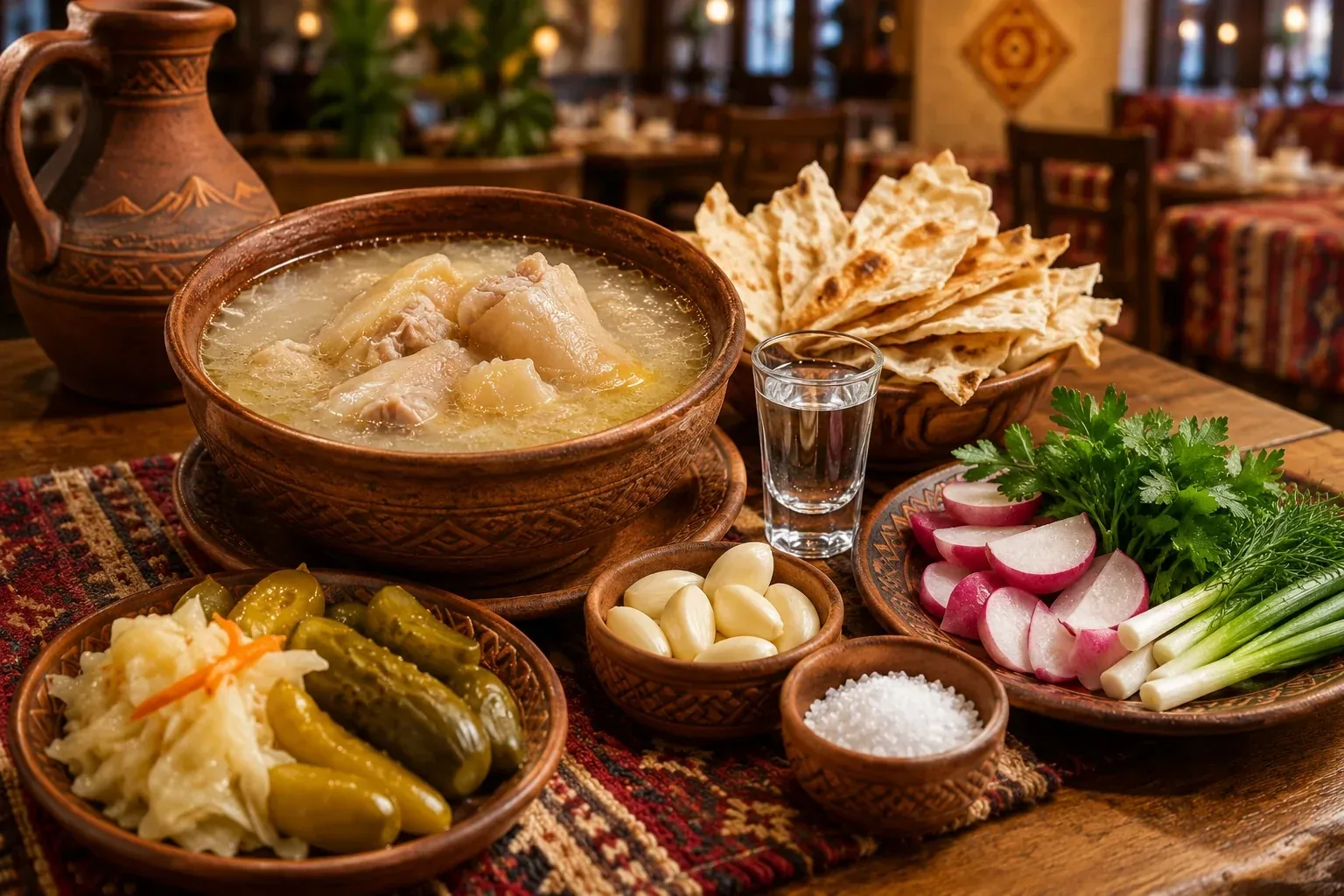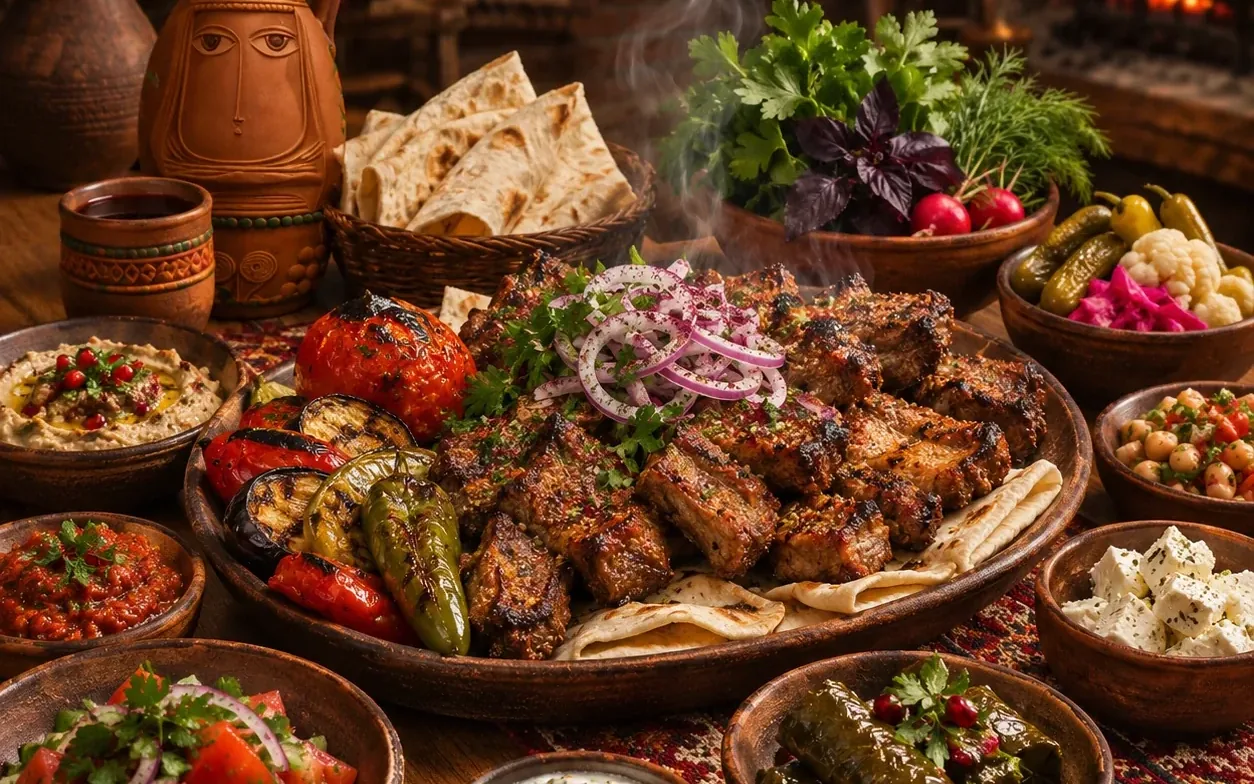
Sit down at an Armenian table and, often before the food you ordered arrives, a plate of greens appears: whole sprigs of tarragon, rehan, coriander, dill and parsley, a few spring onions, mint, a tuft of cress. Nobody chops or dresses them. They are eaten by hand, between bites and between toasts, and the plate stays until the meal is over. On an Armenian menu it is listed simply as fresh greens, tarm kanachi.
Each herb plays its part. Tarragon, tarkhun, is among the most fragrant, with a gentle aniseed sweetness, and Armenian reference works note that in Armenia it is eaten almost only fresh, as a green, and hardly ever cooked. Rehan, Armenian basil, comes green or purple and is grown in every region of the country. Cress, kotem, is one of the earliest leafy greens of spring and is also eaten only raw. Coriander and dill go into salads and soups as well, mint is dried for spas and other dishes, and spring onions add bite.
How do you eat them? Tear off a piece of lavash, lay on a slice of salty white cheese, add a few sprigs of whatever you like and roll it up. The result is a brduch, a little wrap that is a snack in its own right; UNESCO's description of lavash mentions this very habit of wrapping it around cheese, greens or meat. With khorovats, the herbs freshen each mouthful of grilled meat, and at a khash breakfast greens and radishes sit next to the garlic.
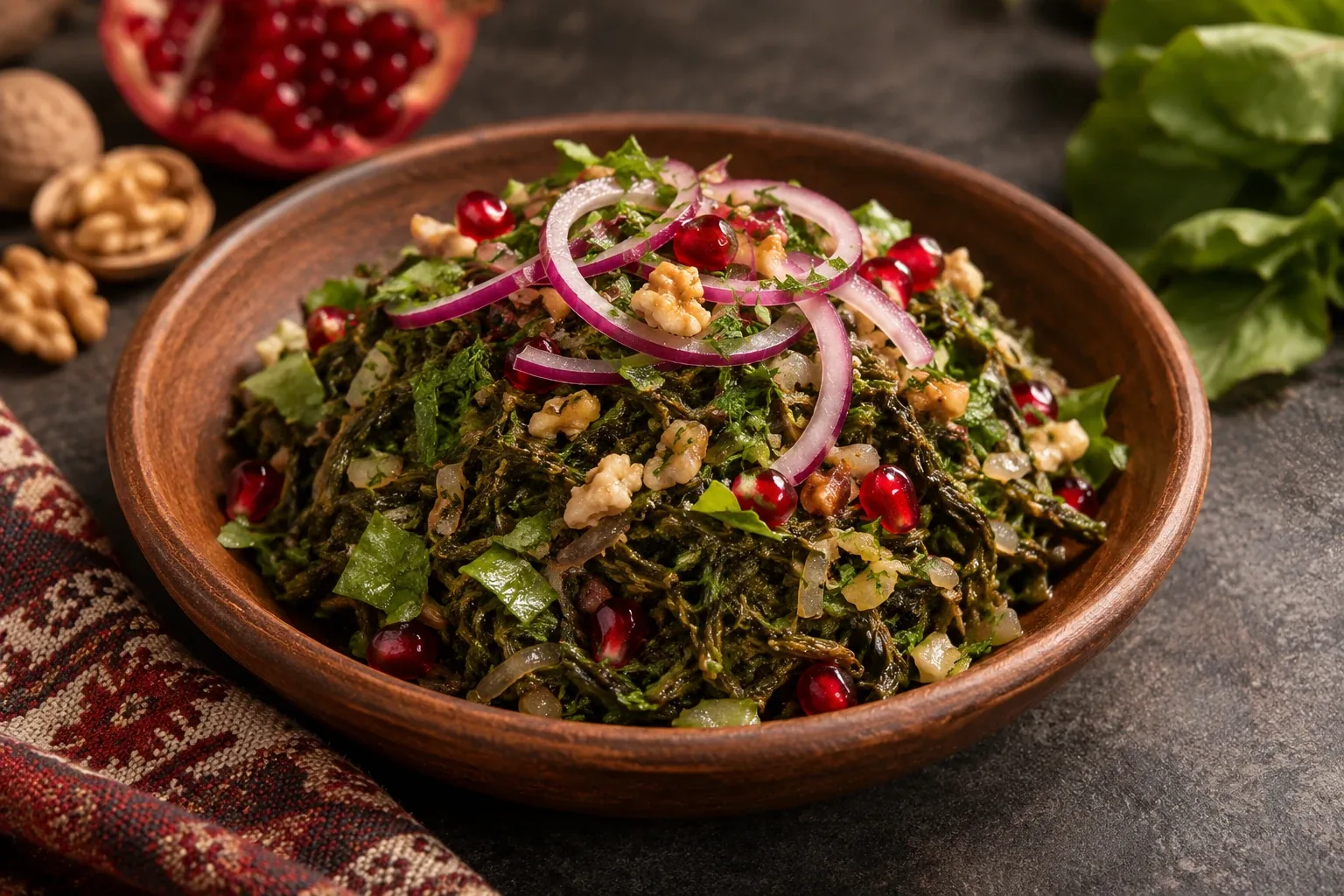
Then there are the greens nobody plants. In spring Armenians head for the hills to gather wild plants: aveluk, a wild dock; the chervil-like mandak and shushan; sibekh; nettles; wild asparagus; mallow. Young shushan and sibekh are fried with eggs, as is wild asparagus; others go into soups, salads and pies, and some, mandak among them, are pickled. The habit is alive: a survey of Yerevan's markets between 2016 and 2019 counted 148 species of wild food plants on sale, with curly dock, mandak, sibekh, mallow, nettle and wild asparagus among the most common.
Much of the harvest is kept for winter. Aveluk leaves are braided and dried in the shade, and bundles of dried greens are a familiar sight at Armenian markets; the Yerevan survey's authors note that drying wild vegetables for winter now survives in only a few countries. Dried greens, beans and lentils were once the backbone of the Lenten table. The gathering of wild plants and fruits in the communities of Tavush province is on Armenia's national list of intangible heritage, and the filling of zhingyalov hats, a flatbread stuffed with greens, can hold ten or more kinds, many of them wild.
Tarragon has a second life in the glass. The bright green tarragon soda familiar across the former Soviet Union comes from Georgia and is usually credited to the Georgian pharmacist Mitrofan Lagidze. Wild herbs end up in the teapot too: thyme, wild mint and rose hips are all gathered for tea.
Why does this matter so much? Partly it is nature: a 2023 review counts 142 species of aromatic spice plants in Armenia's flora. Partly it is balance, because a plate of herbs lightens a table built on bread, cheese and grilled meat. And partly it is pride: when Armenia named its priority product for the FAO's One Country One Priority Product initiative in 2023, it chose its greens, wild sorrel and two locally bred varieties of basil.
Ararat Tavern's menu has Fresh greens, best with the Assortment of Armenian cheeses and the Assortment of bread, for rolling your own brduch. Wild greens appear in the Aveluk salad and the Soup with aveluk, and a group can share the Seasonal greens with potatoes for 3–4. There is a Tarragon sauce too, and a Herbal tea to finish. Book a table and let the greens do their work.