At an Armenian table a glass is rarely raised in silence. Each round comes with a few words, and the word that ends them is kenats. It is an old declined form of the word for life, so every toast is made, quite literally, “to the life of” someone. A feast can go on for hours, and it is the toasts that give it its shape.
A big table usually chooses a tamada, a toastmaster, to lead it. The tamada gives the first toast, welcoming everyone and thanking the hosts, then decides who speaks next and keeps the pace, so that the evening neither drags nor gets out of hand. There is no written rulebook, and the order of toasts changes from family to family and from region to region. The best tamadas know the customs of the house, the right order of toasts and the place of everyone at the table.
Guests come early in that order. A guest is seated in one of the places of honour, and the toast to the guests is among the first of the evening. Then the toasts move on to the people who hold a family together: parents and elders, children, and the hearth, ojakh in Armenian, which stands for the home itself.
Remembering the dead with a glass belongs to the same tradition. People once raised their glasses to departed relatives at the graveside, and at New Year some families still visit the cemetery to remember those they have lost. At a feast, the toast to those who are no longer at the table is usually one of the quietest moments of the evening.
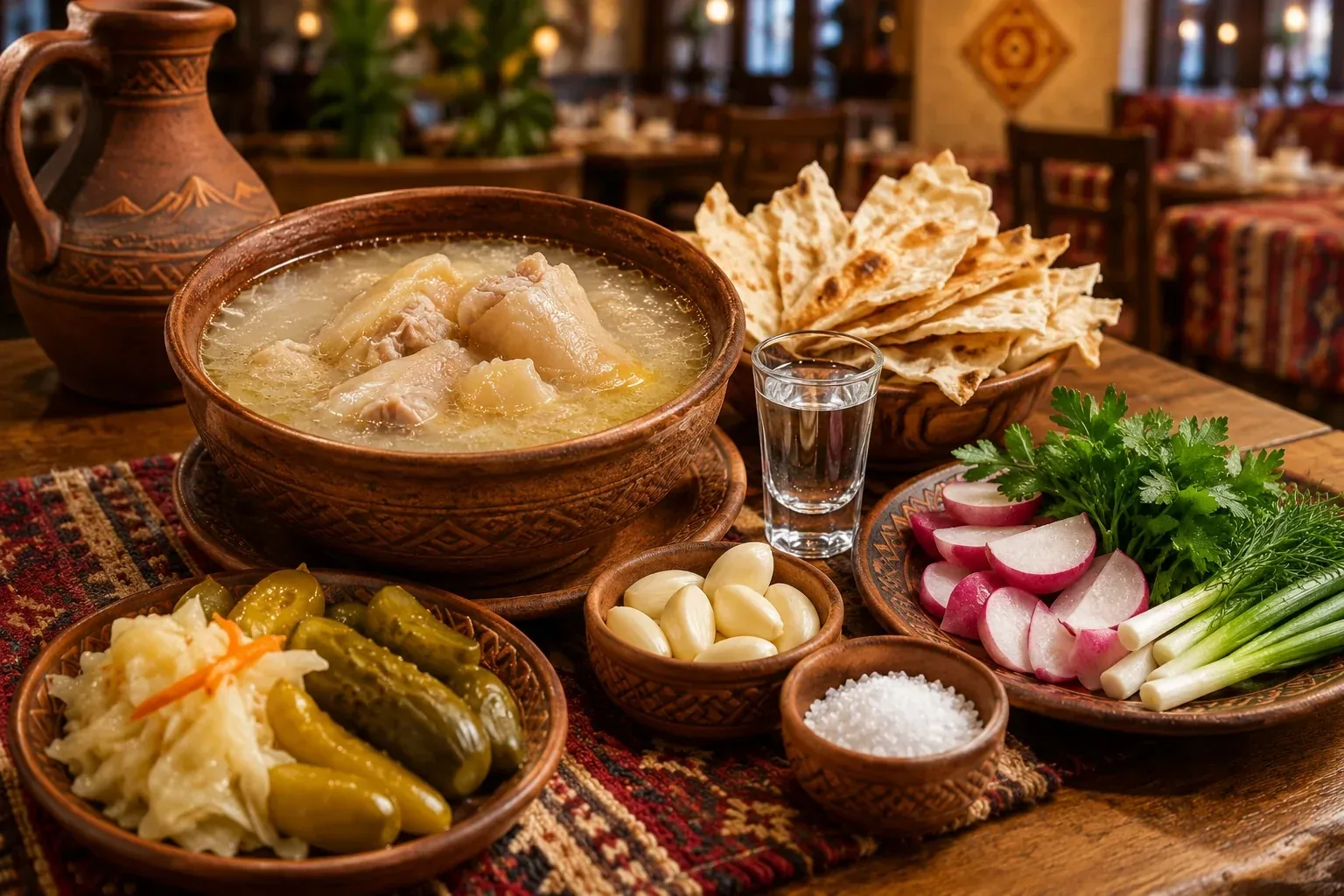
Later the toasts grow freer: to friendship, to peace, to the happy chance that brought everyone together. Any guest may ask the tamada for the floor, and an Armenian toast is seldom short; a story or a joke often comes before the glass goes up. A khash morning has its own custom, and one well-known order is three toasts: to the day, to the cooks and to the guests.
What is in the glass depends on the table. Brandy has been produced in Yerevan since 1887 and is a classic choice for toasts. Oghi, the Armenian fruit spirit, is distilled from mulberries, grapes, cornelian cherries, apricots, pears or plums, often at home from the garden's own fruit. It is the drink that welcomes guests, and it is strong, so it comes in small glasses. Wine has the longest history of all: near the village of Areni, archaeologists found a winery about 6,100 years old, the oldest known so far.
A few words for guests. Listen to the toast before you drink. You do not have to empty your glass every time: a sip will do, and when you have had enough, leave a little in the glass so that it is not refilled. If the tamada gives you the floor, a few sincere words about the hosts and the table are better than a long speech. And when coffee arrives at the end, accept it: it is part of the hospitality too.
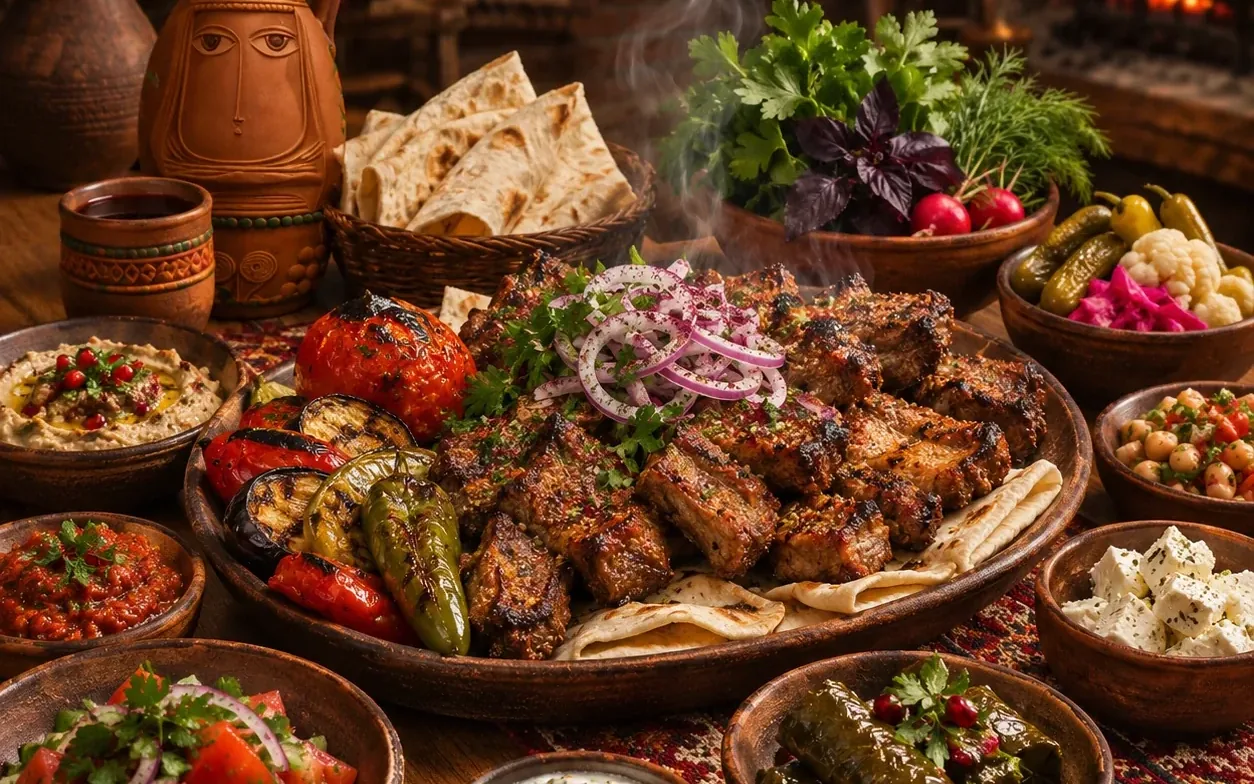
For a long table, Ararat Tavern has Armenian brandies such as Ararat 5 Stars, Akhtamar and Noy Classic, Artsakh fruit vodkas made from mulberry, cornel and apricot, Keush Brut and Karas sparkling wines, and Kilikia and Gyumri beer, with khorovats, Armenian cheeses and fresh greens to go with them. Book a table and choose your tamada.