Matsoni is the yogurt of the Armenian kitchen: thick, pleasantly sour and used for far more than breakfast. Armenians call it matsun, an old word built on a root meaning “to curdle”, and the tradition of making and using it is on Armenia's national list of intangible cultural heritage. It does not belong to Armenia alone. Matsoni is its Georgian name, the one you will see on most menus, and the scientists who have studied it describe it as a national food of both Georgia and Armenia.
Making it at home takes little more than patience. Milk is brought to the boil and left to cool until it is warm rather than hot, around 40 °C. A spoonful of the previous batch is stirred in, roughly one part to a hundred, and the pot is kept warm overnight; by morning the milk has set. Armenians have a verb for this, merel. A little of each batch is kept back to start the next one, so every jar is, in a sense, a descendant of the last. Matsoni can be made from cow's, sheep's, goat's or buffalo milk.
What happens in the jar has been studied. A 2015 survey of matsoni from across Armenia and Georgia, made from all four kinds of milk, found that its bacteria were dominated by lactobacilli and streptococci, joined by a varied cast of yeasts, and that the mix changed with the region and the milk. The authors suggest that starting each batch from the last is what carries those local differences forward. We will stop there: this is a restaurant's blog, not a medical journal.
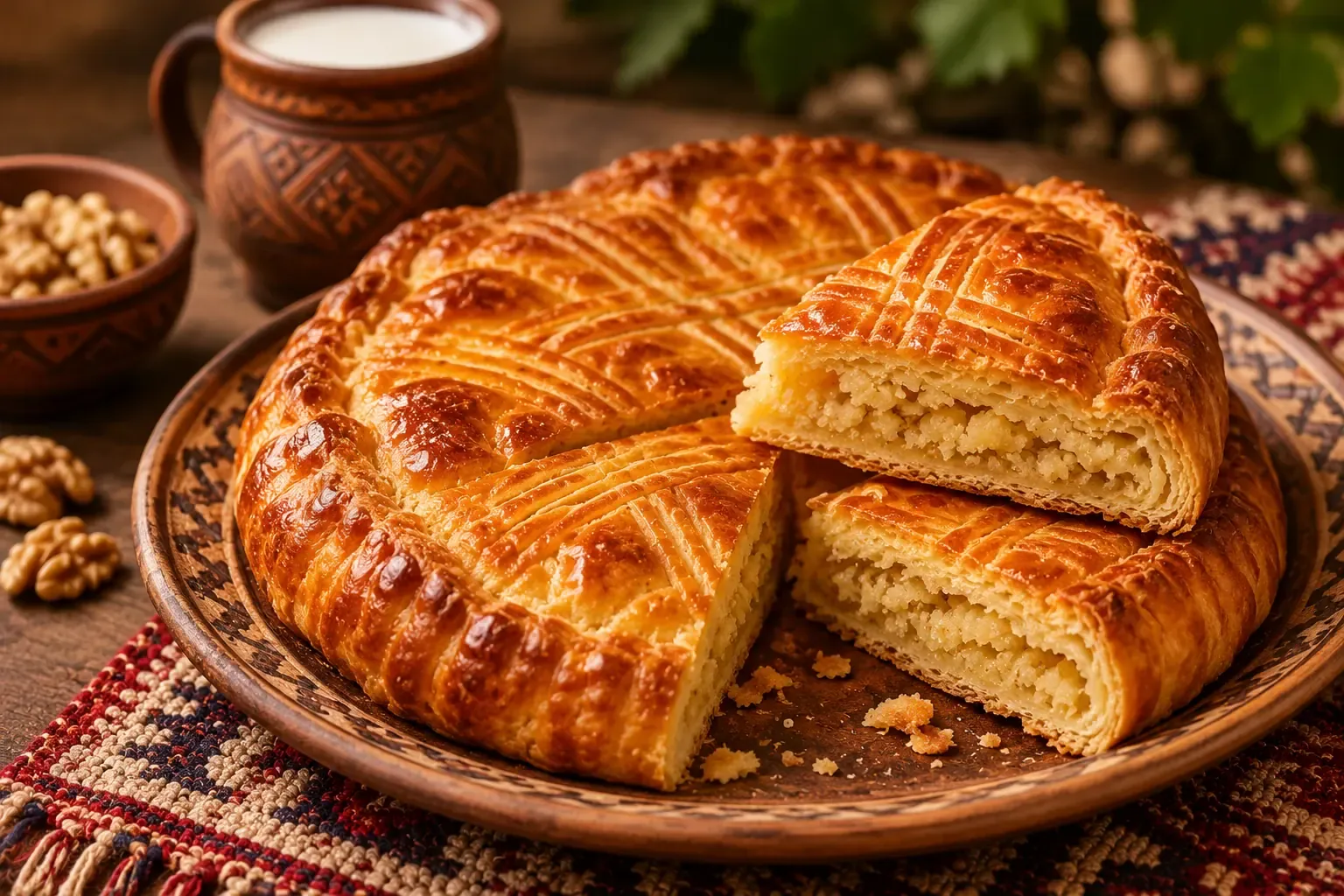
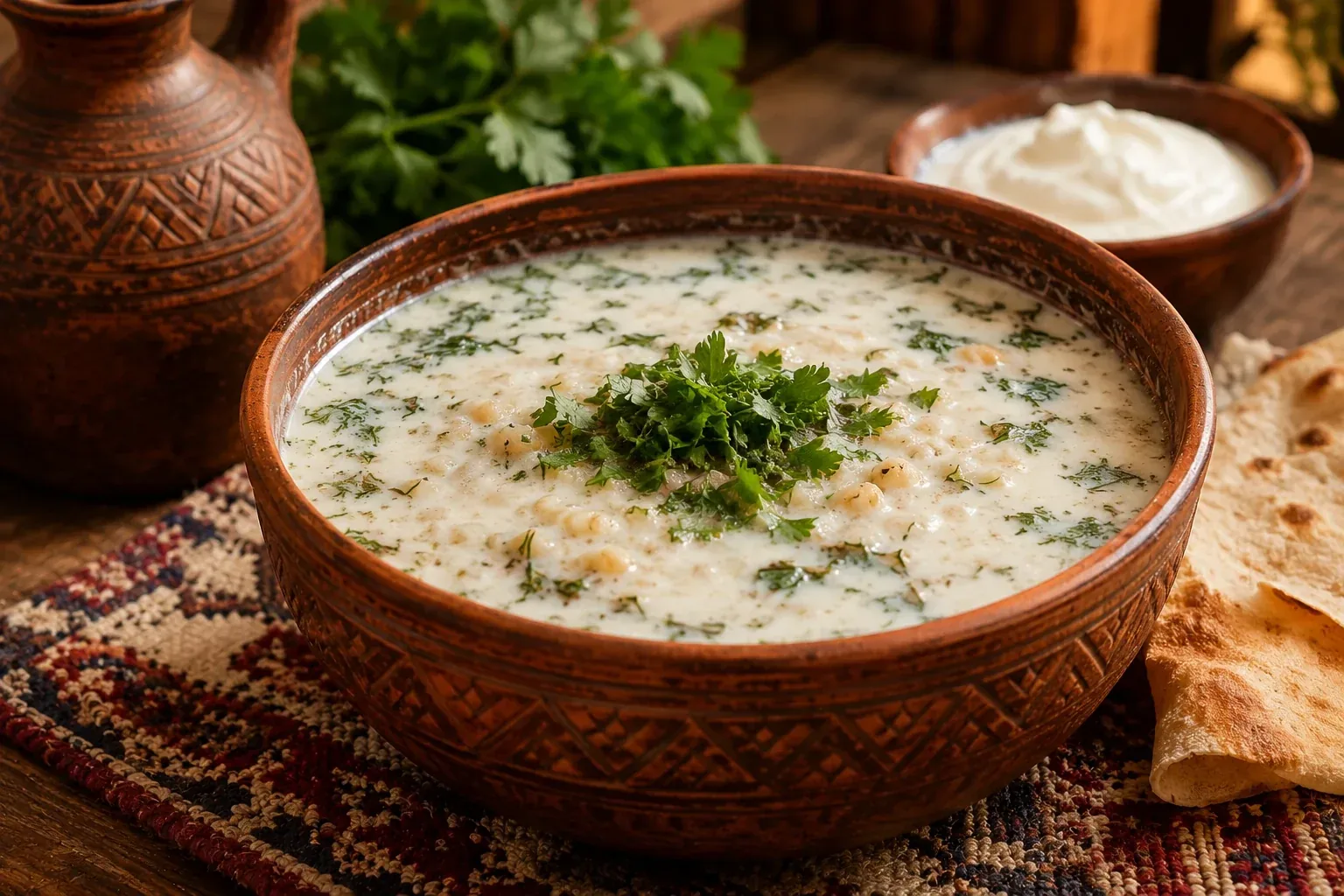
On the table, matsoni turns up everywhere. It is eaten plain, with bread and herbs. Stirred with crushed garlic, it is the companion of tolma and of aveluk fried with onion. Whisked with egg and a little flour so that it does not split, then simmered with hulled wheat, it becomes spas, a soup served hot in winter and often chilled in summer, also known as tanapur, “soup with tan”. Matsoni even goes into the dough of some kinds of gata.
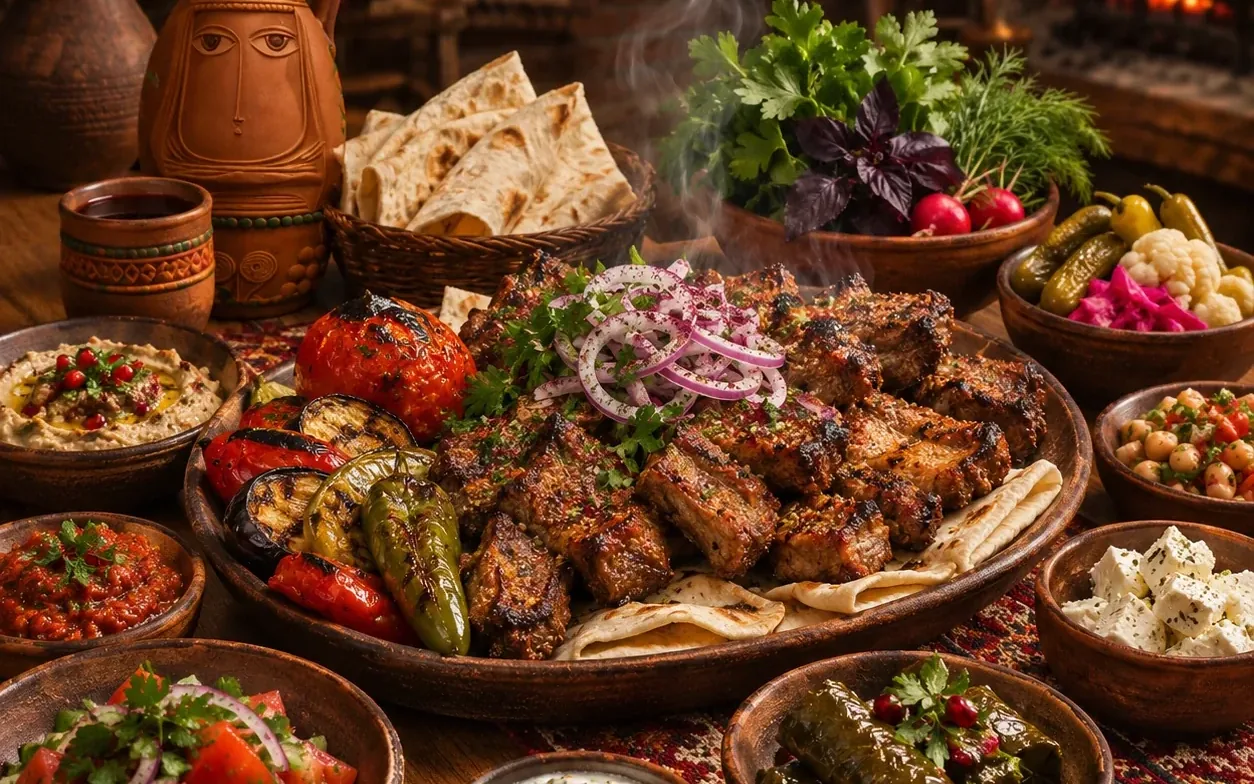
Tan is matsoni made to drink. Today it is usually matsoni thinned with cold water and a pinch of salt, sometimes with sparkling mineral water instead of still, and shop-bought tan comes both still and fizzy. The word's older meaning, still given in Armenian dictionaries, is slightly different: the liquid left behind when butter is churned from matsoni. It was drunk, or boiled, strained and dried in the sun into small sour, salty balls or cakes called chortan, which were stored and later dissolved in warm water to make soup. Cold tan is still the classic non-alcoholic drink with khorovats.
Strain matsoni instead of thinning it and you get the opposite. Hung in a cloth bag until the whey drips away, it turns thick enough to spread, much like the labneh of the Middle East. Strained matsoni is eaten with herbs and lavash, mixed with cucumber and dill into a cool salad, or rolled up in slices of eggplant with walnuts.
At Ararat Tavern matsoni runs through the menu as well. Order Tan with your khorovats, Spas from the soups and a bowl of Strained yogurt for the table, or try it in the Salad with strained yogurt, with cucumber and dill, and in the Eggplant rolls with walnut filling. Tolma with grape leaves or with cabbage completes the picture, since in Armenia tolma is rarely served without garlic matsoni. Book a table and taste how much one simple bowl of matsoni can do.