Armenian cooking keeps a calendar. Long before supermarkets, the year was set by fasts and feasts, by what the hills and gardens gave and by what could be stored for the cold months. Much of that rhythm survives in Yerevan's markets and kitchens, and it explains why some dishes taste best, or only appear, at a particular time of year. Here is the year in brief; several of its chapters have posts of their own.
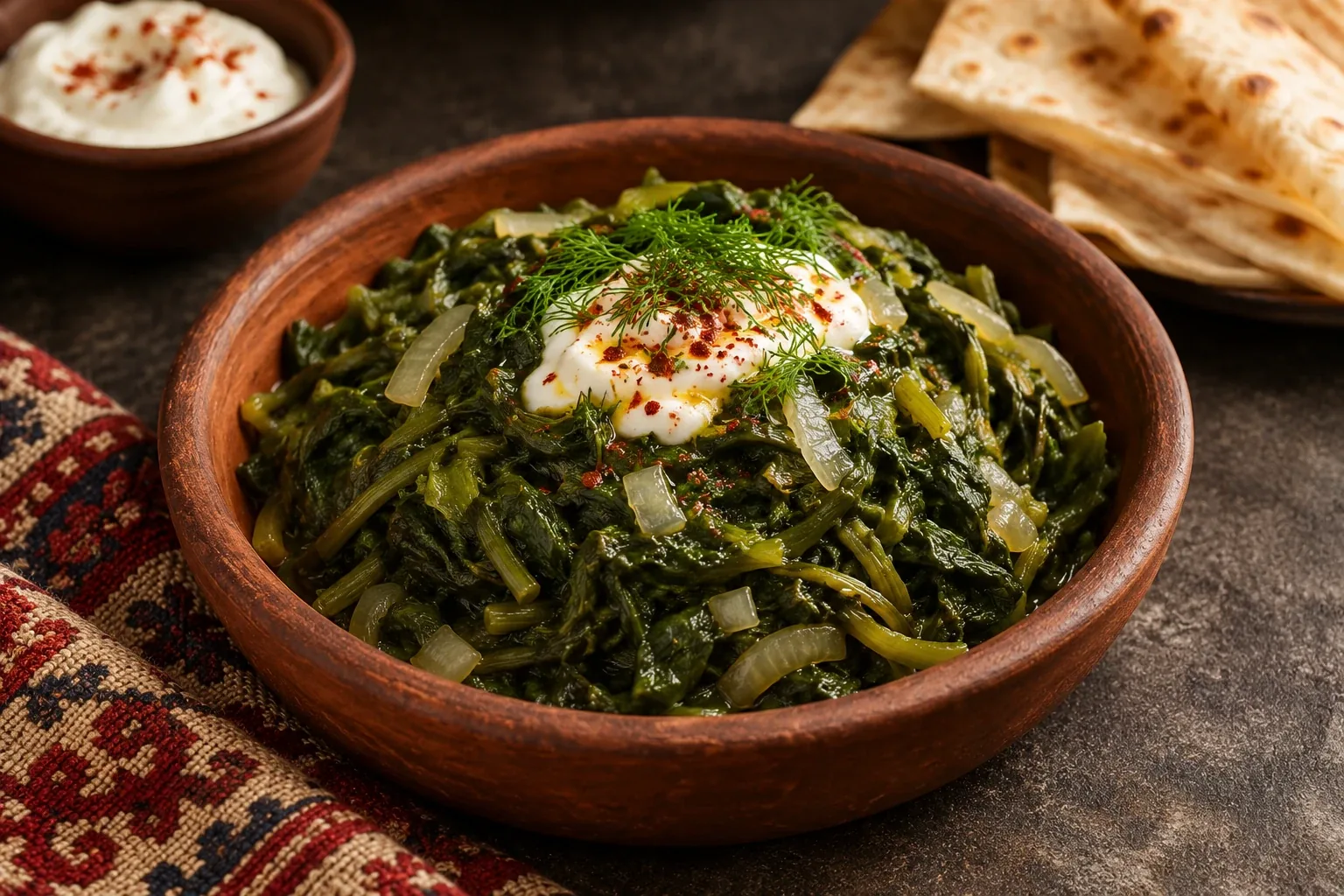
Spring starts lean. Great Lent fills the weeks before Easter with beans, lentils and pasuts dishes made without meat, dairy or eggs, and the first fresh food comes not from the garden but from the hills. Wild greens such as aveluk, the wild dock, sibekh, mandak and nettles are gathered on the slopes and eaten fresh or cooked, and some are braided and dried for winter. Then Easter breaks the fast with red eggs, fish and pilaf. In late spring and early summer young vine leaves are picked for tolma, and some are brined for the months ahead.
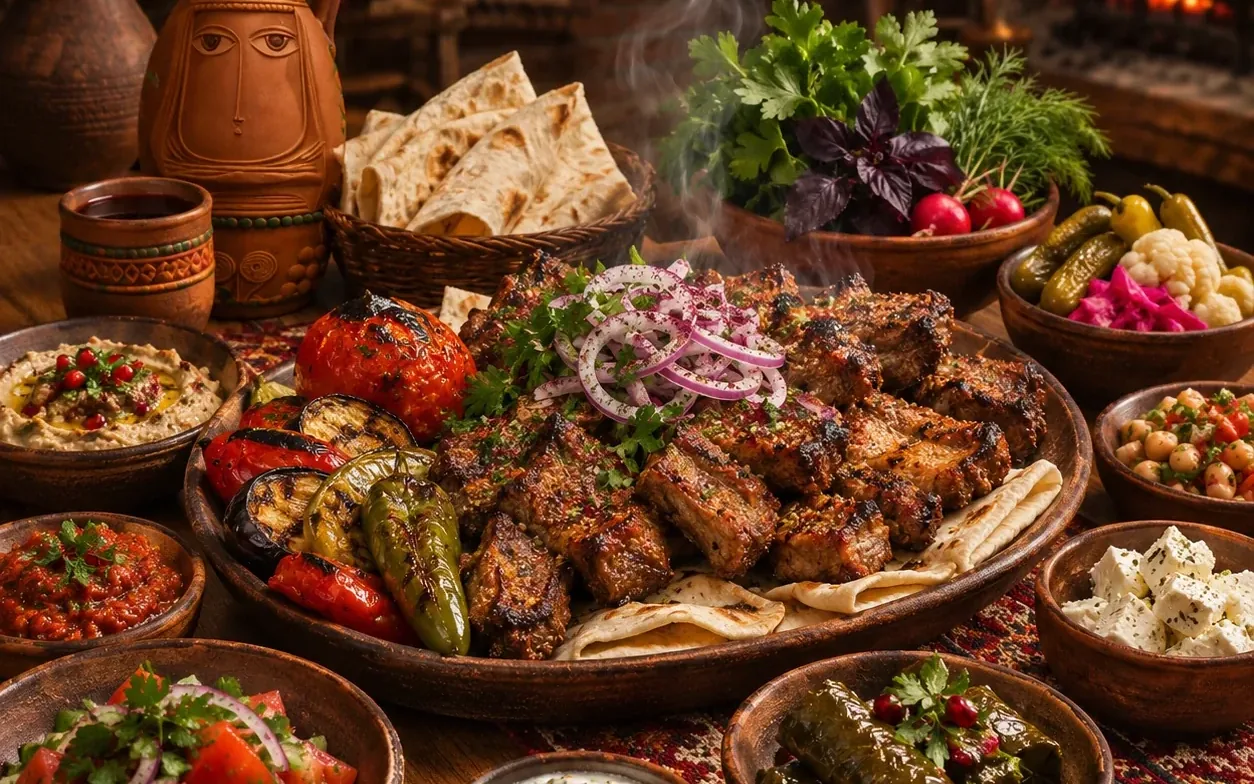
Summer is the season of plenty, and the table grows lighter and cooler. Peppers, tomatoes and eggplants go into summer tolma or onto the coals beside the khorovats, a plate of fresh herbs comes to almost every meal, and the fruit runs from cherries to apricots and peaches. Spas is served chilled, tan comes ice-cold, and in high summer Vardavar sends the whole country out with buckets of water.
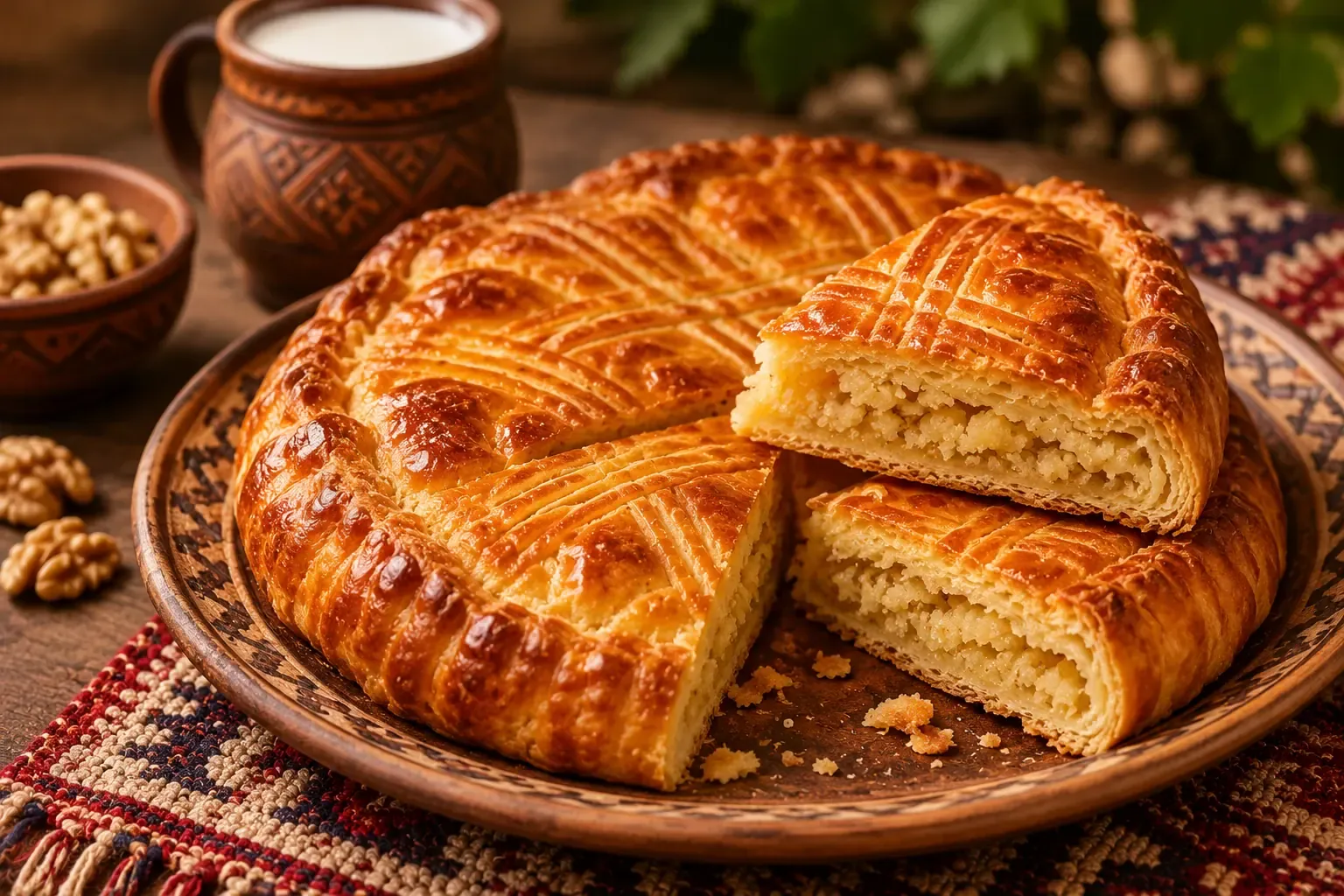
Late summer belongs to the grape. By old custom the new grapes wait for their blessing on the Sunday nearest 15 August, and the harvest runs on into autumn. Wine is still made at home in the traditional way, and the village of Areni in Vayots Dzor holds a wine festival every autumn. Some of the sweet grape must is cooked with flour into a thick coating for strings of walnuts, the chewy sweet sujukh, and the new walnuts go into pakhlava and walnut gata.
Autumn is also the season of the larder. Arishta, home-made noodles, was traditionally made after the new harvest and dried for winter. Cabbage, cucumbers and peppers go into pickle jars, and Armenia's national list of intangible heritage even includes a pickle made from beetroot stems. In Meghri, in the far south, persimmons and figs are dried in a tradition that is on the same list. Pumpkins come in too, and the finest end up as ghapama: a whole pumpkin baked with a filling of rice, butter, honey, dried fruit and nuts, often for Christmas.
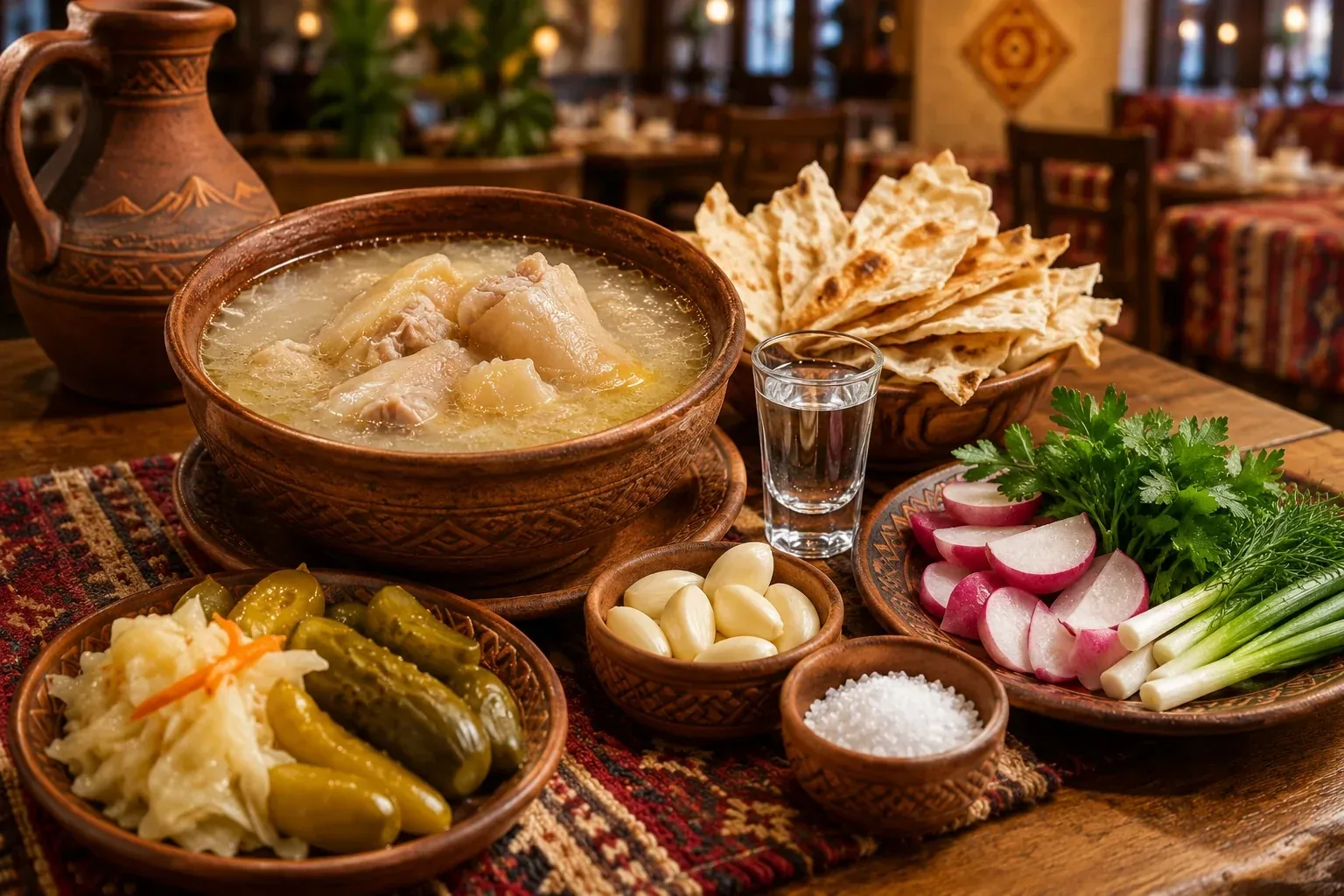
Winter is the time for slow pots: harisa stirred for hours, khashlama under its lid, tolma rolled in cabbage leaves. It is also khash season, when a broth of beef feet that has simmered all night is eaten early in the morning with garlic and dried lavash. Dried fruit, walnuts and summer's preserves carry the sweetness through to spring.
Much of this calendar can be tasted at Ararat Tavern. In the cold months khash is served as a seasonal dish, with or without meat, and the menu also has Harisa, Tolma with cabbage and lamb or veal khashlama. The Aveluk salad and the Soup with aveluk bring spring's wild greens to the table, a group can share the Seasonal greens with potatoes for 3–4, Summer tolma and BBQ vegetables taste of the summer garden, and Pokhindz with ice-cream, Gata or Pakhlava round off the meal. For the toasts there are Artsakh fruit vodkas made from mulberry, cornel, wild pear and apricot. The tavern is open every day from 10:00 to midnight at 15 Sayat-Nova Avenue.