Few ingredients turn up in Armenian cooking as often as the walnut. The Armenian word for it, enkuyz, also means “nut” in general. Armenia lies within the walnut tree's natural range, and walnut trees are a familiar part of the Armenian village. The history goes back a long way: in the Areni-1 cave in Vayots Dzor, archaeologists found walnuts in clay storage jars about six thousand years old. The find matters because so little is known about when and where the walnut was first domesticated, although whether the Areni walnuts were wild or cultivated has yet to be established.
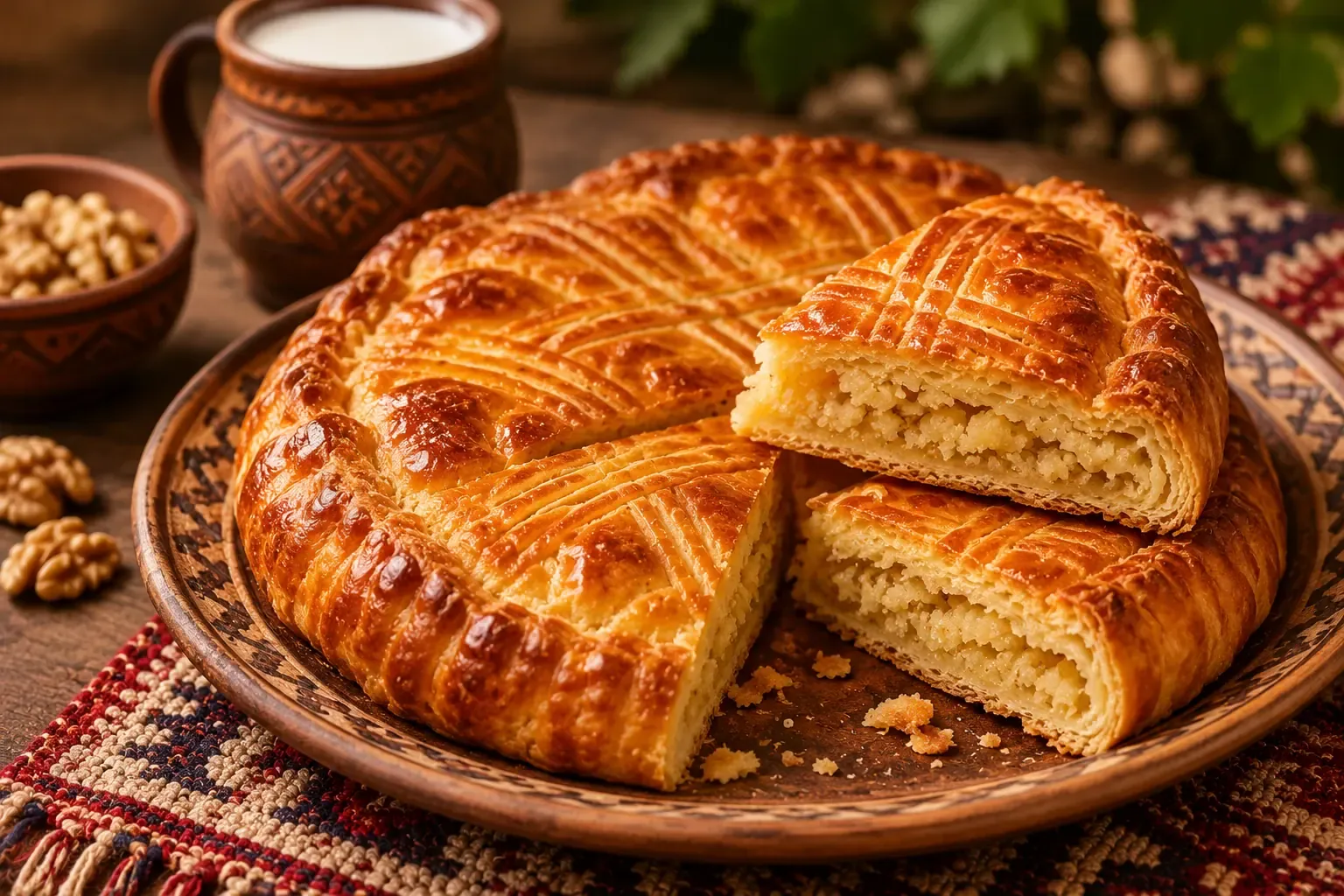
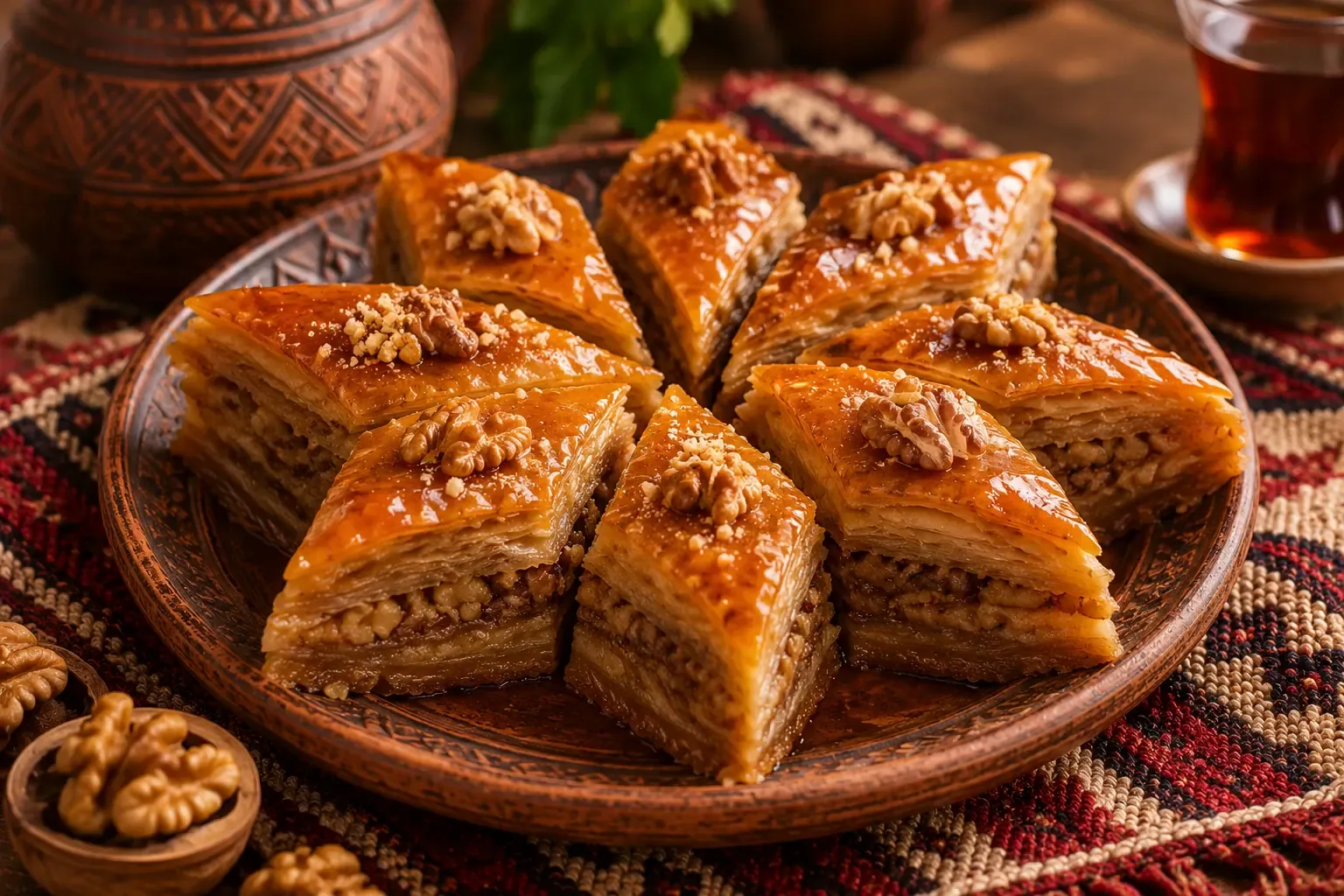
The best-known walnut sweet is pakhlava, which has relatives all over the region. Thin sheets of pastry brushed with butter are layered with chopped walnuts, sugar and often cardamom, cut into diamonds, baked and soaked in honey or syrup. Armenia's most famous version is Kyavar pakhlava from Gavar, and the tradition of making it is on the national list of intangible cultural heritage. Gata, the rich buttery pastry of the festive table, is most often filled with khoriz, a crumble of flour, butter and sugar, but there is walnut gata too.
In autumn, when the grapes ripen, walnuts go into sweet sujukh. Walnut halves are threaded on a string and dipped again and again into grape juice cooked with flour until thick, sometimes spiced with cinnamon, cloves or cardamom, then hung up until the coating is firm and chewy. The same sweet is also called sharots, and the tradition of making sweet sharots in Ashtarak is on the national list too.
The walnut dish that asks for the most patience is green walnut preserve, made all around the region, from Greece and Cyprus to Georgia and Iran. The walnuts are picked in late spring or early summer, while the husk is still green and the shell inside has not yet formed, so that a knife slides straight through. Every family has its own recipe and timings, but the method generally goes like this: the walnuts are peeled and soaked in water for several days, often a week or more, with the water changed regularly, until they darken and lose most of their bitterness. Many cooks then leave them in limewater, a solution of slaked lime, for a few hours or a whole day to keep them firm, rinse them well, prick them and simmer them in syrup with cinnamon and cloves, sometimes cardamom too. The result, dark, glossy and soft right through, is served with tea.
Walnuts are just as much at home in savoury food. In ishli kufta, the shell of bulgur and beef can hide minced meat fried with onion and chopped walnuts. In Garni, in Kotayk, cooks finish red bean soup with ground walnuts instead of butter and serve aveluk, the wild dock, with walnuts, garlic, matsoni and pomegranate seeds. And at Easter many families cook a rice pilaf with raisins, dried fruit, walnuts and almonds.
Eggplant rolls with walnut filling are another dish the region shares. Slices of fried eggplant are rolled around a paste of ground walnuts, garlic, herbs and spices; in Georgia the dish is called nigvziani badrijani, and in Armenia it is a favourite cold starter too.
At Ararat Tavern you can start with eggplant rolls with walnut filling or red bean soup, which has walnuts in it too, and finish with pakhlava or gata and a cup of Oriental coffee. Book a table.