If people know one thing about Armenian wine, it is the cave near the village of Areni where archaeologists found the oldest known winery. Today's Armenian wine is a far younger story. Soviet planners gave wine to Georgia and Moldova and brandy to Armenia, and many vineyards were replanted with grapes suited to distilling. Then, in 1985, during the anti-alcohol campaign, vineyards were torn up and wine production fell by half.
Recovery began in the late 1990s, but the real growth came in the 2010s, helped by new equipment, training, and winemakers and investors from the diaspora. Around 2012 there were perhaps a couple of dozen commercial wineries; today there are well over a hundred, and between 2012 and 2022 wine output roughly doubled, from 6.2 to 12.6 million litres.
Armenia counts its native grapes in the hundreds, and a handful now appear on labels. Areni Noir, named after that same village, is the flagship red. Voskehat, the “golden berry”, is the leading white, made both still and sparkling and often blended with another local white, Khatouni. Khndoghni, also called Sireni, is a dark, tannic red native to Nagorno-Karabakh. Two modern crossings bred in Armenia are common too: the white Kangun, with Georgian Rkatsiteli as one parent and a scent of apricot and white flowers, and the red Haghtanak, “victory”, an offspring of Saperavi whose red flesh gives deeply coloured, firm wines.
The wine regions follow the provinces, and five are usually named. Vayots Dzor in the south is the smallest, about 1,200 hectares, and the most celebrated: in the Areni valley vines climb from about 850 to 1,750 metres, and many old vines still grow on their own roots. Armavir, west of Yerevan, and Ararat province share the Ararat plain, and Armavir has by far the most vineyards in the country. Aragatsotn's vines grow south of Mount Aragats, and Tavush grows grapes in the Aghstev valley in the north-east.
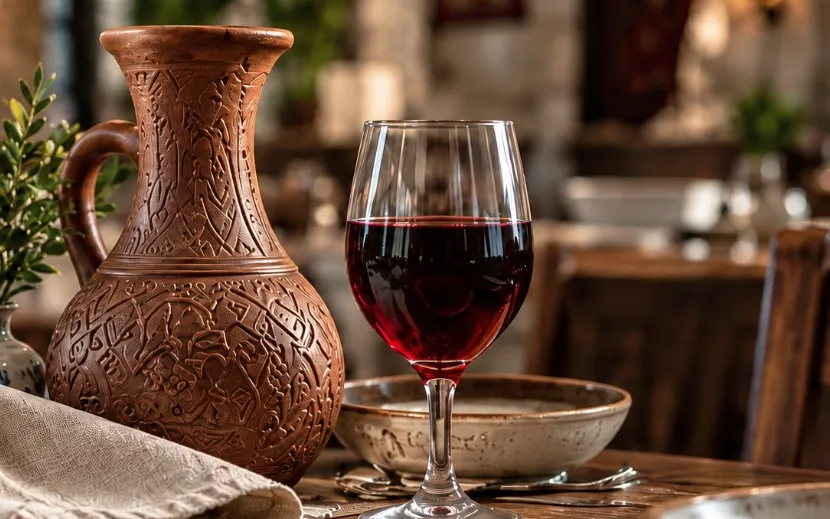
Before steel tanks and oak barrels there was the karas, a large clay jar for fermenting and storing wine, often set into the ground. By the time the revival began nobody in Armenia was making them, so when the Zorah winery wanted to age its Areni in clay, it had to buy old karases from local families. Today Zorah, Trinity Canyon and a few others use them for some of their wines.
To taste, look first, against a white cloth: reds lose colour with age, whites deepen. Swirl the glass to release the aroma and smell it, a few short sniffs and one long one: fruit and flowers come from the grape, bready notes from fermentation, vanilla from oak. Then take a good sip. Sweetness shows first, on the tip of the tongue; acidity makes the mouth water; tannin dries the gums; body is the wine's weight, like skimmed against whole milk. Last comes the finish: how long the taste lingers after you swallow.
And Areni Noir? Usually it is not heavy: firm but not harshly tannic despite its thick skins, with bright acidity kept by cool mountain nights and red fruit, most often cherry, sometimes with a touch of spice. The best examples add a smoky, mineral note that writers link to volcanic soils. One American wine writer placed it somewhere between Pinot Noir and Zinfandel. Voskehat is a textured, aromatic white that some critics compare to Viognier.
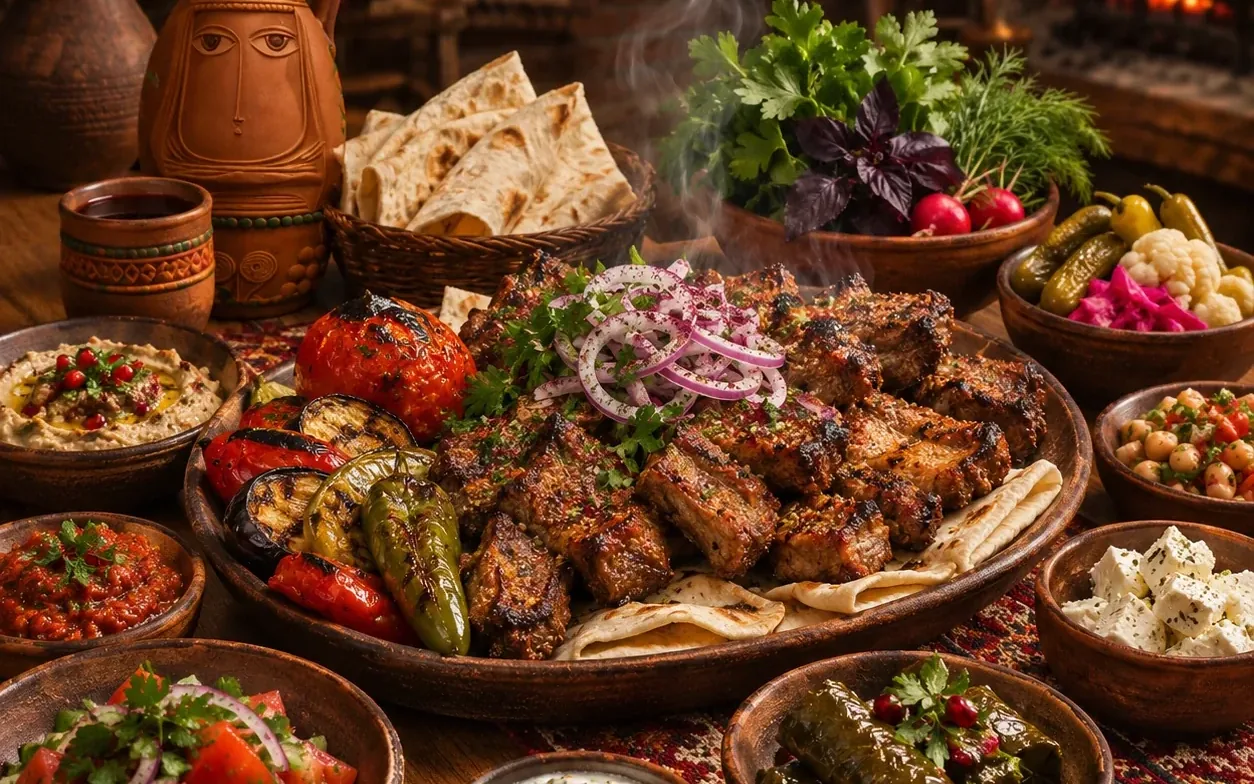
At Ararat Tavern, Armenian wine comes by the bottle, still and sparkling. Among the reds are Hin Areni, Takar and Zorah Karasi, all three made from Areni, along with Tariri, Kataro and Grand Karas; among the whites, Koor and Hin Areni made from Voskehat, Van Ardi's Kangun and Tus from Tavush. Voskehat goes into sparkling wine too: Keush makes its sparkling wines by the traditional method, with the second fermentation in the bottle, from Voskehat and Khatouni grown high in Vayots Dzor, and the menu has its Keush Brut, along with the very dry Karas Extra Brut and the semi-sweet Karas Dyutich. Try an Areni with khorovats, a Voskehat with the Assortment of Armenian cheeses, and the Dyutich with pakhlava.